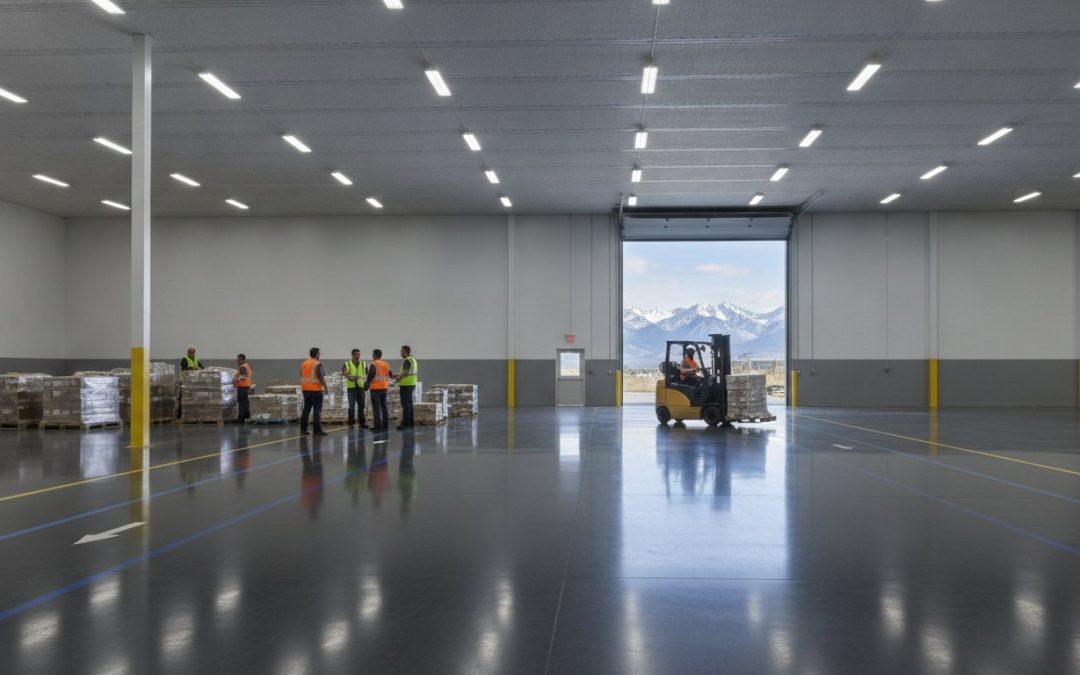
Could a single winter season in Casper or Cheyenne compromise the structural integrity of your entire logistics operation? In Wyoming, your warehouse floor isn’t just a surface; it’s a critical asset that battles some of the harshest freeze-thaw cycles in the country. If you’ve ever dealt with the relentless concrete dusting that ruins your inventory or the constant worry of cracks forming during a deep freeze, you know how demanding our local climate can be. This guide reveals how the professional warehouse floor sealing Wyoming facilities depend on can transform a porous, high-maintenance slab into a dust-free, OSHA-compliant powerhouse.
We’ll explore the latest 2026 industrial coating standards, including the shift toward high-performance polyaspartic systems that offer superior durability over traditional epoxy. You’ll learn how to achieve a workspace that’s easy to clean, safer for your crew, and built to withstand heavy industrial traffic for years to come. Let’s look at what it takes to protect your investment and keep your operations running smoothly in the Equality State. By focusing on long-term slab protection, you can significantly reduce maintenance costs while ensuring your facility meets the highest standards of safety and efficiency.
Key Takeaways
- Understand how professional coatings prevent structural degradation caused by Wyoming’s relentless freeze-thaw cycles and heavy forklift traffic.
- Learn why modern polyaspartic systems are often superior to traditional epoxy for warehouse floor sealing Wyoming projects due to faster cure times and UV stability.
- Discover how high-performance coatings improve facility safety through non-slip surfaces and reduce energy costs by enhancing light reflectivity.
- Identify the critical differences between surface-level wear and deep structural cracks to ensure your warehouse slab receives the correct level of protection.
- Gain insight into the specialized moisture vapor transmission testing required for industrial facilities located in high-altitude environments.
The Wyoming Logistics Challenge: Why Bare Concrete Fails
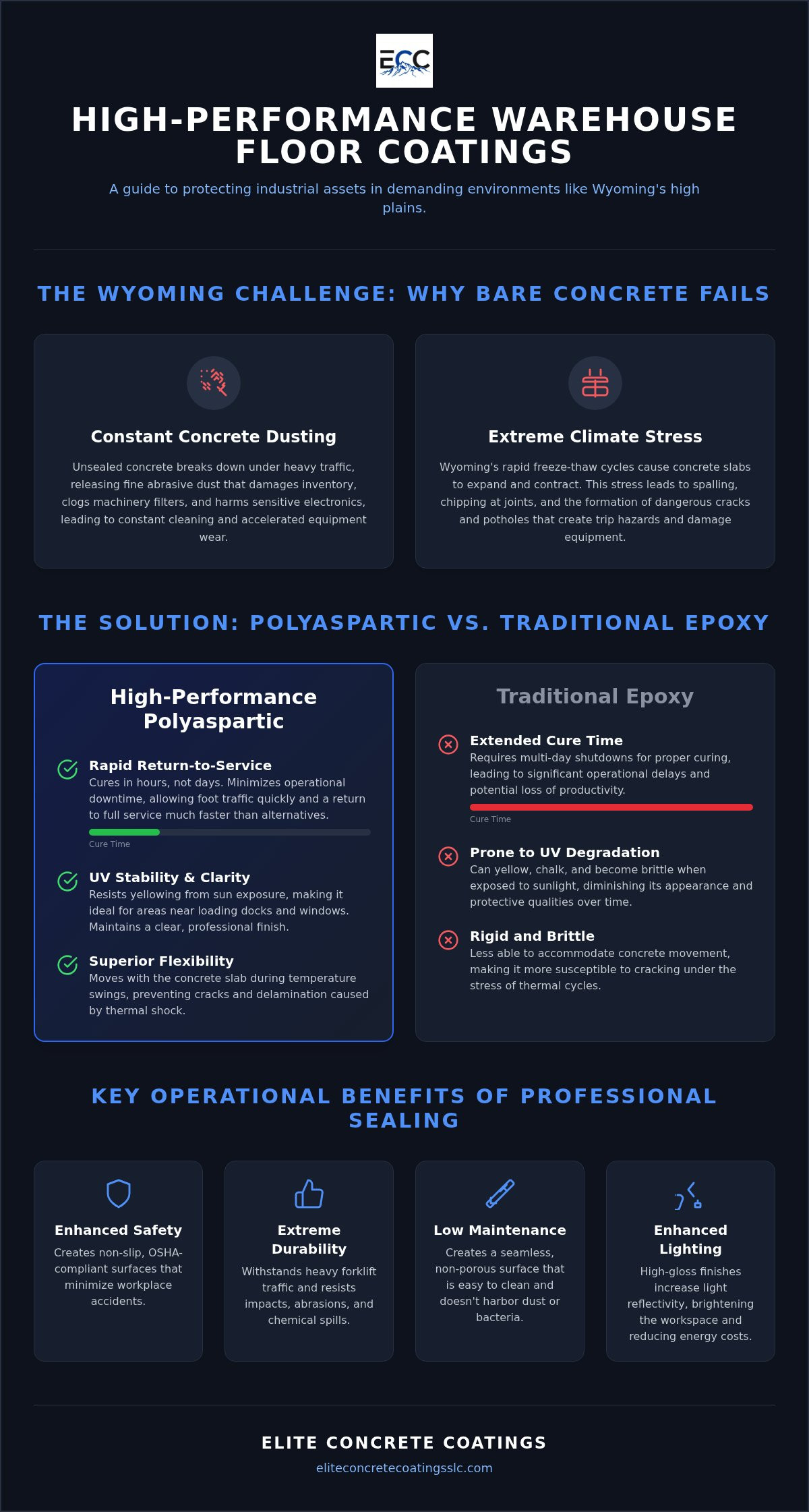
Wyoming’s high plains present a unique set of obstacles for logistics facilities that many national contractors often overlook. While a concrete slab might feel indestructible, it’s actually a porous, living material that reacts to everything in its environment. In our region, the combination of heavy forklift traffic and extreme temperature swings can turn an unprotected floor into a liability within just a few seasons. Choosing the right Concrete sealer isn’t just about appearances; it’s a vital step for structural survival. Without professional intervention, bare concrete eventually succumbs to the weight of industrial operations and the harsh local climate.
Many facilities in Cheyenne or Casper first notice issues when a fine white powder begins coating their racking and inventory. This isn’t just dirt tracked in from the loading dock. Implementing a strategic plan for warehouse floor sealing Wyoming helps prevent these structural failures before they become costly repairs that disrupt your workflow.
Concrete Dusting and Inventory Safety
Unsealed concrete creates a constant layer of fine particulates that can wreak havoc on your operations. Concrete dusting is the breakdown of the slab surface under mechanical stress. When heavy equipment rolls over unsealed concrete, the brittle top layer disintegrates into microscopic dust. This grit infiltrates sensitive electronics, clogs forklift filters, and forces your team into a never-ending cycle of cleaning. The hidden cost of this dust isn’t just the labor spent sweeping; it’s the accelerated wear on your machinery and the potential damage to stored goods that must remain pristine for shipment.
We often see businesses try to solve this with simple acrylic sealers found at big-box stores. These products typically sit on the surface like a thin skin. Under the relentless pressure of high-capacity forklifts, acrylics flake and peel, leaving the concrete exposed again. True industrial protection requires high-performance coatings that bond deep within the concrete matrix to stop dusting at the source.
Wyoming’s Climate and Slab Expansion
Wyoming is famous for its rapid temperature shifts, where a fifty-degree swing in a single day isn’t unusual. Your warehouse slab expands and contracts with these changes, putting immense pressure on expansion joints. If these joints aren’t properly maintained with specialized joint sealants, the edges of your concrete will begin to “spall” or chip away. These jagged edges quickly turn into potholes that jar equipment and create trip hazards for your crew.
Protecting these joints is just as critical as sealing the main floor area. We see similar environmental challenges across the border, which we detail in our look at The Ultimate Guide to Warehouse Floor Coatings in Utah: 2026 Edition. By combining a high-performance surface seal with flexible joint protection, you create a unified barrier against moisture and the destructive freeze-thaw cycles that define the Intermountain West.
Resinous Sealing Technologies: Polyaspartic vs. Epoxy
Selecting the right chemistry for your facility is a balance between long-term performance and operational downtime. While traditional epoxy has served the industry for decades, polyaspartic coatings have revolutionized how we approach warehouse floor sealing Wyoming logistics hubs. Each technology brings specific strengths to the table, and the best choice often depends on your facility’s specific traffic patterns and environmental exposure.
Polyaspartic systems are highly valued for their exceptional UV stability. In high-altitude environments like Wyoming, floors near loading docks and large bay doors are often exposed to intense sunlight. Standard epoxy can yellow and become brittle under these conditions over time; however, polyaspartic remains clear and flexible. This flexibility is a massive advantage in our region, as it allows the coating to move with the concrete during those rapid temperature shifts we discussed earlier.
Polyaspartic Systems for Rapid Return-to-Service
The primary advantage of polyaspartic technology is its rapid cure time. In a 24/7 logistics environment, shutting down a section of the warehouse for several days isn’t always feasible. We specialize in multi-layer Warehouse Concrete Coatings that can often be walked on in just a few hours. These systems are also designed as low-VOC options. This means we can perform installations without the overwhelming chemical odors that typically disrupt nearby workers or contaminate sensitive inventory.
Resinous Coatings for Chemical and Impact Resistance
Industrial epoxy remains a powerful staple for areas requiring extreme chemical resistance and high-build thickness. If your facility manages forklift charging stations where battery acid spills are a risk, or if you handle heavy oils and aggressive industrial cleaners, Resinous Commercial Flooring provides a dense, non-porous barrier. This protection prevents hazardous liquids from seeping into the slab and causing permanent structural damage.
Proper adhesion for these high-performance systems starts with meticulous mechanical grinding to create the perfect surface profile. A well-sealed floor doesn’t just look better; it’s a foundational part of meeting OSHA’s general requirements for walking-working surfaces by keeping the area clean, dry, and free of hazards. If you aren’t sure which resinous system fits your specific traffic patterns, we’re here to help you evaluate your facility’s needs and find a solution that lasts.
Operational Benefits of Professional Warehouse Sealing
Investing in warehouse floor sealing Wyoming facilities isn’t just about protecting the slab; it’s about optimizing every square foot of your operation. When you move beyond bare concrete, you’re choosing a workspace that works as hard as your crew. Professional coatings provide a level of operational efficiency that simple cleaning routines can’t match. By creating a non-porous surface, you significantly reduce the need for aggressive scrubbers and specialized cleaning chemicals. A simple sweep or damp mop is often all it takes to keep the facility in top shape, which keeps your team focused on logistics rather than janitorial tasks.
Long-term ROI is where these systems truly shine. By preventing the surface degradation and joint spalling we discussed in previous sections, you extend the lifespan of your concrete slab by years. This proactive approach avoids the massive operational disruptions that come with major floor repairs or full slab replacements down the road. It’s about building a foundation that supports your business growth without the constant headache of floor maintenance.
Enhanced Visibility and Light Reflectivity
Wyoming’s shorter winter days and large, high-ceilinged facilities often lead to high energy bills. One of the most immediate benefits of our high-performance coatings is their ability to reflect light. Glossy or satin finishes bounce ambient and overhead light back into the workspace, effectively brightening the environment without adding more fixtures. This improved visibility creates a safer, more professional atmosphere for your staff and clients alike. For a deeper look at how these systems handle the rigors of massive distribution centers, check out our Heavy Duty Warehouse Flooring: 2026 Industrial Guide.
Integrated Safety Markings and Non-Slip Textures
Safety is paramount in any logistics hub. Unlike tape or paint that peels under forklift tires, we can embed permanent safety markings directly into the sealing system. This ensures that your aisles and hazard zones remain clearly defined, helping you stay compliant with federal regulations for walking-working surfaces. These markings are durable enough to withstand thousands of passes from heavy equipment without fading or lifting.
We also customize the traction levels of your floor based on the specific needs of different zones. For loading ramps or areas prone to moisture, we integrate Commercial Non-Slip Coatings to prevent slips and falls. This tailored approach ensures that your facility is as safe as it is durable. It’s a comprehensive solution that national striping companies often miss because they focus on the lines rather than the integrity of the surface itself.
Evaluating Your Wyoming Facility for Sealing
Before starting any project for warehouse floor sealing Wyoming facility managers must perform a thorough diagnostic of their concrete. Wyoming’s high-altitude environment presents challenges that national contractors often miss. For instance, the atmospheric pressure differences found in cities like Laramie or Cheyenne can influence moisture vapor transmission (MVT) within the slab. If moisture is pushing up through the concrete, a standard sealer will eventually bubble or peel. We use specialized testing to ensure the concrete is dry and stable enough to receive a high-performance coating system.
You also need to distinguish between surface-level crazing and deep structural cracks. Surface cracks are often just a sign of rapid drying during the original pour, but structural cracks suggest the ground beneath is shifting or the slab is under excessive stress. We also evaluate any existing sealers for compatibility. Applying a high-grade resin over an old, failing acrylic is a recipe for disaster. Finally, we calculate the required mil thickness based on your equipment. A 10,000-pound forklift requires a much more robust build than simple pedestrian traffic to prevent delamination under heavy loads.
The Importance of Joint Sealant Application
Joints are the most vulnerable part of any industrial floor. Because they’re designed to allow for movement, they’re often the first place where the concrete begins to chip or spall under the weight of hard-wheeled vehicles. We use professional-grade joint fillers to bridge these gaps. This prevents debris from accumulating in the cracks and provides the necessary edge support to keep the floor level. For facilities handling aggressive materials, our Chemical Resinous Coatings offer an extra layer of protection for these critical transition points.
Slab Preparation: The Key to Coating Longevity
Professional concrete grinding is a non-negotiable step in our process. We use heavy-duty diamond grinders to remove the laitance, which is the weak top layer of concrete, to reveal a fresh, porous profile. This allows the sealer to anchor itself deep within the slab. We also pay close attention to oil saturation from leaky machinery. If these contaminants aren’t properly addressed during the grinding phase, the new coating won’t bond. Choosing between different systems depends on your specific facility goals, as we explain in our comparison of Epoxy vs Polished Concrete: Choosing the Best Warehouse Floor in 2026.
Ready to see how your slab measures up? Schedule a professional floor evaluation to identify the best protection strategy for your Wyoming facility.
Professional Implementation: The Elite Concrete Coatings Approach
At Elite Concrete Coatings, we treat every project like we’re working on a neighbor’s property, even when the scale is massive. Our approach to warehouse floor sealing Wyoming facilities combines the high-capacity capabilities of a major industrial contractor with the personalized care of a family-owned business. We don’t believe in one-size-fits-all solutions. Instead, we use a meticulous framework to analyze your facility’s specific workflow and environmental stressors before a single grinder touches the floor. This ensures that the system we install is perfectly matched to your operational demands.
We know that downtime is the enemy of logistics. Our project management team works closely with your operations manager to schedule installations during low-traffic windows or in phases. This ensures that while we’re transforming your slab, your shipments keep moving. Our commitment to material precision means we measure and mix with scientific accuracy. This ensures the chemistry performs exactly as promised in the harsh high-plains climate. We handle the technical details so you can focus on running your business.
Customized Solutions for Wyoming Facilities
Cheyenne distribution hubs often face high-velocity forklift traffic, while Casper industrial sites might deal with heavier chemical exposure or equipment loads. We select our resinous systems based on these specific variables. Whether you need a high-build epoxy for impact resistance or a fast-curing polyaspartic for a quick turnaround, we tailor the system to your needs. If you’re planning your long-term facility budget, it’s helpful to look at the broader picture through our guide on Understanding Industrial Epoxy Floor Cost: 2026 Professional Investment Guide.
Reliability and Craftsmanship
Our family-owned roots mean we have a personal investment in every square foot we coat. There’s a tangible satisfaction in seeing a dusty, cracked warehouse floor turn into a bright, safe, and durable workspace. We take pride in the craftsmanship that goes into our joint sealants and non-slip finishes. It’s not just a job for us. It’s a transformation that helps your business thrive. We stand by our work because we live in the same communities we serve. Contact Elite Concrete Coatings for a professional warehouse assessment and let’s build a floor that truly lasts.
Build a Future-Proof Foundation for Your Wyoming Logistics Hub
Your warehouse floor is the literal foundation of your business success. We’ve explored how professional coatings solve the challenges of concrete dusting and structural degradation caused by our unique high-plains climate. By moving away from bare concrete and embracing high-performance polyaspartic systems, you gain a workspace that is safer, brighter, and significantly easier to maintain. Choosing a specialized partner for warehouse floor sealing Wyoming ensures your facility is ready for the heavy traffic and extreme shifts of the coming years.
At Elite Concrete Coatings, we’re a family-owned team with a personal investment in every project we touch. We combine decades of local experience with technical expertise in non-slip integration and expert joint sealants to deliver results that last. We’re eager to help you transform your space into a durable, professional environment that supports your team’s hard work. Don’t let your slab become a liability when it can be your greatest operational asset.
Secure your facility with professional warehouse floor sealing from Elite Concrete Coatings and take the first step toward a more resilient workspace today.
Frequently Asked Questions
How long does warehouse floor sealing last in Wyoming’s climate?
High-performance warehouse floor sealing Wyoming projects typically last 5 to 10 years depending on the volume of forklift traffic. As a family-owned business serving the Intermountain West from Salt Lake City to Casper, we understand the pressure freeze-thaw cycles put on industrial slabs. Choosing a durable polyaspartic or epoxy system significantly extends this lifespan compared to basic sealers. Regular inspections and maintaining joint integrity are key to ensuring your floor remains a structural asset for years.
Can you apply floor coatings over existing warehouse sealers?
Professional coatings should not be applied directly over old sealers because they prevent the new material from bonding with the concrete. To ensure a successful warehouse floor sealing Wyoming installation, we must mechanically grind the surface to remove all existing contaminants or previous coatings. This process opens the pores of the concrete, allowing the resin to anchor deep within the slab. Skipping this step almost always leads to premature delamination in high-traffic hubs like Salt Lake City or Casper.
What is the difference between a concrete sealer and a resinous coating?
A concrete sealer is typically a thin, penetrating film designed to repel moisture, while a resinous coating is a high-build system like epoxy or polyaspartic. Resinous coatings create a much thicker, more durable barrier that protects against heavy impacts and abrasion. While sealers are great for basic dustproofing in smaller shops in South Jordan or Syracuse, industrial facilities with heavy equipment usually require the superior strength and longevity offered by a multi-layer resinous coating system.
How soon can forklifts drive on the floor after sealing?
Forklift traffic can usually resume within 24 to 48 hours when using a high-performance polyaspartic system. This rapid return-to-service is a major advantage for 24/7 logistics hubs in Wyoming and Utah cities like Ogden or West Jordan that can’t afford long shutdowns. Standard epoxy systems often require 72 hours or more to reach full chemical cure for heavy vehicle use. We coordinate scheduling to minimize disruption, ensuring your crew gets back to work quickly on a safe surface.
Does professional sealing help with OSHA compliance in Wyoming?
Yes, professional sealing is a critical component of maintaining OSHA compliance regarding walking-working surfaces. By integrating permanent safety markings and non-slip textures, you meet federal requirements for clear aisle designation and hazard prevention. A sealed floor also prevents concrete dusting, which improves air quality and prevents the accumulation of fine particulates. This creates a safer environment in facilities from Layton to Cheyenne, helping you pass inspections and protect your team from preventable slips and falls.
What maintenance is required for a sealed warehouse floor?
Maintenance for a sealed floor is remarkably simple and involves regular sweeping and damp mopping with a neutral cleaner. Because the surface is non-porous, dirt and oils can’t penetrate the slab, which eliminates the need for aggressive scrubbing or specialized chemicals. This ease of cleaning saves on labor costs and helps maintain high light reflectivity in large spaces. Avoid using abrasive pads to preserve the coating’s finish in your Spanish Fork or Cheyenne facility.
Can you seal a warehouse floor that has significant cracking?
You can certainly seal a floor with significant cracking, provided those cracks are professionally repaired before the coating is applied. We use industrial-grade joint sealants and fillers to bridge cracks and stabilize the edges of the slab. This preparation prevents the cracks from reflecting through the new coating and stops moisture from infiltrating the base. Addressing these structural issues during the preparation phase is essential for ensuring the integrity of your warehouse floor for years to come.
Is polyaspartic better than epoxy for Wyoming distribution centers?
Polyaspartic is often the better choice for Wyoming distribution centers due to its superior UV stability and faster cure times. Distribution centers with high-traffic loading docks benefit from polyaspartic’s resistance to yellowing and embrittlement. This technology is highly popular across our service areas in Provo, Lehi, and Cheyenne because it handles extreme temperature fluctuations common in the high plains. While epoxy is excellent for chemical resistance, polyaspartic offers the versatility required by most modern industrial operations.