
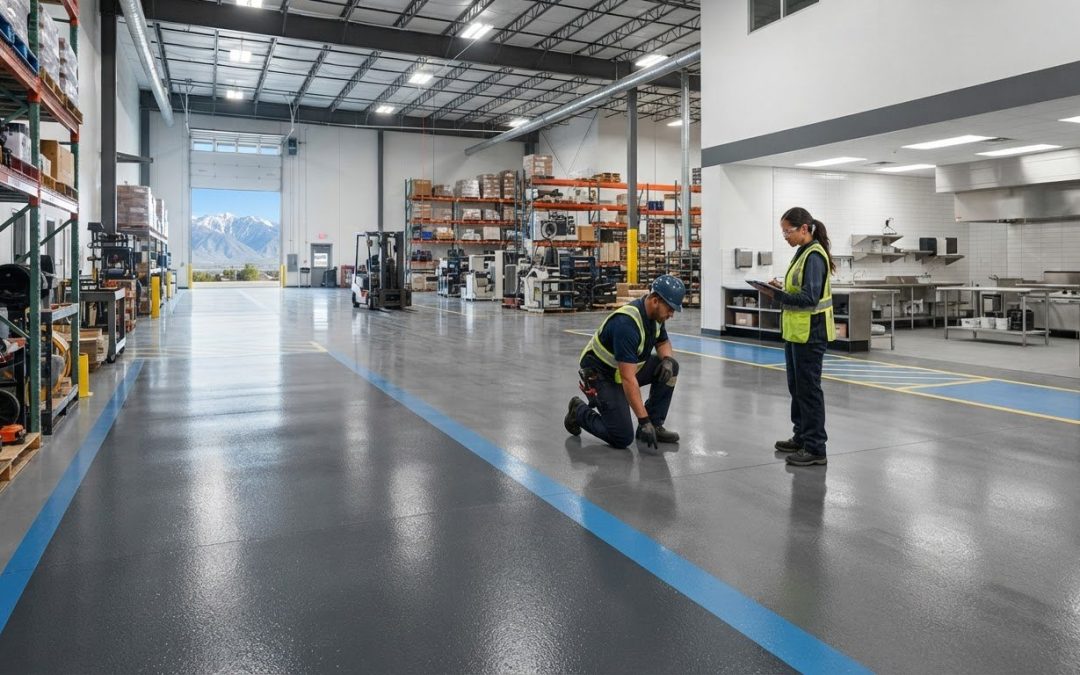
What if the best floor for your Layton facility isn’t the toughest-sounding coating, but the one that fits how your team works every day? Choosing commercial concrete coatings Layton Utah businesses can rely on starts with the floor’s traffic, safety priorities, cleaning routine, and operating schedule.
A floor should support daily use, a clean and professional environment, and a workable project plan. But warehouses, retail spaces, parking areas, and other commercial facilities don’t all put the same demands on concrete. A system suited to one area may not fit another.
This guide compares coating and finishing options, including warehouse and non-slip coatings, ESD coatings, polished concrete, and grind and seal. You’ll learn what to weigh when matching a system to your facility’s use, maintenance needs, and appearance goals, plus how to plan a professional project. Elite Concrete Coatings is a family-owned Utah company serving Layton and nearby Northern Utah communities, including Ogden, Syracuse, Salt Lake City, Provo, Lehi, West Jordan, South Jordan, Spanish Fork, and Layton.
Key Takeaways
- Start with what the floor must handle. Consider traffic, equipment, cleaning routines, and safety priorities before narrowing your options.
- Compare coating and finishing approaches against the facility’s needs. No single category suits every commercial space.
- Include the existing slab’s condition and joints in project planning so the scope reflects the floor you have.
- For commercial concrete coatings Layton Utah facilities need, a site-specific assessment connects the floor’s use and priorities to an appropriate approach.
- Define the scope and operational needs early. Elite Concrete Coatings’ commercial and industrial services can help shape practical next steps.
Commercial Concrete Coatings in Layton: Start With Your Facility’s Needs
What must your floor handle each day? That’s the right starting point when considering commercial concrete coatings for a Layton facility. A loading area with forklift traffic faces different demands from a customer-facing retail floor. A system chosen for appearance alone may not suit the work happening on the slab.
Commercial concrete coatings are applied floor systems that change or protect a concrete surface to better suit a facility’s use. Coatings are one approach, while concrete finishing options create a different look and feel. This overview of concrete sealers and coatings explains the distinction between topical and penetrating products. When defining a project, focus first on what the floor needs to accommodate, not just its final appearance.
Which facility demands should shape the coating decision?
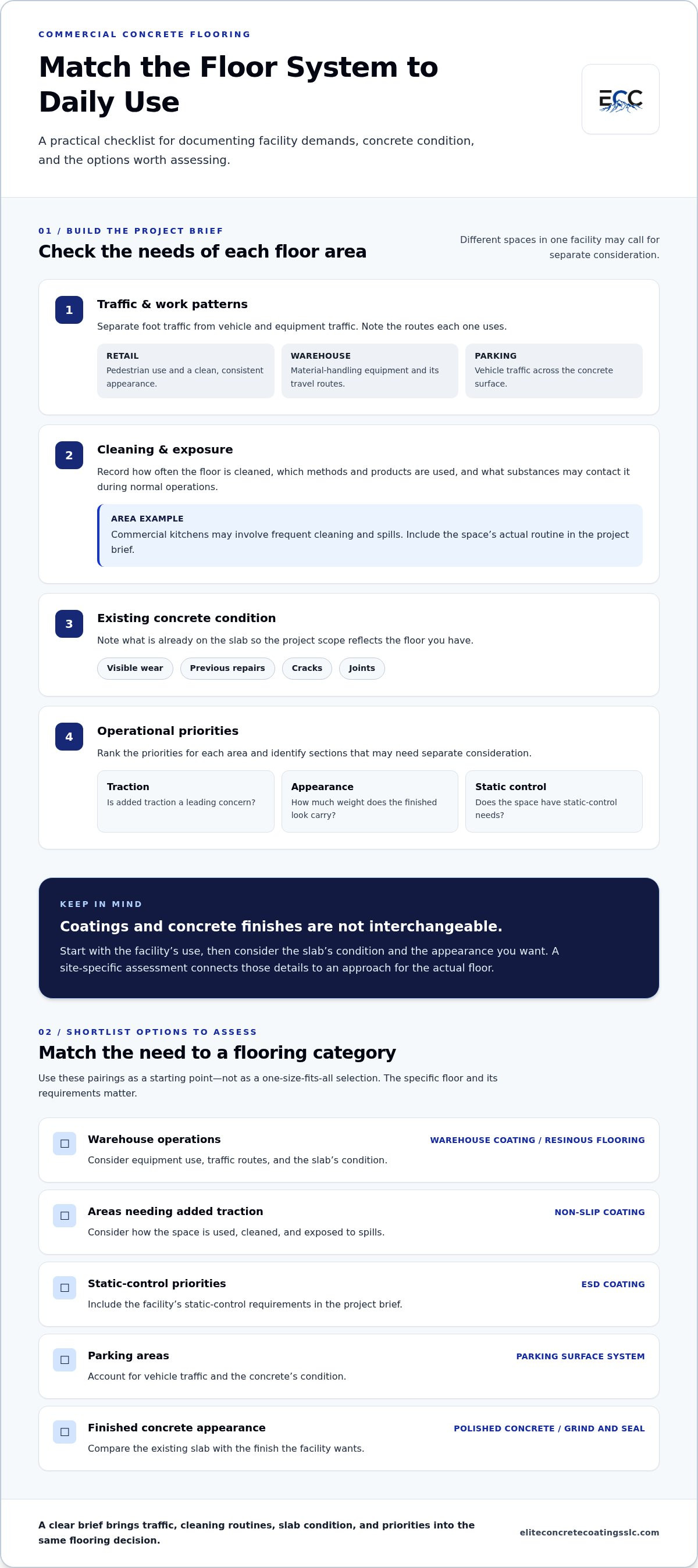
Separate foot traffic from vehicle and equipment traffic. Retail spaces may prioritize a clean, consistent appearance under regular pedestrian use. Warehouse planning should account for material-handling equipment and designated traffic routes, where durable coatings can be paired with clear aisle demarcation from services like StripeGuys Warhouse Line Striping. Parking areas have vehicle traffic, while commercial kitchens may involve frequent cleaning and spills. Some specialized spaces have additional priorities, such as static control. These differences help determine which coating or finish to consider.
Cleaning routines matter, too. Document how often the floor is cleaned, which methods and products are used, and what substances may reach the surface during normal operations. Systems with similar appearances may not suit the same cleaning routine or exposure. Including these details in the project brief helps match the recommendation to the facility rather than relying on a broad category alone.
What should a Layton facility manager clarify first?
Map the areas in scope and note how each one is used. A single building may have different needs in its warehouse aisles, retail area, kitchen, and parking spaces. Record visible wear, existing repairs, cracks, and joints for assessment. This gives the project team useful context about the concrete itself, not just the proposed finish.
Next, rank your operational priorities. Is traction the leading concern, or does appearance carry more weight? Does the space call for static control? Note how each area is used and cleaned, and identify sections that may need separate consideration. The slab’s condition and joints also matter because they can affect project scope and surface preparation.
- Traffic: List pedestrians, vehicles, and equipment separately, including the routes they use.
- Exposure: Describe cleaning practices and substances that may contact the floor.
- Concrete condition: Flag visible wear, previous repairs, cracks, and joints.
- Priorities: Rank traction, appearance, and static control for each area.
Clear answers turn a general flooring request into a practical brief. Elite Concrete Coatings provides commercial flooring services in Layton and nearby Northern Utah communities. Its commercial concrete flooring services address different facility needs based on each space’s use and priorities.
Commercial Coating and Concrete-Finishing Options for Layton Facilities
Commercial floors can be coated or finished in different ways, and the terms don’t mean the approaches are interchangeable. Compare options by first identifying the facility’s needs, then considering the existing slab and the appearance you want.
Facility use and slab conditions guide system selection. A warehouse with equipment traffic, for example, has a different brief from a customer-facing space where appearance is a priority. Use the table as a starting point, then assess the specific floor.
| Facility need | Option | Decision considerations |
|---|---|---|
| Warehouse operations | Warehouse coating or resinous flooring | Consider traffic routes, equipment use, and the slab’s condition. |
| Areas needing added traction | Non-slip coating | Consider how the space is used, cleaned, and exposed to spills. |
| Static-control priorities | ESD coating | Include the facility’s static-control requirements in the project brief. |
| Parking areas | Parking surface system | Account for vehicle traffic and the condition of the concrete. |
| Finished concrete appearance | Polished concrete or grind and seal | Compare the existing slab with the finish the facility wants. |
When might a resinous coating be the right category?
Resinous flooring is a broad category of systems formed with resin-based materials. It may suit a commercial space when its requirements align with the system being considered. For a warehouse, include equipment traffic and work patterns in the brief. If chemical exposure matters, describe the substances and the areas involved. Elite Concrete Coatings applies resinous materials for commercial and industrial flooring projects.
“Resinous” doesn’t identify a single solution. Intended use, slab condition, and project priorities all help shape the choice. The American Concrete Institute offers broader context on concrete materials and practices. A site assessment connects those considerations to the actual floor.
How do polished concrete and grind-and-seal differ?
Polished concrete mechanically refines the concrete surface. Grind and seal also begins with grinding, then uses a sealer as part of the finished surface. They are distinct approaches, so compare the existing slab with the appearance the facility wants. Learn more about commercial polished concrete when considering how a finished concrete floor may fit the space.
Bring the options back to the facility brief: What should the floor look like? What activities will take place on it? What condition is the slab in now? For commercial concrete coatings Layton Utah facilities can consider, matching those details to the right category is a practical step toward a tailored recommendation.
How to Compare Commercial Concrete Coatings for Your Layton Site
No single coating category is right for every facility. A warehouse, retail area, parking structure, and specialized workspace can place different demands on a floor. Compare options against your operation rather than choosing by category name alone. This framework can help organize the decision and support a recommendation grounded in the site.
- Start with facility use. Describe the activities in each area, including whether people, vehicles, or equipment travel across the floor and where those routes run. For warehouse applications, include how aisles and work zones are used, then compare warehouse floor coatings against those needs.
- Set the cleaning and exposure context. Note the facility’s cleaning routine and identify substances that may contact the concrete. These details help define maintenance priorities and whether a particular exposure should influence the system discussion.
- Rank the priorities. Decide what matters most in each space: traction, appearance, maintenance needs, or a specialized requirement. If traction is a priority, compare suitable non-slip options in the context of how the area is used and cleaned. Elite Concrete Coatings provides commercial non-slip coatings for facilities with traction needs.
- Account for the slab. The existing concrete is part of the comparison. Visible wear, repairs, and joints can affect what needs attention before a system is selected. Consider the floor’s condition alongside the operational brief.
- Get a site-specific recommendation. Bring together the facility’s use, cleaning routine, priorities, and slab observations. A useful recommendation connects those conditions to an appropriate coating or finishing approach instead of treating one category as the default.
How should traffic, cleaning, and safety priorities be weighed?
Give the most weight to what happens in the space each day. A floor used mainly by pedestrians has a different traffic pattern from one crossed by vehicles or equipment. A cleaning routine or exposure that matters in one zone may not apply throughout the facility. If traction is a priority, state it clearly in the project brief and use the slip-resistant coating guide as background for the decision.
When do specialized floor requirements change the comparison?
Some spaces have requirements beyond general traffic and appearance. If static control is part of the facility’s needs, include it early so ESD coatings can be considered in context. Describe chemical exposure separately, including where it occurs and what substances are involved. These specifics help shape a tailored system discussion without assuming one approach fits every zone.
For commercial concrete coatings Layton Utah facilities can assess, compare options against the work, not just the product category. Elite Concrete Coatings’ commercial flooring team can connect your facility brief to a practical next step.
Plan a Commercial Concrete Coating Project in Layton
A well-planned floor project starts with a clear scope, not a product name. Identify the spaces involved, the work performed in each one, and the priorities the finished floor needs to support. This gives the project team a basis for assessing the concrete, comparing approaches, and coordinating work around the people and processes that use the space.
Substrate assessment informs coating-system selection because the existing concrete is the surface the system must be planned for.
Use a sequence that keeps the decision grounded in your site:
- Define the scope. Map the areas being considered and note how each is used. A warehouse aisle, customer-facing area, and service zone may have different requirements, even within one building.
- Assess the slab. Document visible wear, previous finishes, repairs, and joint concerns. These observations help guide a site assessment and keep the project discussion focused on the concrete’s actual condition.
- Match requirements. Relate the facility’s use and priorities to coating or finishing options. Consider whether distinct zones need separate approaches instead of assuming the entire building has one uniform brief.
- Plan the work. Coordinate access, work areas, and communication with the people responsible for facility operations. The project plan should reflect the scope, site conditions, and selected system.
What information helps define the project scope?
Bring an area-by-area description to the planning conversation. Identify each zone, its daily use, and the priorities that matter there, such as traction, appearance, or static control. Add notes about known slab wear, previous finishes, repairs, cracks, and joints. This context helps define the scope and highlights where parts of the facility may need different consideration.
Be specific about transitions between spaces, too. A work area connected to a customer-facing zone may have different appearance or use expectations. Marking those boundaries early clarifies which surfaces are included and where one set of requirements gives way to another. A well-mapped project makes it easier to compare options against the facility’s needs.
How can Layton businesses plan around facility operations?
Coordinate with the people who manage access, daily workflows, and affected work areas. Identify routes or activities that need to remain available, and discuss how spaces can be organized during the project. Early communication helps stakeholders understand which areas are in scope and where coordination is needed.
Keep timing tied to the specific project. Scope, site conditions, and the selected system all influence planning, so a general schedule may not fit every facility. For commercial concrete coatings Layton Utah businesses are planning, discuss access and operational needs early to establish realistic next steps. Start planning your commercial flooring project with Elite Concrete Coatings.
Choose Elite Concrete Coatings for Commercial Flooring in Layton
Commercial flooring decisions are strongest when the recommendation reflects both the concrete and the work happening on it. Elite Concrete Coatings is a family-owned Utah company serving Layton and nearby Northern Utah communities, with commercial and industrial flooring services for facilities with varied needs. Share what each space must support so the project discussion can focus on an approach suited to those priorities.
For commercial concrete coatings Layton Utah facility managers are evaluating, start with the facility brief: how the area is used, what condition the slab is in, and which priorities matter most. A warehouse floor, retail environment, parking area, and specialized workspace may call for different considerations. Elite’s commercial concrete coating services address those facility needs.
What commercial flooring work can Elite support?
Elite provides warehouse coatings, non-slip coatings, ESD coatings, parking surfaces, resinous flooring, polished concrete, grind and seal, and joint sealants. These services can be considered in relation to the space, the existing slab, and operational requirements. The goal is a site-specific discussion, not a one-size-fits-all system choice.
- Warehouse areas: Match warehouse coatings to the facility’s use and floor conditions.
- Spaces with traction priorities: Consider non-slip coatings where traction is a stated need.
- Specialized operations: Raise static-control requirements when considering ESD coatings.
- Parking areas: Identify the parking surfaces in scope and how they are used.
- Finished concrete: Compare polished concrete and grind and seal against the desired appearance and the slab.
Commercial work can involve distinct zones within one facility. A retail area may have different appearance priorities from a warehouse or service space, while parking surfaces bring their own considerations. Defining those spaces separately makes the project brief more useful. Elite serves commercial and industrial settings, including warehouses and retail environments, so the flooring discussion can stay connected to the actual site rather than an abstract product category.
What are the next steps for a Layton facility?
Start with a clear picture of the project: which areas are included, how they’re used, and what the floor needs to support. Share known slab concerns, including visible wear, repairs, previous finishes, or joints that need attention. If requirements differ across zones, outline those differences too. This gives the project discussion a practical foundation.
Elite can discuss your facility, its floor, and its priorities with a project-focused approach. To begin shaping a recommendation around the site’s conditions and operational needs, discuss your commercial floor project.
Turn Your Flooring Priorities Into a Clear Next Step
Moving from exploring options to planning a project starts with a focused conversation about what success means for your facility. Align key stakeholders on the most important outcome, whether that means supporting daily operations, addressing a specific floor concern, or shaping the look of a space. A shared priority gives the project discussion direction.
For commercial concrete coatings Layton Utah facilities are considering, the goal isn’t to choose a system by name alone. It’s to turn your facility’s needs into a clear, site-specific plan. Bring forward the areas you’re considering, the work they support, and the questions you want resolved. From there, the discussion can focus on practical options for your building and how to move forward.
Share your facility’s flooring priorities with Elite Concrete Coatings and take the next step toward a project plan.
Frequently Asked Questions
Can commercial concrete coatings be applied over an existing floor finish?
Sometimes, but it depends on the existing finish and the concrete beneath it. The floor needs an assessment to determine whether the old material is firmly bonded, what condition the slab is in, and whether the surface needs preparation or removal. For commercial concrete coatings Layton Utah facilities are considering, share details about previous floor treatments early so the project scope accounts for them.
How should a business maintain a coated commercial concrete floor?
Follow care instructions suited to the installed floor system. In daily operations, remove loose debris and clean spills promptly, then use cleaning products and equipment appropriate for the surface. Don’t assume that a product or cleaning method used elsewhere in the building suits every coated area. A written routine helps cleaning teams follow consistent practices and flag unusual changes in the floor.
How often should commercial concrete coatings be inspected?
There isn’t one inspection interval for every facility. Include the floor in routine facility walk-throughs, and take a closer look after an impact, spill, or change in how an area is used. Note changes such as peeling, visible wear, or deterioration around joints. Dated observations help facility managers track whether a condition is isolated or changing and provide useful context for an assessment.
What should a facility do if part of a coated floor becomes damaged?
Mark the affected location and consider whether access needs to be managed to protect people and operations. Record what changed, when it was noticed, and any relevant event, such as equipment impact or a spill. Avoid covering the area with an unapproved material or cleaner. A professional assessment can help determine the extent of the issue and a suitable repair approach for the floor system.
Can one commercial floor coating work across different facility areas?
It may be possible to use one approach across several areas, but don’t assume every zone has the same requirements. A warehouse aisle, retail space, and parking area can differ in traffic, cleaning, and operational priorities. Map the areas and compare their needs before deciding whether a shared system makes sense or separate approaches are more appropriate.
Do commercial concrete coatings change the appearance of a concrete floor?
Yes. A coating can change the floor’s visual character, and finishing approaches can create a different appearance as well. The result depends on the selected system, the existing slab, and the desired look, so discuss expectations before planning the work. This applies to commercial facilities in Layton, Ogden, Syracuse, Salt Lake City, Provo, Lehi, West Jordan, South Jordan, and Spanish Fork.