
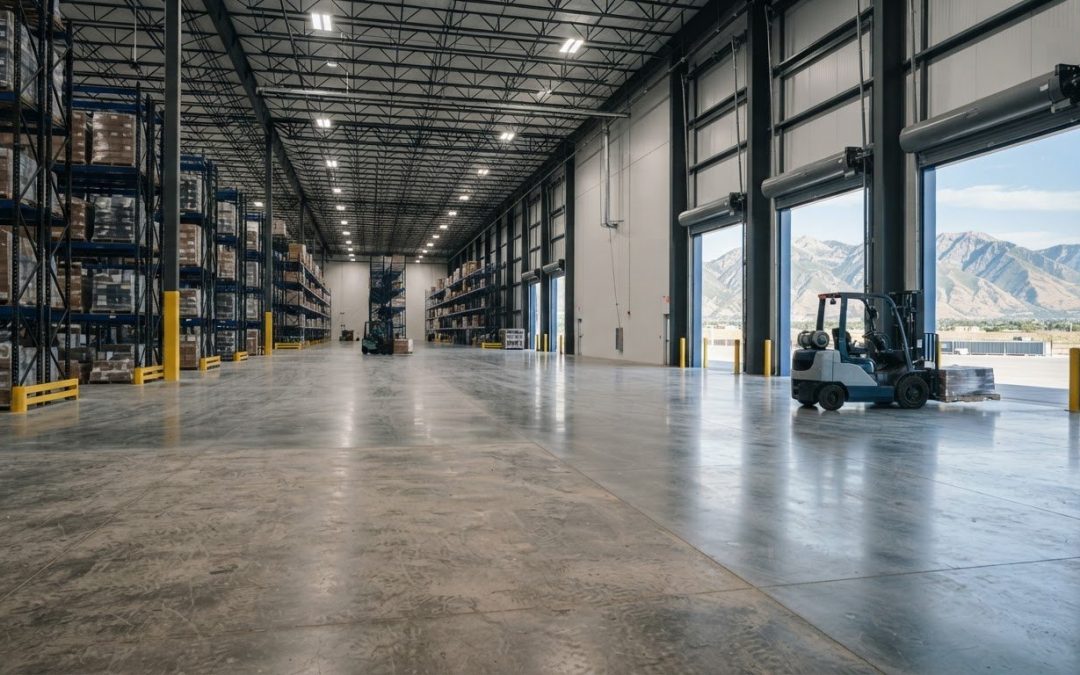
You’ve cleaned the aisles, wiped down equipment, and cleared dust from nearby inventory, only to see the powder return. When that cycle keeps repeating, concrete dusting solutions for warehouses should start with the floor itself, not another round of cleaning. Recurring dust can point to a weakened concrete surface, and the right response depends on the slab’s condition and your facility’s daily operations.
Routine cleaning removes dust that has already settled, but it may not address a surface that continues to break down. Concrete dusting can relate to how the slab was placed, finished, or cured, as well as wear from ongoing use. Identifying the likely cause is an important first step before selecting a treatment or planning work around shipping, storage, and forklift traffic.
This guide explains common causes of warehouse floor dusting and compares practical approaches, including warehouse coatings, polished concrete, and grind and seal. You’ll learn what to document, what a professional assessment should consider, and how to match a treatment to your slab and facility use. These steps can help warehouse teams in Salt Lake City, Ogden, Provo, Lehi, West Jordan, South Jordan, Spanish Fork, Layton, and Syracuse plan a suitable next move.
Key Takeaways
- Visible dust is a symptom, not a diagnosis. Assess the slab before choosing a treatment.
- Densifiers, sealers, coatings, polished concrete, and grind and seal serve different purposes. Compare them against the floor’s condition and intended use.
- The right concrete dusting solutions for warehouses account for traffic patterns, facility tasks, cleaning routines, and project access.
- Record where dust appears, how often it returns, and which operations it affects to make an assessment more focused.
- Warehouse coatings, polished concrete, and grind and seal are options for commercial and industrial floors in northern Utah.
What Concrete Dusting Means for Warehouse Floors and Daily Operations
Concrete dusting is the release of fine powder from a concrete floor surface. The term describes what’s visible, not the confirmed reason it’s happening. In a warehouse, powder may collect along travel paths, around work areas, or near storage. Tracked-in dirt and packaging debris usually vary with foot and vehicle traffic. Dusting is more likely when fine powder repeatedly returns to the same floor zones after cleaning.
This distinction helps teams describe the issue without jumping to conclusions. Concrete dust can be associated with a weak surface, but visible powder alone doesn’t establish its cause or identify the right treatment. A professional assessment should consider the slab and how the facility uses it before selecting among concrete dusting solutions for warehouses.
How warehouse teams recognize concrete dusting
Look for a fine, powdery residue on the floor or nearby surfaces, especially if it returns to familiar areas after routine cleaning. Note whether it is concentrated along forklift routes, around workstations, or in storage zones. These observations help describe the issue, but they don’t prove a specific slab condition.
- Record where powder accumulates and whether the affected areas change.
- Note whether it returns after the usual cleaning routine.
- Distinguish fine residue from visible dirt, packaging fragments, or debris tracked in from outside.
These notes give a flooring professional a clearer picture of the symptoms. Avoid treating one dusty patch as a complete diagnosis. The condition of the surface and the way the facility operates both matter.
Why recurring dust matters in an active facility
Repeated dust accumulation adds work to warehouse housekeeping. Whether managed by internal staff or commercial janitorial specialists like Valley Clean, crews may need to revisit aisles, work surfaces, or nearby storage areas, and equipment may need extra cleaning. The burden is more noticeable when powder returns between scheduled cleaning rounds.
Dust can also make it harder to maintain clean storage and work areas. It may settle on packaging or inventory near the floor, creating a need for more attention to affected zones. Not every dusty floor presents the same concern or needs the same response. The pattern, extent, and effect on daily routines are important context.
Keep observations specific: identify the affected locations, nearby operations, and how often the residue reappears. A concrete densifier is one treatment category that may come up in a professional discussion, but understanding the symptom comes first. For facilities considering a concrete-finishing approach, commercial polished concrete is another option to compare with the slab’s condition and warehouse needs.
Why Warehouse Concrete Floors Dust and What to Assess First
Finding powder on a slab is a reason to investigate, not enough evidence to name a cause. Dusting can be associated with a weakened surface, but similar-looking residue may have different explanations. A sound treatment plan starts with the floor’s condition and the way the warehouse uses and maintains it.
Conditions that can contribute to a dusty concrete surface
Potential contributors include surface wear and issues related to the slab’s original finishing or curing. Technical explanations such as excess water in the concrete mix or inadequate curing may be relevant, but a qualified flooring professional should assess them before they’re treated as a diagnosis. The surface’s history and current condition matter.
Warehouse activity provides additional context. Repeated vehicle traffic and routine use can wear a surface over time, particularly where the concrete may already be vulnerable. That doesn’t mean traffic alone caused the dust. A pattern concentrated in a busy travel lane is an observation to compare with other evidence, not proof of a single cause.
What a professional warehouse floor assessment examines
An assessment should consider the dust pattern alongside the slab’s condition and facility routines. A visual review can identify areas for closer evaluation, but may not establish every underlying cause on its own. Useful context includes:
- Where powder appears, whether it is widespread or concentrated, and whether the pattern changes.
- Visible wear or surface changes, along with the condition of joints and nearby floor areas.
- Vehicle routes, traffic intensity, storage patterns, and the work performed in affected areas.
- Cleaning methods and frequency, plus any previous floor treatments that could affect the surface.
Considering these details together helps distinguish a localized issue from a broader floor condition. Dust in one heavily used area, for example, may call for a different investigation than similar residue across the warehouse. A professional can use the slab’s observed condition and operating context to guide further evaluation and treatment selection instead of relying on dust alone.
Concrete dust may contain respirable crystalline silica. For information on silica exposure in construction work, consult OSHA’s construction standard on respirable crystalline silica. The tasks and circumstances matter when considering its relevance to a particular facility.
Choose a treatment only after the floor’s condition and likely contributors have been assessed. This keeps the decision grounded in the actual slab and its demands. A professional review can also help determine whether warehouse concrete coatings suit the floor’s needs. To discuss an assessment for your facility, connect with Elite Concrete Coatings.
Comparing Concrete Dusting Solutions for Different Warehouse Needs
Once the slab has been assessed, compare treatment categories by their purpose and fit for the facility’s work. Densifiers, sealers, coatings, and concrete-finishing approaches aren’t interchangeable. None should be treated as a guaranteed fix without considering the existing surface and preparation needs. The Concrete Society’s overview of the causes and prevention of concrete dusting offers technical background to consider alongside a professional floor evaluation.
Densifiers and sealers for existing concrete
A densifier is generally used to treat concrete by reacting within its surface, while a sealer is intended to protect the surface. Their roles and performance depend on the product, slab condition, and preparation. When comparing these options, consider existing wear, prior treatments, traffic, and cleaning routines. The treatment should match the floor, rather than being selected by name alone.
Neither category replaces an assessment of the slab. A treatment suited to one floor may not address another floor’s condition or operational needs.
Coatings, polished concrete, and grind and seal
Warehouse coatings create a distinct finished surface over prepared concrete. Polished concrete mechanically refines the existing slab, while grind and seal combines grinding with a sealing step. These are different approaches, not alternate names for the same system. Compare them by considering the slab, vehicle routes, cleaning expectations, and the function the floor needs to support.
One facility may prioritize a coating approach, while another may prefer a mechanically refined concrete finish. Warehouse coatings and commercial polished concrete are separate options to evaluate against the facility’s requirements. Grind and seal is another concrete-finishing approach for professional assessment.
| Treatment category | General purpose | Useful assessment questions |
|---|---|---|
| Densifier | Treats the concrete surface through a chemical process. | Is the slab condition appropriate, and how does the facility use the area? |
| Sealer | Provides a protective surface treatment. | What surface condition and cleaning routine must it accommodate? |
| Warehouse coating | Applies a coating system over prepared concrete. | How do traffic, work zones, and the intended floor function inform selection? |
| Polished concrete | Mechanically refines the existing concrete surface. | Is the slab suitable for this finish, given its condition and use? |
| Grind and seal | Combines concrete grinding with a sealing step. | How should the finish align with floor condition and cleaning practices? |
Use the comparison to frame a professional discussion, not to select a treatment from its name alone. A careful review can clarify how the slab, traffic patterns, and daily cleaning needs shape the available approaches. That is the practical starting point for matching concrete dusting solutions for warehouses to the work each facility needs its floor to support.

How to Plan a Warehouse Concrete Dusting Treatment
A well-planned floor project starts with useful observations and connects the slab’s assessed condition with facility operations. For concrete dusting solutions for warehouses, the plan should account for the specific floor and work environment instead of assuming every warehouse needs the same treatment or schedule.
Prepare facility information for a professional assessment
Before the assessment, gather clear notes about where dust appears, whether it returns after routine cleaning, and which tasks take place in affected areas. Include cleaning routines, vehicle paths, storage zones, and operational constraints such as busy receiving or picking periods. These details help a flooring professional understand the environment, but they don’t replace evaluation of the slab itself.
Coordinate floor work with warehouse operations
Planning should account for how people, equipment, inventory, and deliveries move through the facility. Discuss which areas are most important to keep accessible and where materials or equipment may need staging. The sequence and schedule depend on the floor condition, selected treatment, and warehouse requirements. Establish the project plan after the scope is clear rather than assuming a fixed duration or amount of downtime.
Use a practical sequence to move from the initial concern to a considered plan:
- Document symptoms. Record affected zones, recurring dust, cleaning frequency, and operational effects. A simple floor map can help distinguish high-traffic routes from storage or work areas.
- Assess the floor. Have the existing slab and relevant site conditions professionally evaluated. Your observations support the assessment, but don’t independently confirm the cause.
- Match the treatment. Compare appropriate coating or concrete-finishing approaches against the slab’s condition, traffic demands, and cleaning routines. A resinous option can be considered as part of resinous commercial flooring when a coating system aligns with the facility’s needs.
- Plan access and work areas. Coordinate sequencing, staging, and communication with the people responsible for warehouse operations. Clarify which zones are involved and how the work plan relates to inventory and vehicle movement.
- Review the completed work. Walk the treated areas with the project team and discuss whether the finish meets the agreed project goals. Continue noting how the floor performs under routine use and share relevant changes for follow-up.
Good coordination is specific. A floor area beside a frequently used loading route may need a different work sequence from a quieter storage zone. Identifying those differences early helps the assessment and project plan reflect how the warehouse actually runs. Share operational constraints up front, then align the work plan with the selected treatment and facility schedule.
For a professional assessment and a floor plan shaped around your warehouse’s needs, connect with Elite Concrete Coatings.
Professional Concrete Dusting Solutions for Northern Utah Warehouses
Choosing a response to floor dusting takes more than selecting a finish by name. The slab’s condition, warehouse traffic, cleaning practices, and operational priorities all help shape a suitable plan. Elite Concrete Coatings is a family-owned Utah company providing warehouse coatings, polished concrete, and grind and seal for commercial and industrial facilities. Its service area includes Salt Lake City, Ogden, Provo, Lehi, West Jordan, South Jordan, Spanish Fork, Layton, and Syracuse. A professional assessment can help turn recurring floor concerns into a clear path forward.
Match the professional treatment to the warehouse
Every facility uses its floor differently. An assessment considers the existing concrete and how the warehouse operates before identifying a direction. Warehouse coatings may suit one set of floor needs, while polished concrete or grind and seal may better fit another. No single approach fits every slab or work environment, so the recommendation should reflect the facility rather than follow a one-size-fits-all formula.
These approaches also differ in how they finish the floor. Coatings create a distinct surface over prepared concrete; polished concrete and grind and seal are concrete-finishing options. The floor’s current condition and intended use help guide the comparison. Elite Concrete Coatings provides commercial and industrial floor coatings, polished concrete, and grind and seal, matching its professional services to the project being assessed.
Warehouse coatings are one option for a commercial facility. Compare them with polished concrete and grind and seal in light of the slab and its day-to-day demands. The goal is a considered choice based on the project, not an assumption that one treatment suits every surface.
Plan a local next step in northern Utah
Make the assessment useful by sharing where dust appears, how it returns, and what warehouse activities take place in those areas. Note vehicle paths, storage zones, cleaning routines, and operational constraints that could shape the work plan. This information helps connect the floor’s observed condition to the practical needs of the facility.
Project planning can then account for access, staging, and communication with the people coordinating warehouse operations. The selected treatment and facility schedule inform how work is organized, so planning should be specific to the site rather than based on a generic timeline. Clear coordination helps teams understand the proposed work areas and prepare operationally.
If recurring dust is affecting your facility, discuss a warehouse floor assessment and suitable treatment with Elite Concrete Coatings. A tailored evaluation is the practical first step toward choosing among concrete dusting solutions for warehouses.
Set Your Warehouse Floor Up for What Comes Next
A floor treatment is an opportunity to align the slab with the way your facility needs to work. Consider how traffic routes, storage needs, and cleaning routines may change, not just where dust is visible today. That wider view can help guide a professional assessment toward an approach that fits both the existing concrete and your operational priorities.
For facilities in Salt Lake City, Ogden, Provo, Lehi, West Jordan, South Jordan, Spanish Fork, Layton, and Syracuse, the next step is a focused discussion about the floor’s condition and intended use. Elite Concrete Coatings provides warehouse coatings and commercial concrete-finishing services, including polished concrete and grind and seal. Thoughtful planning can put your team on a clearer path toward choosing concrete dusting solutions for warehouses.
Talk with Elite Concrete Coatings about your warehouse floor to discuss an assessment and suitable treatment options.
Frequently Asked Questions
What causes concrete floors in warehouses to produce dust?
Warehouse concrete can dust when its surface is weak or has deteriorated, but visible powder doesn’t identify the cause by itself. Factors may include how the slab was placed, finished, or cured, as well as wear from ongoing use. Dust in a travel lane may coincide with heavy traffic, while powder in several areas may point to a broader surface concern. A professional evaluation helps distinguish possibilities.
Can a concrete coating stop warehouse floor dusting?
A coating may be an appropriate part of a floor treatment plan, but it shouldn’t be assumed to stop dusting on every slab. The condition of the concrete and preparation requirements affect whether a coating is suitable. If a facility is considering a coating over a worn surface, that surface should be assessed first. A professional can recommend an approach based on the floor’s condition and how the warehouse operates.
How do professionals choose a treatment for a dusty warehouse floor?
Professionals consider the floor’s condition and how the space is used, rather than selecting a treatment based only on visible dust. They may review where the problem occurs, the demands placed on those areas, cleaning routines, and previous treatments. A warehouse in Salt Lake City with different operating needs from a facility in Ogden may require a different recommendation. The assessment helps guide the choice.
Is polished concrete a suitable option for a dusty warehouse?
Polished concrete may suit a warehouse if the existing slab is appropriate for that finishing approach and its intended use. The floor’s condition and facility requirements should guide the decision. Polishing is not the same as applying a coating, so compare the options for the specific project. A professional assessment can help determine whether the concrete is a candidate or whether another commercial flooring approach is more suitable.
What happens if warehouse concrete dusting keeps returning after cleaning?
If powder keeps reappearing, cleaning may be removing residue without addressing why it forms. Note whether it returns in the same locations or appears in new ones, and whether the pattern changes with traffic or warehouse activity. That record helps a flooring professional investigate the surface and surrounding conditions. It can also help distinguish a recurring floor issue from dust or debris introduced during facility operations.
Can a warehouse floor be treated while the facility is operating?
It depends on the selected treatment, the areas involved, and the warehouse’s operating requirements. A project may sequence work around distinct areas or require different access arrangements. Before work begins, coordinate staging, traffic routes, inventory access, and communications with the facility team and flooring professional. The schedule should be developed around the project and site conditions, not assumed in advance.
How should a warehouse prepare for professional concrete floor treatment?
Share a clear picture of the facility before work is planned. Identify affected zones, vehicle routes, storage areas, cleaning routines, and operational constraints such as receiving periods or restricted access. Facilities in Layton, Provo, Lehi, West Jordan, South Jordan, Spanish Fork, and Syracuse can use these details to make project discussions more focused. The project team can then coordinate access and staging for the selected treatment.