
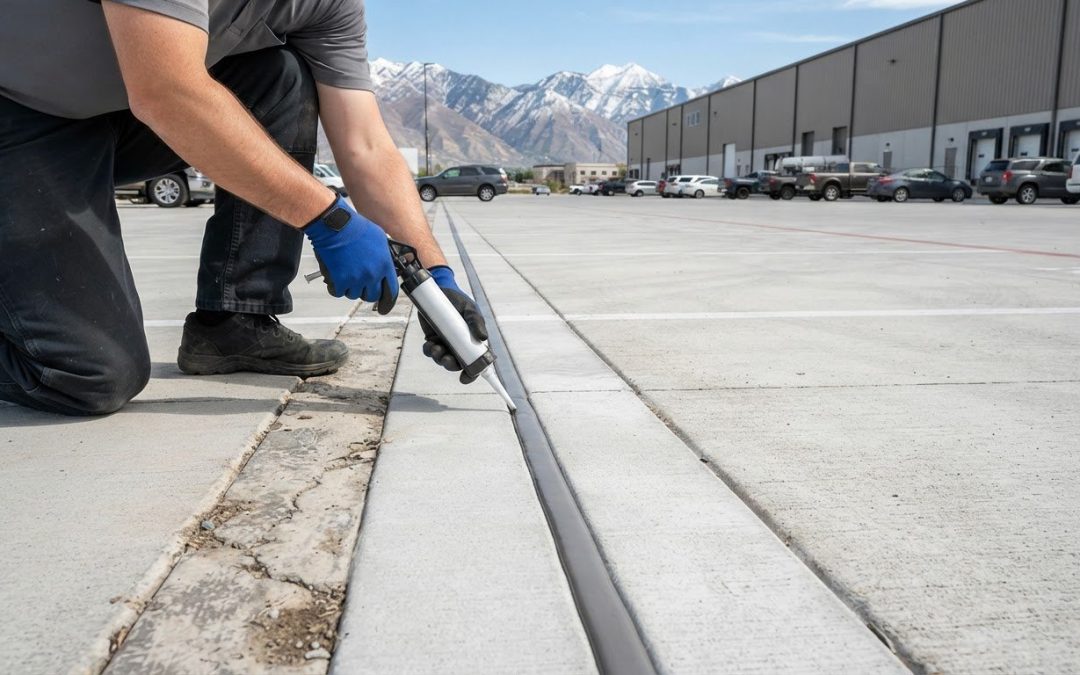
Open joints can turn small seams in a parking lot into pathways for water and debris. A concrete joint sealing service fills and seals gaps between concrete surfaces, helping limit moisture penetration. In parking lots, sealed joints also help protect concrete edges from debris and everyday wear.
It’s easy to focus on the visible slab and overlook the seams that let concrete move as temperatures change. The right sealant, applied properly, helps keep those joints working as intended. This guide explains what joint sealants do, how joint sealing differs from crack repair, and why careful preparation matters.
You’ll also learn what to look for in sealed parking-lot joints and how regular inspections can reveal wear early. The goal is to understand the work, the factors that shape the approach, and when to plan professional joint sealing for a commercial lot.
Key Takeaways
- Learn how to distinguish planned concrete joints from cracks, and why each may need a different repair approach.
- See how temperature changes, traffic, and exposure influence joint movement and sealant selection.
- Understand why inspection and thorough surface preparation are essential for sealant adhesion.
- Spot signs of joint-sealant wear so maintenance can be planned before damage spreads.
- Explore how commercial concrete coating services can support the condition and use of your facility’s surfaces.
What is the difference between joint sealing and crack repair?
Joint sealing protects an intentional seam; crack repair addresses an unintended break in the slab. Identifying the condition helps determine the appropriate repair and preserve pavement integrity.
Assessing Pavement Cracks and Other Issues
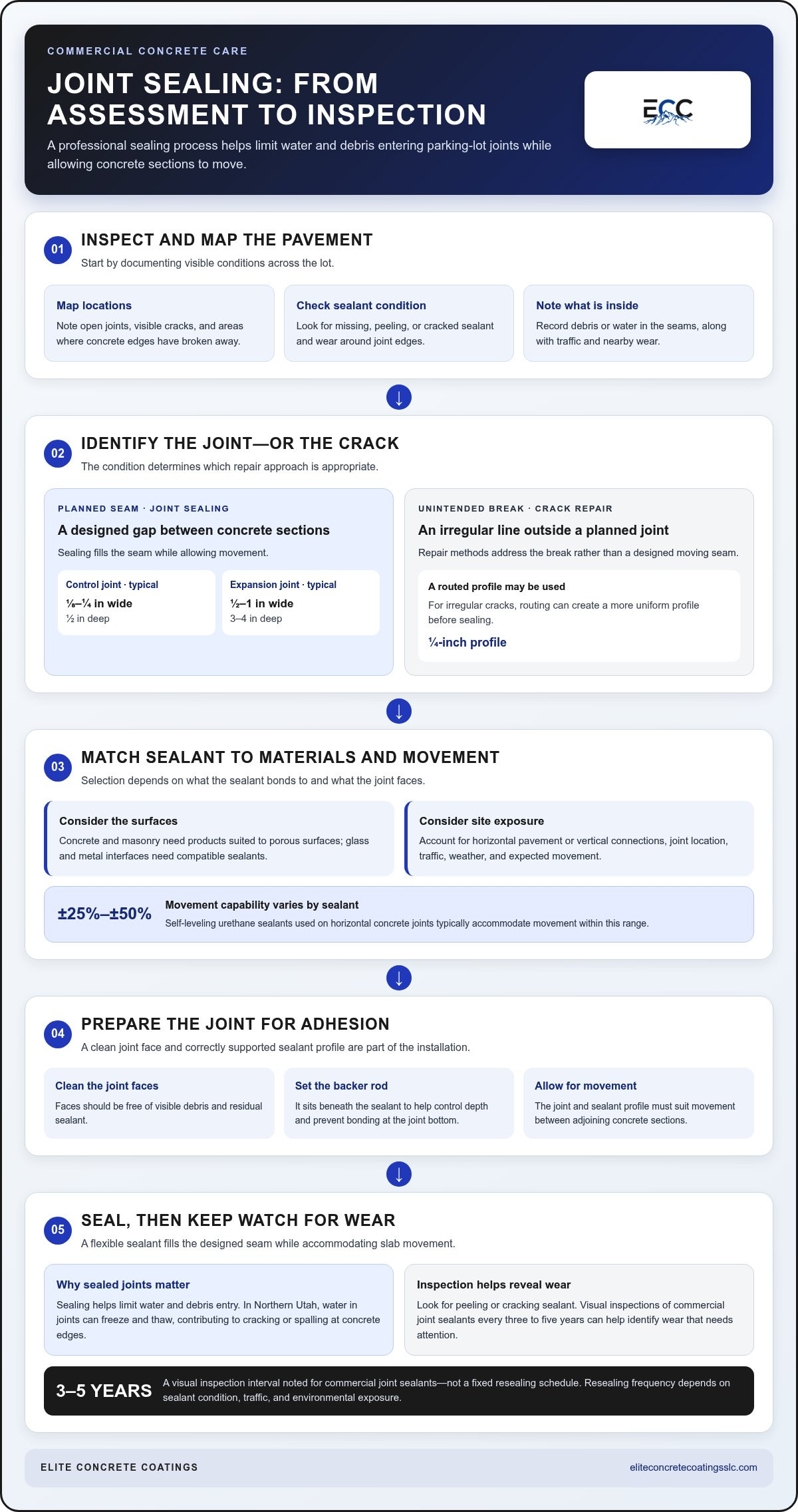
A pavement evaluation starts with mapping visible cracks, open joints, and areas where concrete edges have broken away. Note each location, whether the line follows a planned seam, and whether sealant is missing, peeling, or cracked. Look for debris or water inside joints and wear around their edges. These observations help distinguish routine maintenance from damage that needs a different repair.
Expansion Joints Versus Concrete Cracks
An expansion joint is a planned gap that gives separate concrete sections room to move. Control joints guide where shrinkage-related cracking occurs. Typical control joints measure one-eighth to one-quarter inch wide and one-half inch deep; expansion joints typically measure one-half to one inch wide and three to four inches deep. An irregular line outside a planned joint may instead be a concrete crack.
That distinction matters because sealants and repair methods serve different purposes. Joint sealing fills a designed seam while allowing movement. Crack repair addresses an unintended break; routing can create a more uniform profile before sealing. For irregular cracks, a crack saw or angle grinder can widen the opening to a one-quarter-inch profile. The condition and shape of the break guide the repair approach.
Professional work includes assessing the pavement, identifying joint types, and matching preparation and sealant to the condition. This helps avoid treating a moving expansion joint like a stationary crack. For commercial surfaces, an evaluation should also note traffic exposure and nearby wear that may affect the repair.
For licensing, insurance, and warranty considerations, review clear written documentation of applicable credentials, insurance coverage, work scope, and warranty terms. These details clarify responsibilities and coverage before work begins.
Resealing frequency depends on sealant condition, traffic, and environmental exposure. Inspect joints for peeling or cracking; visual inspections of commercial joint sealants every three to five years can help identify wear that needs attention.
When planning joint sealing, consider how the evaluation distinguishes planned joints from cracks and how the proposed work addresses each condition. Discuss joint preparation, sealant selection, and the repair approach for damaged concrete.
Before hiring, ask what the inspection covers, how the crew will identify joint types, and what preparation the work includes. For example, ask how the plan addresses loose debris, failed sealant, and cracks that need routing. If the surrounding surface also needs a finished treatment, commercial polished concrete may be relevant to that separate surface goal.
What are expansion joints, and why is sealing them critical for Northern Utah commercial properties?
Expansion joints create space for concrete sections to move as temperatures change. Sealing them helps limit water and debris entering the seams, where freeze-thaw cycles can contribute to cracking and spalling.
Selecting Sealants for Different Materials
Choose a joint sealant based on the materials it must bond to and the exposure it will face. Concrete and masonry joints need products suited to those porous surfaces, while glass and metal interfaces require compatible sealants. A sealant intended for one substrate may not provide the right adhesion or movement response on another. Consider the joint’s location, finish, and contact surfaces before selecting a product.
For a commercial property, note whether the joint is horizontal pavement or a vertical connection between building materials. These conditions affect how the sealant meets the surface and faces exposure. The selected product should suit the materials on both sides and the project’s environmental conditions.
Sealant Durability and Movement Tolerance
Water entering an unsealed joint can contribute to freeze-thaw damage. As water freezes and thaws, concrete edges may crack or spall. A flexible sealant accommodates movement instead of forming a rigid bridge across separate slabs. Selection should account for expected structural and thermal movement, along with traffic and weather exposure.
Movement capability varies by sealant. Self-leveling urethane sealants used on horizontal concrete joints typically accommodate movement of ±25% to ±50%. Match that capacity to the joint’s expected movement and the surface conditions. The right fit helps the sealant maintain adhesion as the slabs shift.
Accommodating Seasonal Slab Movement
Concrete expands and contracts as temperatures change, so a sealed joint must remain flexible through seasonal shifts. A rigid filler can resist that movement, lose adhesion, or break. For a parking surface, choose a flexible joint sealer designed to accommodate slab movement. Consider the joint’s width, exposure, and expected movement between adjoining sections.
Installation matters too: the joint must be wide enough for the required movement, and the sealant must adhere to the separate concrete faces. In Northern Utah, freeze-thaw exposure makes keeping water out of joints especially relevant. Installation conditions should suit the product and the weather at the site.
Installing Backer Rods and Setting Sealant Depth
Backer rod sits inside the joint beneath the sealant. It helps control sealant depth and prevents unwanted bonding at the joint bottom. Before installation, the joint face should be clean and free of visible debris or residual sealant. Size and place the backer rod to support the intended sealant profile.
A 1:2 sealant depth-to-width ratio is identified as the industry standard. Correct backer rod placement helps create that profile, while a bond breaker tape can serve the same purpose where appropriate. Properly installed backer rod can extend sealant life by 2–3 times compared with installations without it.
For best results, assess the material, movement, and weather exposure together. A suitable sealant, correct joint profile, and clean bond surfaces work as a system. If water enters joints and freezes, concrete edges can deteriorate; timely sealing helps protect those edges and the pavement’s integrity.
Joint inspection, cleaning, preparation, and sealing
A durable seal depends on more than the sealant itself. Inspecting the joint, removing contaminants, and preparing dry, sound surfaces support adhesion and help identify repairs before sealing begins.
Assessing Joint Condition
Start with a visual inspection along each joint, looking for peeling sealant, cracks, gaps, and damaged concrete edges. Note whether existing material remains attached to both sides or has separated. Remove loose debris and address deteriorated edges before applying new sealant.
Check nearby surfaces for oil, grease, dirt, and dust. These contaminants can interfere with adhesion, while standing water or damp concrete can contribute to haziness or bond loss. Record areas that may need repair or extra preparation, especially where water could collect and later freeze.
Cleaning, Preparing, and Priming Joints
Remove residual sealant and debris from the joint faces so the new material can bond to clean concrete. Preparation should leave the joint free of visible loose material, including dust and grit. Remove any sand topping or scattered sand from bonding surfaces rather than covering loose particles with sealant.
Next, check that the joint is dry before application. Damp concrete can cause haziness or loss of adhesion. Use primer only when the selected sealant’s instructions call for it, and apply it to the surfaces specified for that product. The joint’s condition and sealant system determine the preparation sequence.
Preparing Surfaces for Sealer Adhesion
Clean the concrete around the joint as well as the joint faces. Oil, grease, dirt, and dust on either surface can compromise adhesion. For example, a parking-lot joint beside a vehicle-stained area needs cleaning beyond the visible seam. Proper preparation provides clean contact surfaces and reduces the risk of early separation.
Before sealing, confirm the joint is dry and free of residual material. Check that the opening can receive sealant evenly and that its edges are sound enough to support adhesion. Sealant should fill the joint and bond to its sides, not bridge over debris or loose sand.
Finish by applying the selected flexible sealant according to its product directions. Properly prepared, sealed joints can accommodate movement while helping limit water entry. This matters where moisture may freeze and contribute to cracking or spalling. Regular visual inspections can reveal peeling or cracking that needs timely attention.
What Is Concrete Joint Sealing, and Why Is It Important?
Concrete joint sealing places a flexible barrier in a seam to help keep moisture and debris out. Its purpose differs from coating an entire slab, so the treatment should match the surface and its use.
Benefits of Sealing Concrete Joints
A sealed joint helps limit water penetration at the seam between concrete sections. This matters in traffic areas, where unsealed joints can collect grit and debris that abrade concrete edges. A flexible sealant also allows the joint to move as slabs expand and contract. Inspect for gaps, peeling, or cracks, which can indicate that the barrier no longer covers the joint effectively.
Debris can wear concrete surfaces over time, while water entering joints can contribute to deterioration through freeze-thaw cycles. A properly sealed seam helps reduce these exposure pathways and support the surrounding slab. Joint caulking works best when it fills the opening and adheres to the joint faces, rather than covering debris or bridging across the top.
Benefits of Sealing Concrete Surfaces
Surface sealer treats the broader concrete area, while joint sealant focuses on seams. That distinction matters: a coated slab still has joints that need movement-tolerant material. Concrete sealer coverage typically ranges from 250 to 300 square feet per gallon, depending on porosity. For application, two thin coats help avoid puddling and uneven, thick areas.
Allowing the surface to dry between coats supports an even finish. The typical wait is two to four hours, subject to the manufacturer’s recommendation. Sealer is typically applied when air temperatures are above 50°F, and temperatures should remain above 50°F for at least 24 hours afterward. Those conditions apply to surface sealer, not automatically to every joint sealant.
Consider a commercial parking area with broad slab surfaces and open seams. Surface sealing addresses exposure across the concrete, while joint sealing targets openings where water and debris can enter. Neither treatment replaces the other. Matching each material to its location helps maintain a durable finish without treating joints as rigid extensions of the slab.
Good maintenance starts with identifying which protection is wearing. Look for a dull or uneven finish across the slab, then inspect seams for gaps, peeling, or loss of adhesion. These different signs point to different areas needing attention. Timely maintenance helps preserve concrete integrity and reduce the chance that small defects develop into broader deterioration.
Choose a treatment based on surface condition, traffic, and exposure. A joint needs flexible material that accommodates movement; a broad concrete surface may benefit from a surface sealer applied in thin coats. Keeping these roles distinct helps protect concrete without assuming one product or application will address every wear point.
Concrete joint sealing for parking lots
Parking-lot joints face vehicle traffic, weather, and debris. A planned sealing program helps limit moisture entering seams and supports pavement integrity. Start by assessing joint condition, then plan work around the lot’s use. A concrete joint sealing service can address open or deteriorated joints while accounting for the needs of each area.
Inspect lanes, turning areas, parking stalls, and loading zones. Look for open seams, missing sealant, and concrete edges beginning to break away. Note where vehicles turn or brake frequently, as those areas face different demands from lightly used stalls. An inspection map helps identify patterns and prioritize sections for maintenance.
Before resealing, remove debris and residual material from the joint faces. Sealant needs to fill the opening and adhere to its sides. Select a flexible product suited to the joint and site exposure, since a rigid fill cannot accommodate slab movement. Preparation and material selection work together to support a lasting repair.
Timing matters for new concrete and reopened parking areas. New concrete should cure for at least 28 days before sealer application, or for the period recommended. After application, drying before exposure to heavy traffic can take as long as three days. Plan work around those requirements so vehicles don’t disturb newly applied material.
Separate inspection schedules from replacement expectations. Property owners are advised to seal concrete joints annually, while sealed expansion joints are engineered to last 5 to 10 years, depending on climate and traffic. These recommendations describe different planning considerations. Inspect the actual joint condition rather than treating every seam as identical.
During routine lot reviews, look for sealant that is peeling, cracked, or pulling away from joint edges. Check for debris in open seams and moisture entering exposed gaps. Record the affected area and type of wear. These notes help target repairs and track whether issues return in the same traffic zones.
A practical maintenance plan connects joint condition to how the lot operates. Prioritize damaged seams in busy routes, schedule work around curing and traffic restrictions, and keep inspection notes for comparison. When planning a concrete joint sealing service, include the lot’s use, joint locations, and visible wear in the project discussion. This context helps define the work needed to protect the pavement.
For commercial parking-area improvements, plan parking surface work with the lot’s joint condition and traffic demands in mind.
Elite Concrete Coatings: Warehouse Coatings
Elite Concrete Coatings can help when a commercial facility needs a durable floor solution beyond joint maintenance. Its Warehouse Coatings address warehouse flooring needs, while Non-Slip Coatings suit spaces where traction is a priority. For facilities with specialized operational requirements, ESD Coatings are another available option.
Choose the next step based on how the space is used. A warehouse floor, a high-traffic parking structure, and an area requiring non-slip performance each call for a different surface solution. For parking facilities, Elite Concrete Coatings also offers Parking Decks & Garages. Share your facility’s needs and the condition of its concrete when discussing the right direction.
Contact Elite Concrete Coatings to discuss your commercial concrete project.
Plan the Next Step for Your Concrete
Make joint condition part of your commercial property’s maintenance planning. A clear record of where sealant is wearing, which areas see the most traffic, and what surface work is needed can help you plan repairs around how the facility operates.
For broader commercial concrete needs, Elite Concrete Coatings offers Warehouse Coatings, Non-Slip Coatings, and Parking Decks & Garages. If a concrete joint sealing service is the next step for your property, share the site’s use and the areas needing attention so the conversation can focus on practical priorities.
Contact Elite Concrete Coatings to discuss your commercial concrete project. A thoughtful maintenance plan starts with the condition of your surfaces and the work that matters most to your facility.
Frequently Asked Questions
What are joint sealants used for?
Joint sealants close gaps between concrete sections or adjoining building materials while allowing movement. In a commercial lot, they help keep water and loose debris from entering pavement seams. Sealants may also be used where concrete meets masonry, glass, or metal. A horizontal parking-lot joint and a vertical building connection face different conditions, so choose a sealant suited to the surfaces and exposure.
Can you seal joints in an existing building that is already showing water infiltration?
Yes, joints in an existing building can be sealed after identifying the source of water entry. Moisture near a seam may come through that joint, but it can also travel from another opening. An assessment should examine the joint, adjacent materials, and signs of deterioration. In a commercial property in Salt Lake City, identifying the entry point helps determine whether sealing the joint addresses the problem.
How do I repair my expansion joints or mastic?
Repair generally involves removing failed mastic, examining the joint, and preparing the opening for replacement sealant. The approach depends on whether the joint edges remain sound and whether old material is still bonded. A professional assessment can determine the appropriate preparation and flexible sealant for the conditions. For a busy facility, plan how work areas will stay clear until the material is ready for use.
What does expansion joint sealing cost?
Cost depends on the project scope, including joint dimensions, total length, access, existing material, preparation needs, and selected sealant. These factors can vary substantially between a clear, accessible seam and one requiring extensive removal or edge repair. A project-specific quote establishes the cost. For commercial properties in northern Utah, provide joint locations and visible condition when requesting an estimate.
What is a backer rod and why does it matter?
A backer rod is a compressible insert placed beneath sealant inside a joint. It helps shape the sealant and limits bonding at the bottom, allowing the sealant to work between the joint’s sides. For example, a rod that sits unevenly may create inconsistent sealant depth along the seam. Correct placement supports a uniform joint profile and helps the sealant accommodate movement.
What is concrete joint sealing and what joints should be sealed?
Concrete joint sealing fills selected seams with flexible material to protect them from moisture and debris. Expansion joints and control joints are common candidates, but the decision depends on each joint’s purpose and condition. A planned seam differs from an accidental crack, so inspection helps determine the appropriate treatment. At a commercial site in Ogden or Provo, note which joints show missing or damaged sealant.
What materials are used for concrete joint sealing?
Flexible sealants are used for concrete joints, with the material chosen according to the substrates and exposure. Urethane sealants are used on horizontal concrete joints, while silicone sealants are used on glass and metal curtain-wall systems. Installations may also use a backer rod or bond breaker tape beneath the sealant. These supporting materials help shape the sealant and prevent unwanted bonding at the joint bottom.
How much does professional concrete joint sealing cost per linear foot?
There is no single per-foot rate that applies to every project. The quote depends on joint dimensions, total length, access, removal of existing material, surface condition, and selected sealant. For example, an accessible joint with sound edges has a different scope from one requiring substantial preparation. A project-specific estimate for a northern Utah property provides a clearer basis for planning than a general rate.