
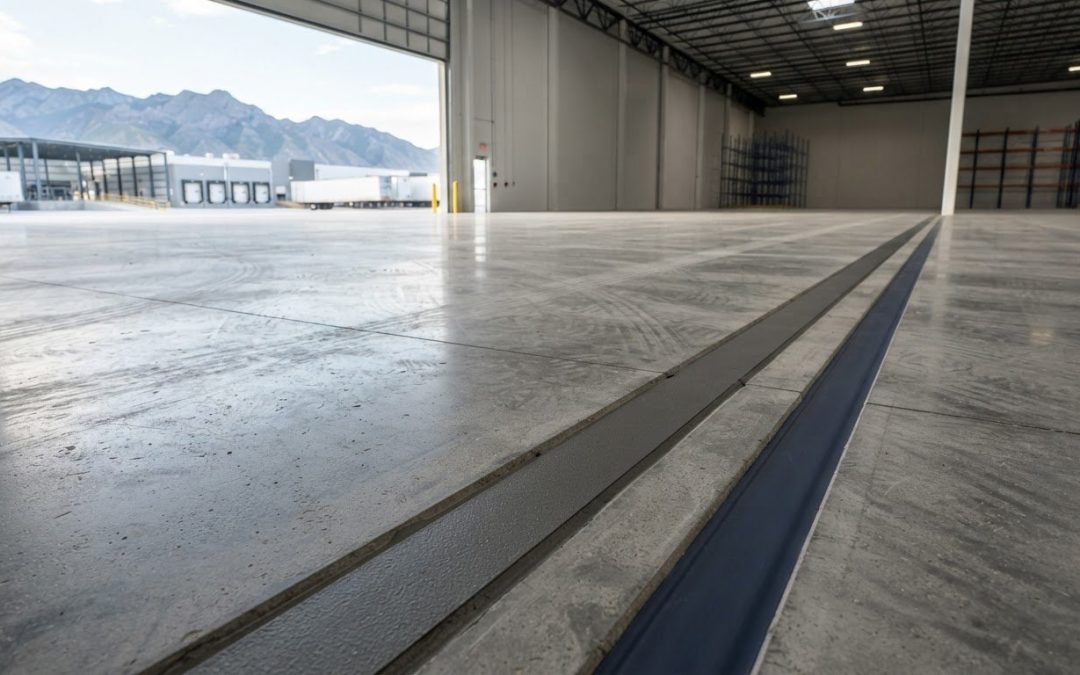
The right joint filler depends on how the slab is used and whether the joint moves. For commercial concrete joint repair in Salt Lake City, a working warehouse floor exposed to steel-wheel traffic needs a filler that supports the concrete edges, while a joint designed to accommodate movement calls for a flexible sealant. Choosing by joint function, not appearance alone, helps match the repair to the floor’s demands.
It’s easy to assume every open joint needs the same fix. But rigid filler and flexible sealant serve different purposes, and choosing the wrong one may leave the underlying issue unresolved. This guide explains how to distinguish working joints from moving joints, prepare a repair area for bonding, and recognize when a slab may need more than a surface fill.
You’ll also learn what to consider for commercial floors in warehouses and industrial facilities, how to monitor repaired joints, and how professional joint-sealing work can fit into a broader floor-care plan.
Key Takeaways
- Choose a joint filler based on the floor’s traffic and the support its concrete edges need.
- Distinguish control joints from joints that accommodate movement before selecting a repair approach.
- When slab movement is driving the damage, filling the surface alone may not address the underlying issue.
- Proper joint sealing helps limit moisture seepage beneath the slab; plan to inspect filled joints once a year.
- For warehouse and industrial floors, consider how joint repairs work alongside the facility’s broader floor-coating needs.
Concrete floor joint fillers and repair products
Start with the joint’s purpose, then match the repair material to the floor’s traffic. On commercial floors used by steel-wheel equipment, joint filler should support the concrete edges. A forklift route through a Salt Lake City warehouse, for example, puts different demands on a joint than a pedestrian-only corridor.
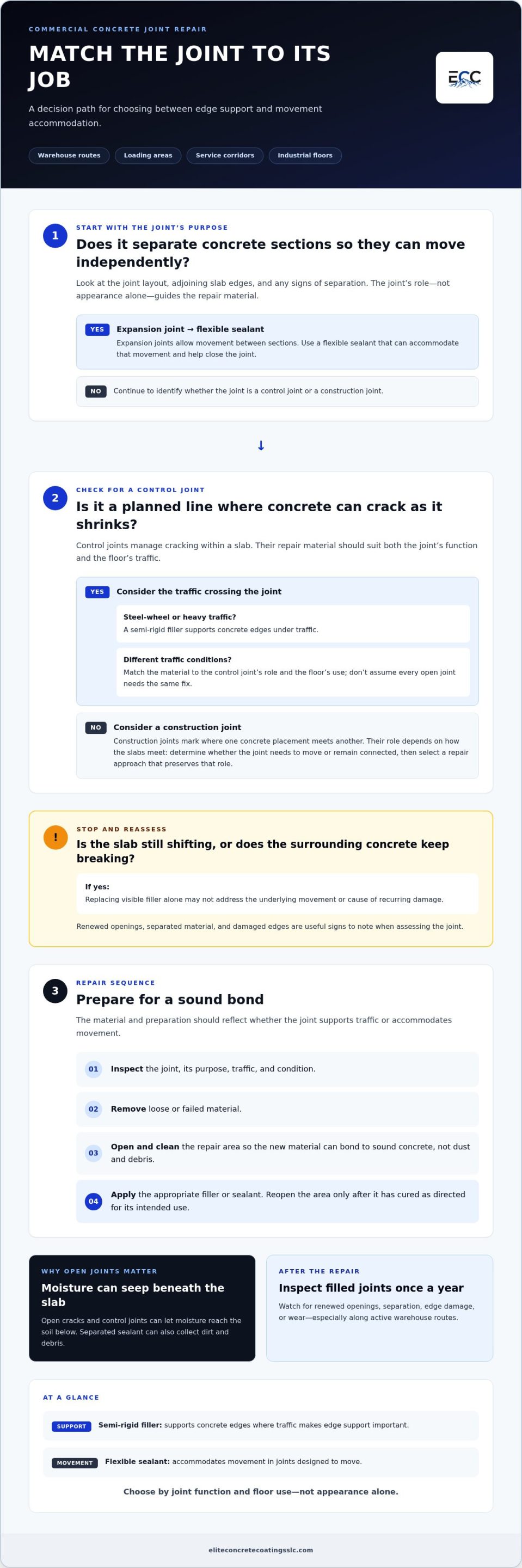
Filler and sealant are not interchangeable. Semi-rigid filler supports joint edges under traffic, while flexible sealant accommodates movement and helps close a joint. The joint’s purpose matters: restricting intended movement can cause a repair to fail, while soft material in a heavily trafficked joint may not provide enough edge support.
When comparing commercial concrete joint repair in Salt Lake City, focus on the assessment and scope. Does the plan identify the joint’s function, traffic, edge damage, and proposed material? A clear scope should explain how the joint will be prepared and filled, and why the approach suits the floor’s use.
How much does commercial concrete joint repair cost per linear foot in Salt Lake City? The cost depends on the repair scope and conditions at the property. Request a free quote from Elite Concrete Coatings for an estimate based on the project.
What affects concrete joint repair pricing and project estimates? Key factors include joint length, width and depth, the condition of the concrete edges, removal of failed material, surface preparation, and the filler or sealant selected. A long run of sound joints requires a different scope from a short section with crumbling edges that need more preparation.
A commercial joint-repair project typically follows a practical sequence: inspect the joint, remove loose or failed material, open and clean the repair area, then apply the appropriate filler or sealant. Cleaning helps the new material bond to sound concrete rather than dust and debris. The method should reflect whether the joint needs to support traffic or accommodate movement.
How long does commercial concrete joint repair take, and when can the area reopen? Timing depends on the joints’ length and condition, preparation requirements, and the selected material’s curing time. Reopen the area only after the repair has cured as directed for its intended use.
Delaying repairs to a damaged joint can allow concrete edges to deteriorate further under repeated traffic. Open cracks and control joints can also let moisture seep into the soil beneath the slab. Monitor repaired areas for renewed openings or wear, especially along active warehouse routes.
For facilities in Salt Lake City, commercial concrete services can be considered alongside joint-sealing needs. A repair plan should account for the floor’s use, the joint’s condition, and the material selected, so the work addresses the specific demands of each area.
Control joints and flexible joint filler
Joint type determines whether a repair should support an edge or allow movement. At facilities in Salt Lake City, identify each joint’s purpose before choosing a flexible filler or sealant.
Commercial Joint Types
Control joints create planned lines where concrete can crack as it shrinks. Expansion joints separate concrete sections and allow them to move independently. Construction joints mark where one concrete placement meets another. Commercial floors, loading areas, and paved access routes may have all three. Review the joint’s layout, adjacent slab edges, and any signs of separation to understand what needs attention.
What types of concrete joints need repair in commercial buildings and pavement? Control, expansion, and construction joints may need attention when their edges break down, filler separates, or gaps expose the joint. A loading-area control joint with chipped edges calls for a different assessment than an expansion joint between separate slab sections.
Movement is the key distinction. A control joint manages cracking within a slab, while an expansion joint accommodates movement between sections. A construction joint connects separate placements, so its role depends on how the slabs meet. Don’t assume a visible gap needs the same rigid fill as every other joint. In a warehouse aisle, traffic may make edge support the priority; between adjoining slabs, movement may matter more.
Joint Repair Methods
Repair begins by identifying the joint and removing loose or failed material. The joint is then prepared so the replacement material can bond to sound concrete. For an expansion joint, select a flexible sealant that can accommodate movement. For a control joint, the material should suit the joint’s function and floor traffic. Construction-joint repairs likewise depend on whether the joint must move or remain connected.
How do contractors repair concrete expansion joints, control joints, and construction joints? They assess the joint’s purpose and condition, remove deteriorated material, clean the repair area, and install a suitable filler or sealant. The repair should preserve intended movement instead of bridging the gap with unsuitable rigid material.
Moisture can enter through open joints and reach the soil beneath a slab. In a Salt Lake City service corridor, separated sealant may also collect dirt and debris. Note where the opening appears, whether the joint edges are damaged, and whether the gap changes across adjoining sections. These observations can help distinguish a failed seal from a movement problem that needs a different approach.
After a repair, inspect the joint for separation, damaged edges, or renewed openings. Flexible sealant should suit the movement the joint was designed to handle. If a section continues shifting or the surrounding concrete keeps breaking, replacing visible filler alone may not address the cause. Before choosing the material, match the repair to the joint’s role and the floor’s traffic.
The directory lists 1271 contractors in Salt Lake City, Utah; 332 in St George, Utah; 361 in Ogden, Utah; 285 in West Jordan, Utah; 276 in Sandy, Utah; and 228 in West Valley City, Utah. For project-specific advice, confirm that a contractor handles the relevant joint repair.
When filling is not appropriate for a moving slab
Filler can close a joint, but it can’t correct movement beneath a concrete slab. In a Salt Lake City warehouse, a gap that repeatedly opens beside a loading area may indicate shifting slab sections, not simply worn filler. Identify what is moving before treating the surface.
What are common causes and signs of failed concrete joints? Repeated traffic, movement between slab sections, and deteriorated joint material can all contribute. Look for separated filler, widening gaps, chipped edges, uneven adjoining surfaces, or a joint that reopens after repair.
These signs help distinguish a material problem from a slab problem. For example, filler that has pulled away while the surrounding concrete remains level may need replacing. A raised or sunken edge at the same joint suggests the slabs may have shifted. Filling the gap alone can temporarily hide the opening without correcting the change in slab position.
Before choosing a repair, compare the joint’s condition along its length. Check whether the opening is consistent, only one section has moved, and the concrete edges remain intact. A joint that changes near a warehouse doorway may face different loading from one in a quiet storage aisle. That pattern offers useful evidence about what the repair needs to address.
- Separated material: A visible gap between filler and concrete can indicate loss of bond or continuing movement.
- Broken edges: Chips beside a forklift route may signal that the joint needs support, not just a surface cover.
- Uneven slabs: A height difference across a joint points to displacement that filler cannot level.
- Recurring openings: A joint that reopens after filling calls for reviewing slab movement and the repair method.
If a slab continues to move, the next step is to diagnose the cause and extent of the movement. An assessment should distinguish joint-material failure from shifting or unstable concrete. The repair plan can then address the underlying condition before specifying replacement filler or sealant. This sequence helps prevent repeated surface repairs while the slab continues to change position.
For example, a stable control joint with worn material may suit a joint-focused repair. A construction joint with a newly uneven edge needs closer evaluation of the adjoining sections. Keep the repair aligned with the joint’s function, and don’t use rigid filler to lock together slabs that need to move.
For commercial concrete joint repair in Salt Lake City, a practical first question is whether the concrete edges remain stable. If they do, repairing the joint material may be appropriate. If the slab shifts, nearby cracks appear, or a height difference develops, address the movement first. Surface filling alone won’t restore a level, stable floor.
Commercial caulking and joint sealing
Commercial caulking and joint sealing close openings where water, debris, and repeated floor use can affect a joint. At a Salt Lake City loading entrance, for example, separated sealant can leave a path for moisture. Sealing concrete cracks and control joints helps prevent moisture from seeping into the soil beneath the slab. The sealant must suit the joint’s movement and the surface’s use.
Preparation is essential. Open and clean concrete cracks and joints before filling, so the material bonds to sound concrete rather than dust and debris. In a warehouse control joint, remove loose residue along the repair line and prepare its edges. Applying sealant over dirt or failed material can weaken the bond.
A practical sealing sequence keeps the work focused on the joint:
- Inspect the crack or joint and note separation, damaged edges, and signs of movement.
- Remove failed filler or sealant, then open and clean the area to expose sound concrete.
- Select a sealant suited to the joint’s function and the floor’s expected use.
- Apply the material as directed, keeping it within the prepared joint.
- Allow the repair to cure according to the material instructions before returning the area to service.
Every step affects the result. In a distribution aisle, material left outside the joint can interfere with the surrounding floor. At an exterior threshold, an unclean edge can compromise the bond where water may collect. Careful preparation and placement help keep the sealant where it is intended to work.
Sealing can address an opening, but it won’t correct a slab that continues to shift. If a joint repeatedly separates or adjoining concrete sits at different heights, identify the movement before repeating the same caulking repair. Sealant should accommodate the joint’s intended movement, not substitute for addressing unstable concrete.
Plan for ongoing maintenance, too. Inspect filled concrete cracks and joints once a year. Check for separation, missing material, renewed openings, or concrete edges that have begun to break down. Warehouse managers can include these checks in routine floor reviews, especially around heavily used aisles and loading areas. Record the location and visible change, then prioritize repairs where openings or damage are progressing.
For commercial properties in northern Utah, regular inspections and properly prepared sealing help keep joint conditions visible and manageable. Match the sealant to the joint, prepare the concrete carefully, and watch for movement that requires more than caulking.
Commercial concrete repair for warehouses and industrial facilities
Warehouse repairs must account for floor traffic, equipment routes, and daily operations. In a Salt Lake Valley distribution center, a damaged joint crossing a forklift aisle affects a different work zone than one beside a seldom-used storage area. Map damaged locations and note nearby racks, doors, and travel paths before setting repair priorities.
What Utah building codes, standards, or permitting rules apply to commercial concrete repairs? Requirements depend on the repair scope and local jurisdiction. Replacing joint material differs from changing structural concrete, so identify the work involved and consult the relevant local building department about applicable codes and permits.
Use the floor’s function to guide the assessment. A steel-wheel route needs attention to joint edges that support repeated traffic. A pedestrian corridor may call for a different repair priority, especially near entrances or workstations. At an industrial facility, note whether repairs affect access to equipment, loading areas, or adjoining work zones. These details help define the scope clearly.
A useful facility review can record:
- Location: Mark each joint or crack by aisle, doorway, loading area, or production zone.
- Visible condition: Note separated material, broken concrete edges, recurring gaps, or uneven adjoining slabs.
- Floor use: Identify forklift paths, steel-wheel traffic, pedestrian routes, and stationary equipment areas.
- Operational needs: Flag access routes and work areas that the repair plan must account for.
These observations help distinguish a localized joint repair from broader floor concerns. For example, a warehouse aisle with sound concrete and failed filler may need joint-focused work. A slab edge that keeps shifting beside a loading bay needs assessment beyond the visible opening. Don’t treat every damaged point in a large facility as the same repair. Group locations by condition and use, then prioritize areas where edge damage intersects active traffic.
Plan the work around the facility’s layout. A marked floor plan can show repair zones, nearby operations, and routes that need continued access. Separate work areas by function, such as loading entrances and storage aisles, so the repair scope reflects real operating demands. In northern Utah industrial spaces, this planning connects floor condition with daily movement through the building.
For a broader commercial floor plan, explore commercial concrete floor services alongside joint-repair needs. A clear scope, specific locations, and a repair method matched to traffic give facility teams a stronger basis for planning the work.
Elite Concrete Coatings: Warehouse Coatings
Elite Concrete Coatings offers Warehouse Coatings for facilities planning floor improvements alongside joint maintenance. Address joint issues first: a coating is not a substitute for repairing slab movement or damaged concrete. Once the floor is ready for a coating project, consider how warehouse traffic and work areas shape the overall plan.
Where traction is a priority, Non-Slip Coatings may suit the facility’s needs. ESD Coatings are another option for commercial environments where that flooring category is relevant. Each serves a different purpose, so choose a coating for the space rather than using it as joint filler.
Explore warehouse concrete coatings as part of your facility planning. Contact Elite Concrete Coatings to discuss your warehouse flooring needs.
Plan the Next Step for Your Facility
Recurring joint problems are a cue to review how the facility’s floors support daily operations. A repair plan can guide future maintenance priorities, from busy warehouse routes to parking areas where surface condition matters. Tying the scope to how each space is used helps facility teams make purposeful decisions instead of treating every floor zone alike.
For commercial concrete joint repair in Utah, Elite Concrete Coatings also supports broader facility flooring needs with Warehouse Coatings, Non-Slip Coatings, and Parking Decks & Garages. These services address different spaces, so consider them when planning improvements beyond the joint itself.
Take the next step with a clear picture of the affected areas and how your facility uses them. Explore your commercial flooring options with Elite Concrete Coatings, and keep your maintenance plan moving forward with confidence.
Frequently Asked Questions
What commercial concrete joint repair services are available in Utah?
Elite Concrete Coatings provides Joint Sealants for commercial flooring needs in Utah. This service can help businesses address open or deteriorated floor joints as part of facility maintenance. The company serves Salt Lake City, Ogden, Provo, Lehi, West Jordan, South Jordan, Spanish Fork, Layton, and Syracuse. For warehouse floors, consider how joint sealing fits into the facility’s broader flooring plans and daily operations.
What repair materials and methods work best for commercial concrete joints?
The right material depends on the joint’s purpose and the floor’s use. For example, a facility can map joints by area and note whether each crosses a forklift route, pedestrian zone, or equipment space. Comparing those conditions helps distinguish joints that need edge support from those that must accommodate movement. A repair plan should match the conditions instead of applying one material uniformly across different areas.