
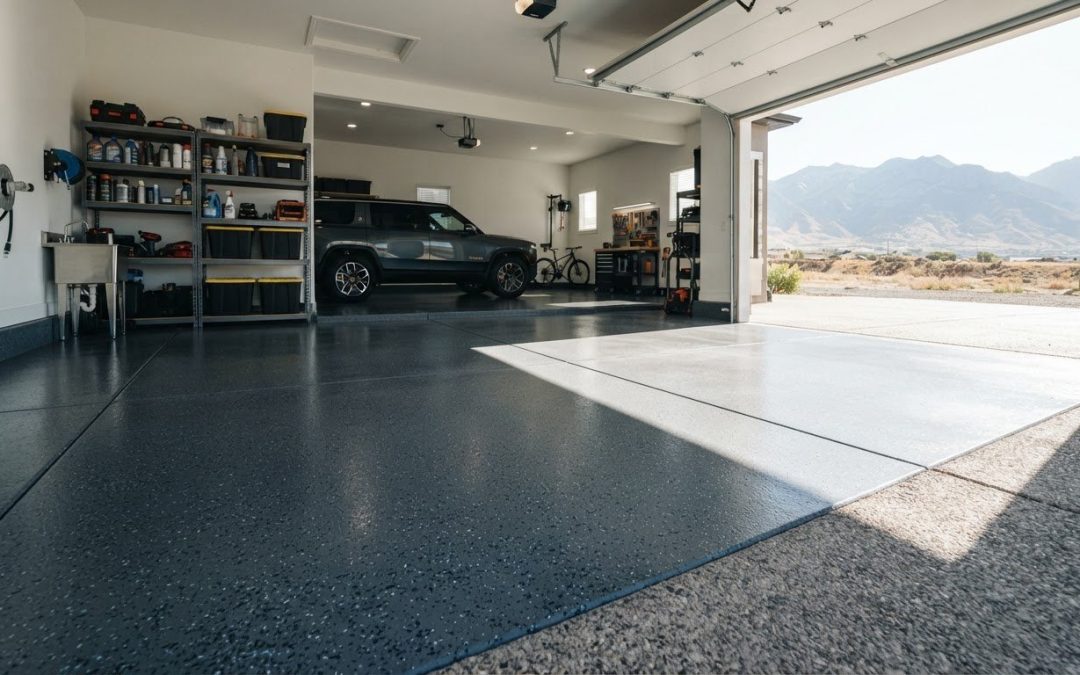
What if a floor labeled UV stable could still change color over time? For Northern Utah homeowners, sunlight streaming through an open garage door can make fading or discoloration a real concern. A uv stable garage floor coating is designed to resist UV-related color change, but “stable” does not mean immune to every change in appearance. The coating type, the complete system, and the amount of sun exposure all matter.
It is reasonable to want a durable finish that keeps its look, especially when broad marketing claims make coatings difficult to compare. Look beyond the label: understand what UV stability means, how epoxy and polyaspartic systems may differ, and how your garage’s light exposure and existing concrete factor into the choice.
This guide explains what can affect fading or discoloration and which details help you evaluate a coating system for your home. Whether you are in Ogden, Salt Lake City, or another Northern Utah community, you will have a clearer basis for choosing a finish suited to your garage.
Key Takeaways
- UV stability means resistance to sunlight-related color change, not a promise that a floor’s appearance will never change.
- Compare the complete coating system, including its chemistry, pigments, and topcoat, rather than relying on a broad “UV stable” claim alone.
- A uv stable garage floor coating can help resist fading or yellowing, but wear, stains, scratches, and other surface changes are separate considerations.
- Consider where direct sunlight reaches your garage and how you use the floor when weighing coating options.
- A professional assessment connects your concrete’s condition and garage needs to a suitable coating system for your Northern Utah home.
What Does UV Stable Garage Floor Coating Mean?
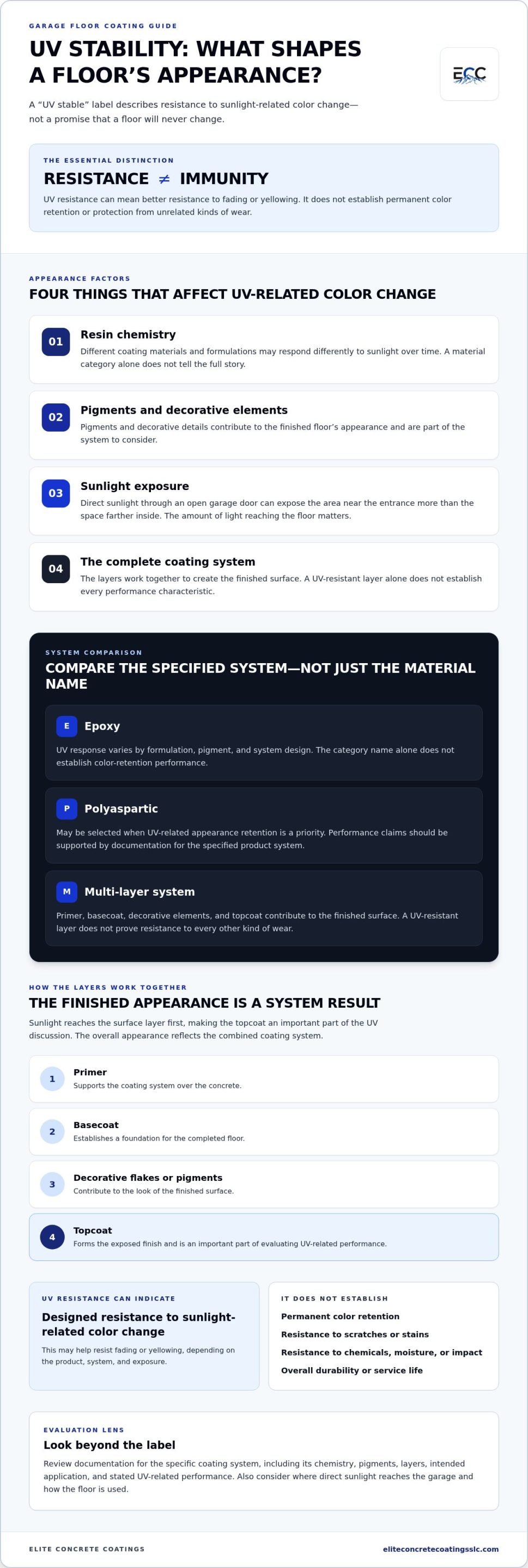
UV stability is a coating’s resistance to color change caused by ultraviolet light, not a guarantee that its appearance will never change. A uv stable garage floor coating is intended to better resist effects such as fading or yellowing when exposed to sunlight. How well it retains its appearance depends on the coating’s resin chemistry, pigments, amount of exposure, and how the complete coating system is designed.
Ultraviolet light and oxygen can contribute to chemical changes in polymers through photo-oxidation. This helps explain why coating formulations matter: different materials may respond differently to light over time. But “UV stable” describes one performance characteristic. It does not automatically indicate how a floor will hold up to abrasion, chemicals, moisture, impact, or other kinds of wear.
Consider those properties separately. A coating may resist UV-related discoloration without being immune to scratches or stains. Likewise, a UV-resistance claim alone does not establish overall durability or service life. The complete system, including its layers and intended use, shapes the finished floor’s performance.
Can sunlight change the appearance of a garage floor?
It can. An open garage door may let direct sunlight reach the floor near the entrance, exposing that area more than the space farther inside. Depending on the coating and exposure, the result could include fading, yellowing, or an uneven appearance. These changes are not inevitable, and their extent can vary with resin chemistry, pigment, and how much sunlight reaches the floor over time.
Color and finish also affect what you notice. A change may be more apparent where a sunlit area meets a shaded one. Other signs of wear can have different causes, so distinguish a color change from scratches, stains, or surface damage when evaluating the floor.
What UV stability does, and does not, promise
Think of UV resistance as a relative performance quality, not permanent color retention. It can indicate that a coating is designed to better resist sunlight-related color change, but it does not promise an unchanged appearance under every exposure condition. Nor does it establish the coating’s lifespan or prove resistance to unrelated damage.
For a meaningful comparison, review documentation for the specific coating system rather than relying on a broad label. Consider stated UV-related performance alongside the system’s intended application, layers, and other relevant properties. Elite Concrete Coatings provides professional garage floor coatings selected with the existing concrete, expected use, and sunlight exposure in mind.
How Coating Chemistry Affects UV Stability on Garage Floors
Coating chemistry is one part of a finish’s performance, but the material name alone does not tell the whole story. Epoxy and polyaspartic systems can differ in how they respond to sunlight, and formulations within each category vary. Pigments, decorative elements, and the selected topcoat also influence the appearance of the completed floor.
That is why a uv stable garage floor coating should be evaluated as a specified system, not just by its resin category. Product documentation can clarify what UV-related performance is stated for the materials being used. Do not assume every product in a category behaves identically.
Epoxy and polyaspartic: what homeowners should understand
Epoxy is a broad coating category, so its response to UV exposure depends on the particular formulation and system. Polyaspartic systems may be chosen when UV-related appearance retention is a priority, but performance claims still depend on the specified product and should be supported by its documentation. For more context on system options, see Elite Concrete Coatings’ garage floor coating options.
| Material or system | General UV considerations | Limitations |
|---|---|---|
| Epoxy | UV response varies by formulation, pigment, and system design. | The category name alone doesn’t establish color-retention performance. |
| Polyaspartic | May be selected for UV-related performance, depending on the specified system. | Claims should be evaluated against product-system documentation. |
| Multi-layer system | Primer, basecoat, decorative elements, and topcoat work together to create the finished surface. | A UV-resistant layer doesn’t establish every other performance characteristic. |
Why the full coating system matters
Each layer has a role. A primer supports the system over the concrete, the basecoat establishes a foundation, decorative flakes or pigments contribute to the look, and the topcoat forms the exposed finish. Since sunlight reaches the surface layer first, the topcoat is an important part of the UV discussion. The overall appearance, however, reflects the combined system, not one ingredient in isolation.
Evaluate UV performance for the specified coating system, not by a material label alone. This keeps the comparison grounded in the exact products and layers planned for the garage. It also prevents a UV-related claim from being mistaken for proof of resistance to scratches, chemicals, moisture, or other forms of wear.
Elite Concrete Coatings’ professional garage floor coating services take the existing concrete, intended use, and light exposure into account when selecting a system for Northern Utah homes.
Does a UV Stable Garage Floor Coating Prevent Fading?
No coating label can promise that a floor will never change in appearance. A uv stable garage floor coating is designed to resist UV-related discoloration, but the degree of resistance depends on the specified coating system and the light it encounters. Treat UV stability as a useful performance quality, not a guarantee of permanent color retention.
Separate possible color changes from other kinds of surface changes. Fading or yellowing may be associated with UV exposure, while scratches, stains, abrasion, impact marks, or surface damage have different potential causes. A floor can show wear without having a UV-related problem, and a color difference alone does not establish that the coating has failed.
- Potential benefit: A UV-resistant system may help limit sunlight-related color change in exposed areas.
- Important limit: Resistance to discoloration doesn’t mean immunity to wear, staining, or every change in appearance.
Which garage conditions can affect UV exposure?
Consider where daylight reaches the floor. Direct sunlight through windows or an open garage door may expose some areas more than others. Door position, garage orientation, and how long light falls on a particular spot all affect the exposure pattern. For a Northern Utah home, assess the actual light entering your garage rather than assuming every floor faces the same conditions.
Exposure can vary across the floor. The area near the entrance may receive direct light while spaces under shelving or parked vehicles remain shaded. That contrast can make any difference in appearance easier to notice.
How to recognize a possible UV-related appearance change
An uneven color or a visible difference between an exposed section and a previously covered area may be worth examining. It does not identify the cause by itself. The coating’s chemistry, pigments, use, and other surface conditions can all affect its appearance, so discoloration alone is not proof of UV damage or coating failure.
If you notice a persistent concern, note where it appears and how it compares with nearby areas. Consider whether the location receives direct light and whether the visible change is color-related or includes scratches, stains, or surface damage. That context helps a professional assess the floor and distinguish a possible UV-related change from other causes.
How to Evaluate UV Stability for Your Northern Utah Garage
Choose a coating by looking at the garage as a whole, not UV claims in isolation. A useful evaluation connects light exposure, floor use, appearance preferences, and the documented performance of the complete system. This gives homeowners in Salt Lake City, Ogden, and nearby communities a clearer basis for comparing options.
Map sunlight and match the coating to garage use
Notice where direct light reaches the floor, especially near the garage door and windows. Consider which areas receive light at different times of day and which remain shaded. The pattern can shift with door position and changing daylight, so consider the exposure more than once.
Then consider how the floor needs to function. Vehicle traffic, storage, and cleaning are separate from UV exposure, but each can shape the system choice and desired finish. For homeowners looking to optimize their space alongside new flooring, seeing how transformation specialists like The Garage RX coordinate storage and functional layouts can help clarify everyday needs. A surface that gets direct sunlight and frequent use may call for different priorities than a lightly used storage area. Think about the color and finish you want alongside the floor’s everyday demands.
Understand product documentation and ongoing care
Compare the technical documentation for the specific coating systems under consideration. Look for information about UV resistance or color stability, and read it in the context of the complete system rather than assuming a material name tells the whole story. Formulations can vary, so a broad label alone is not enough to predict how a particular finish will perform.
Use this sequence to keep the decision focused:
- Map exposure: Note direct-light locations near doors and windows at different times.
- Identify use: Account for vehicle traffic, storage, and cleaning needs.
- Compare documented systems: Review stated UV-related performance along with the intended application and finish.
- Plan care: Follow the system’s maintenance guidance, clean the floor routinely, and remove spills or contaminants promptly using suitable methods.
When comparing epoxy garage flooring with other coating approaches, keep your exposure and use priorities in view. A professional assessment can also account for the condition of the existing concrete alongside the garage’s intended use and light exposure.
Elite Concrete Coatings offers professional garage floor coatings for Northern Utah garages, with system selection informed by the space and its use.
Choosing a Professional UV Stable Garage Floor Coating in Northern Utah
A suitable coating plan starts with the garage itself. Sunlight matters, but so do the existing concrete, how the floor is used, and the finished appearance you want. A professional assessment brings those factors together to match the coating system to the space instead of treating one material as the right choice for every home.
What a project-specific coating plan should account for
Concrete condition provides important context for planning the coating work. The assessment also considers where direct light reaches the floor, how much vehicle traffic it sees, and whether the space is used for storage or other regular activities. Color and finish preferences matter, too. These details help guide system selection while keeping UV performance in perspective alongside everyday use.
Elite Concrete Coatings provides professional garage floor coatings for Northern Utah homeowners. The garage floor coating service considers your concrete, exposure, and priorities when planning a project.
A practical next step for homeowners
Before choosing, note the areas that receive direct sunlight, clarify what you need from the floor, and review system-specific information about UV or color stability. Keep appearance retention separate from other performance needs, such as handling regular traffic and cleaning. This gives you a focused starting point for discussing a uv stable garage floor coating for your home.
If you are comparing epoxy options, consider how the complete system fits your garage rather than relying on the material name alone. A professional assessment connects the concrete’s condition and intended use with light exposure and the finish you have in mind. No single coating type is universally best.
Elite Concrete Coatings’ garage floor coating service is available for Northern Utah projects, with the coating plan based on the concrete, intended use, and exposure.
Choose a Finish That Fits Your Garage
UV stability is resistance to sunlight-related color change, not a promise that a floor will look unchanged forever. The coating’s chemistry, pigments, complete system, and light exposure all influence the finish. Compare system-specific performance information, and consider how your garage’s concrete, traffic, and desired appearance shape the right choice.
A uv stable garage floor coating can be part of a durable, attractive garage, but UV resistance is only one factor to weigh. Elite Concrete Coatings is a family-owned Utah concrete coating company serving Northern Utah communities with professional epoxy garage flooring and polyaspartic systems. A project-specific assessment connects your floor’s condition and everyday use with its light exposure and coating-system options.
Ready to explore a coating for your home? Explore professional garage floor coatings for your Northern Utah home.
Frequently Asked Questions
What does UV stable mean for a garage floor coating?
UV stable means a coating is designed to resist color change caused by ultraviolet light. It does not mean the finish can never change or that it resists every type of wear. A uv stable garage floor coating should be evaluated as part of its complete system, including the resin, pigments, and layers used. Review system-specific documentation to understand what UV-related performance is described for the products planned for your garage.
Will a UV stable garage floor coating ever fade or yellow?
It may, because UV stability does not promise permanent color retention under every condition. Fading or yellowing can depend on the coating formulation, pigments, system design, and amount of sunlight exposure. The coating may still experience scratches, stains, or other wear unrelated to UV light. Consider the specific coating system and your garage’s exposure rather than assuming a UV-resistant label means the appearance will never change.
Is epoxy or polyaspartic more resistant to UV-related color change?
Polyaspartic systems may be selected for UV-related performance, while epoxy’s response varies by formulation and complete system. Neither category name alone predicts the result for every product. A system may also combine different coating layers, each with its own role. Compare documentation for the specific products and layers being considered, especially any stated UV or color-stability performance, rather than treating epoxy or polyaspartic as a universal guarantee.
Can sunlight through an open garage door discolor a coated floor?
Yes, direct sunlight through an open garage door can expose nearby floor areas and may contribute to color change over time. Windows can also let sunlight reach sections of the floor. The amount of exposure can vary with the garage layout, door position, and how long light reaches a spot. Discoloration is not inevitable, though. The coating chemistry, pigments, and complete system all influence how the finish responds.
How can I tell whether my garage floor coating has changed because of UV exposure?
An uneven color or a difference between an exposed section and an area that was covered may indicate an appearance change, but it does not prove UV exposure caused it. Other factors can affect a floor’s look, and scratches or stains have different possible causes. Note where the change appears and whether that spot receives direct light. A professional assessment can help evaluate the surface and possible causes.
Does a UV-resistant topcoat make the entire garage floor coating system UV stable?
A UV-resistant topcoat is relevant because it forms the exposed surface, but that claim alone does not establish the performance of every layer or the complete system. Primer, basecoat, pigments, decorative elements, and topcoat work together to create the finished floor. Look for documentation that describes UV or color-stability performance for the specified system. Keep UV resistance separate from claims about overall durability, lifespan, or resistance to other forms of wear.
How should Northern Utah homeowners compare UV-related coating claims?
Start by noting where direct sunlight reaches the garage, then consider traffic, storage, cleaning, and the finish you want. Compare system-specific documentation for UV or color-stability claims rather than relying on a broad material label. This approach can help homeowners in Salt Lake City, Ogden, Provo, Lehi, West Jordan, South Jordan, Spanish Fork, Layton, and Syracuse assess coating options against their garage’s exposure and everyday needs.