

The epoxy flake colors that look perfect on a small sample can feel different across an entire garage floor. A blend that seems light and balanced in one setting may look darker or more pronounced beside your walls, cabinets, and lighting.
That’s why it helps to compare color in context, not just by the sample name. In this guide, you’ll compare neutral, high-contrast, and warm earth-tone palettes, and see how natural light, overhead fixtures, existing finishes, and everyday garage use can affect the overall look. You’ll also learn how to evaluate a blend across the full room instead of relying on a close-up view.
As you plan a professionally coated garage floor, consider how you want the space to feel and how you use it. We’ll cover practical ways to assess color and the details to discuss when planning epoxy garage flooring. Homeowners in Northern Utah communities, including Salt Lake City, Ogden, and Layton, can use these steps to choose a palette that feels cohesive with the rest of the garage.
Key Takeaways
- Decorative flakes and the background color work together to shape the floor’s overall appearance.
- Compare grayscale, warm, and more expressive palettes with your garage’s existing finishes.
- View epoxy flake colors under your usual lighting, since daylight, fixtures, and viewing distance can affect how a blend looks.
- Start with how you use the garage, then choose a palette that suits the space and the look you want.
- Bring inspiration, room photos, and notes about how you use the garage to guide color planning with a flooring professional.
What Epoxy Flake Colors Add to a Garage Floor
Decorative flakes add color and pattern to a coated concrete floor, giving it more visual depth than a single, uniform shade. Their appearance depends on how they work with the coating’s background color. The balance between those elements shapes whether the floor looks subtle, coordinated, or more defined.
Flakes are one part of a broader coating system. For background on the material itself, see this overview of epoxy resins. When planning a garage floor, treat the visual palette separately from the coating system and concrete preparation. Those technical choices also contribute to the finished floor, while color helps determine how the space looks and feels.
How flake color and background work together
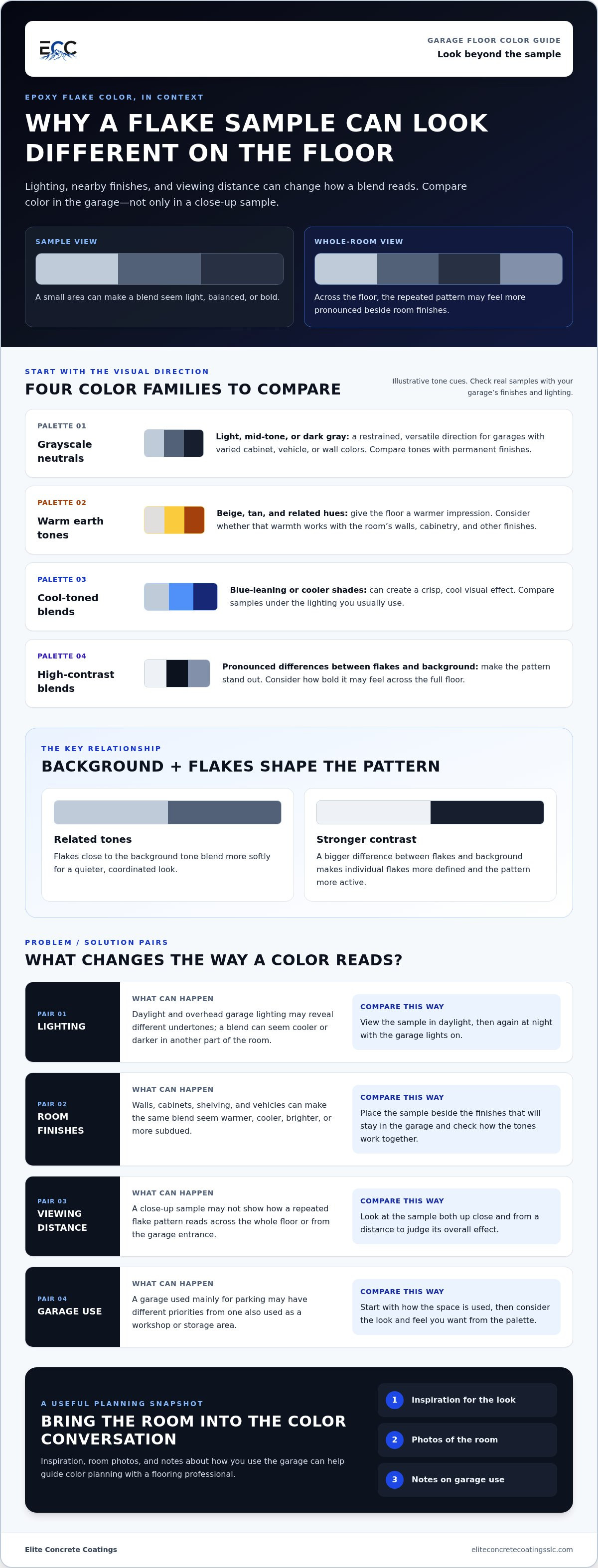
Think of the background as the visual foundation and the flakes as details that add variation. A strong contrast between them makes individual flakes stand out and creates a more active pattern. Flakes in tones close to the background blend more softly, producing a quieter, coordinated look.
Neither approach is right for every garage. Consider how the floor will look alongside wall colors, cabinets, shelving, and vehicles. A small sample is useful for comparing tones, but it may not show how the repeated pattern will read across the whole floor. To judge the overall effect, look at the sample from a distance as well as up close.
Why color is only one part of the finished floor
Light can change the way a shade appears. Daylight through a window and overhead garage lighting may reveal different undertones. The floor can also look different from the garage entrance than it does from a closer viewing angle. Nearby finishes matter, too: a wall or cabinet color can make the same blend seem warmer, cooler, brighter, or more subdued.
For a more useful comparison, view samples in the garage under the lighting you typically use, alongside finishes that will remain in the space. Think about how the garage functions as well. A space used mainly for parking may have different priorities from one that also serves as a workshop or storage area. Its intended use can guide the overall finish plan without making color the only consideration.
Takeaway: Epoxy flake colors influence the floor’s pattern, contrast, and coordination with the room. The full appearance also depends on the background, lighting, surrounding finishes, and viewing distance.
Popular Epoxy Flake Color Families to Compare
Comparing broad color families is easier than trying to picture every possible combination. Start with the effect you want, then consider how each palette relates to the finishes already in your garage. These examples can help you describe a visual direction and narrow your preferences.
| Palette family | Visual character | May suit | Consider |
|---|---|---|---|
| Grayscale neutrals | Light, mid-tone, or dark gray creates a restrained, versatile look. | Garages with varied cabinet, vehicle, or wall colors. | Compare the gray tones with permanent finishes so the floor feels coordinated. |
| Warm earth tones | Beige, tan, and related hues give the floor a warmer impression. | Spaces with complementary warm-toned walls, cabinetry, or other finishes. | Check whether the warmth suits the room’s overall palette. |
| Cool-toned blends | Blue-leaning or cooler shades can create a crisp, cool visual effect. | Garages where existing finishes already have cooler undertones. | View samples under the garage’s usual lighting before settling on a direction. |
| High-contrast blends | Pronounced differences between flake and background make the pattern stand out. | Those who want the floor to become a noticeable design feature. | Consider how bold the pattern may feel across the full floor. |
Neutral and grayscale epoxy flake colors
Grayscale blends are a flexible starting point for garages with a mix of finishes. Light gray can give the floor a brighter impression, mid-tone gray often feels balanced, and dark gray creates a deeper, more dramatic look. These are general visual tendencies, not fixed outcomes: lighting and nearby colors affect how each shade reads. Compare samples beside cabinets, vehicles, and wall finishes to see how the tones work together.
Warm, cool, and high-contrast color blends
Warm earth tones can complement other warm finishes, while cool-toned colors, such as blue-leaning hues, may suit spaces with cooler undertones. Strong contrast makes individual flakes more noticeable; related shades tend to create a quieter, coordinated pattern. If the garage also functions as a workplace, plan clear walkways as part of the layout. OSHA safety standards address workplace walking-working surfaces, but color choices alone don’t establish a safe route.
Use these comparisons to narrow your preferences, then consider how the palette will look across the room. Elite Concrete Coatings provides professional garage floor coatings, with color considered alongside the broader finish plan.
How Lighting and Garage Finishes Change Flake Color
A color sample is a starting point, not a complete picture. Daylight, overhead fixtures, and your viewing angle can all affect how flakes and background tones appear. A blend that looks balanced near a window may seem cooler or darker farther inside the garage. From the entrance, the pattern may also look different than it does up close.
Check the palette in your Northern Utah garage
Compare samples in the space where the coating will be installed and under the lighting you normally use. Look at them in daylight, then again at night with the garage lights on. This helps you notice changes between the two conditions and decide whether the palette suits the room during the hours you use it most.
The same approach applies whether your home is in Salt Lake City, Ogden, or Provo. View each sample from several places: near the entrance, beside the walls, and from farther back. A close-up can reveal individual flake colors, but a distant view gives you a better sense of the overall pattern and balance. Compare deliberately instead of relying on one quick glance.
Coordinate flakes with the rest of the space
Include the whole garage in your decision. Consider wall finishes, cabinetry, trim, visible storage, parked vehicles, and any adjoining area visible from the garage. A palette with undertones similar to the cabinets may help the floor blend into the room. A contrasting choice can make the floor a stronger focal point. Neither effect is inherently better; the right choice depends on the look you want.
Surrounding finishes matter because they influence whether a floor color feels coordinated, contrasting, warm, or cool in the actual room. Keep these finishes in view while comparing samples, including details that may seem secondary, such as trim or storage bins. They contribute to the overall impression.
Color planning is one part of a finished coating project. Concrete condition and preparation are separate technical considerations, and the International Concrete Repair Institute provides resources related to concrete repair and restoration. Consider the visual palette and the floor’s installation needs as distinct parts of the plan.
Match Epoxy Flake Colors to Your Garage’s Look and Use
Start with the garage’s main role. A space used mostly for parking may call for a different visual balance from one that also serves as a workshop, storage area, or place for household projects. Think about how you want the room to feel when you enter, then use that goal to guide your palette choices.
Choose a visual direction for your garage
Epoxy flake colors can support a few broad design directions. A restrained palette keeps attention on the overall space. A coordinated look picks up tones already present in cabinets, walls, or trim. A high-contrast pattern makes the floor more prominent. To choose a direction, decide whether you want the floor to blend with existing finishes or stand apart from them.
For example, if the garage already has colorful storage or prominent wall finishes, a quieter floor may help the room feel balanced. If the finishes are simple, a more pronounced pattern can become a defining feature. Neither approach is universally best. The right choice depends on your taste and how the floor fits into the room as a whole.
- Parking-focused: Consider whether you want the floor to complement the vehicles and visible finishes.
- Storage-focused: Think about how the palette will look beside shelving, cabinets, and stored items.
- Multipurpose: Aim for a visual balance that works with the different activities and finishes sharing the space.
Keep appearance separate from coating performance
Color is a design decision, not a measure of how a coating performs. A particular flake blend alone doesn’t determine slip resistance, durability, or maintenance needs. Those functional considerations depend on the coating system and the garage’s requirements, so discuss them separately from the visual palette when planning the project.
Decorative color shapes the floor’s appearance; functional requirements guide coating-system and finish decisions. Keeping those choices distinct helps you plan for both the look you want and how you expect to use the space.
If you’re weighing color as part of a complete floor plan, explore the guide to professional garage floor coatings for broader context. Bring your preferred visual direction and intended garage use into the planning conversation.
Plan Your Epoxy Flake Color Selection with a Flooring Professional
A little preparation can make a color-planning conversation more productive. Instead of focusing only on sample names, bring examples of the look you want and details about your garage. That context helps connect the palette to the room and the overall coating plan.
Prepare a useful color shortlist
Start with a few reference images that show the direction you like, whether it’s restrained, coordinated, warm, or more expressive. Note the finishes likely to remain in the garage, including wall color, cabinets, trim, and visible storage. Include whether daylight enters through windows and what lighting you typically use after dark.
Photos can capture how those details work together. Take pictures from the entrance and other parts of the garage, including the finishes you want the floor to complement or contrast with. You don’t need to settle on a specific blend in advance. Use inspiration to describe the effect you want, then compare samples in the context of the space.
Turn color inspiration into a finished-floor plan
Next, write down how you use the garage. Note whether it’s mainly for parking, storage, or several activities. This grounds the conversation in the room’s everyday role, while your photos and references clarify the appearance you want. Together, those details help align the color direction with the broader garage-floor coating plan.
Mention conditions that may affect the floor’s appearance, such as direct sunlight entering through windows. Color selection and the coating system are related planning topics, but they aren’t interchangeable: decorative flakes shape the floor’s appearance, while the coating plan addresses functional requirements. Elite Concrete Coatings can help you consider the visual direction as part of professional epoxy garage flooring, without treating a color choice as a performance specification.
As you narrow down epoxy flake colors, focus on how you want the completed room to feel, how the fixed finishes work together, and how you use the garage. A considered palette helps the floor feel like part of a cohesive space rather than an isolated design choice.
Ready to plan your garage floor? Explore our garage floor coatings and take the next step toward a polished space.
Choose a Garage Floor Palette That Feels Right
The right epoxy flake colors are the ones that work across the whole garage, not just on a small sample. Compare neutral, warm, and higher-contrast looks alongside your walls, cabinets, vehicles, and lighting. Then consider how you use the space so the color supports the finished appearance you want.
Color is only one part of the plan. A professional conversation can connect your preferred look with the garage’s use and the coating system. Elite Concrete Coatings is a family-owned Utah company providing professional epoxy garage flooring and concrete coating services in Northern Utah communities.
Ready to plan a more cohesive garage floor? Explore professional garage floor coatings and take the next step toward a polished space you’ll be glad to come home to.
Frequently Asked Questions
What are epoxy flake colors?
Epoxy flake colors are decorative color elements incorporated into a coated concrete floor to create a blended appearance. The finished look comes from the flakes working with the background color, not from one shade alone. Lighting, viewing distance, and nearby finishes can also influence how the palette appears. Compare samples in the garage beside its permanent features to judge the overall effect before choosing a visual direction.
Which epoxy flake color is best for a garage?
There isn’t one best color for every garage. Neutral tones can coordinate with a range of existing finishes, while warmer or higher-contrast palettes create a more distinctive visual character. Start by considering the walls, storage, lighting, and how you use the space. Then compare samples in the garage, where you can assess whether the palette feels cohesive rather than choosing based on a color name alone.
Do epoxy flake colors look different in different lighting?
Yes, lighting can change how a color appears. Daylight, overhead fixtures, viewing angle, and distance from the floor may affect the impression of a palette. A sample viewed closely may look different from the same pattern across the garage. Compare samples in the space during the day and under the lights you typically use at night. This gives you a clearer sense of how the floor may look in everyday conditions.
Are darker epoxy flake colors better at hiding dirt?
Not necessarily. Color alone can’t guarantee that dirt, marks, or wear will be less visible. The appearance depends on the particular blend, the lighting, and what’s on the floor. Rather than choosing a palette based on a general promise about concealment, focus on the look you prefer and how you use the garage. Discuss intended use when planning the coating so appearance and functional needs are considered separately.
Can epoxy flake colors match my garage cabinets and walls?
Yes, color planning can take cabinets, walls, trim, and visible storage into account. You might choose related tones for a coordinated appearance or use contrast to make the floor stand out. Bring photos or compare samples beside these finishes in the garage. Looking at the full room helps you assess how the palette works with permanent features and decide whether you want the floor to blend in or become a focal point.
Do epoxy flake colors affect floor performance?
Decorative color and floor performance are separate considerations. Flakes contribute to the finished appearance, while the coating system and its application relate to functional requirements. A color choice alone doesn’t establish slip resistance, durability, or maintenance needs. Consider how you use the garage alongside the visual palette when planning professional concrete coating. Discuss functional priorities separately so the design choice isn’t mistaken for a performance specification.
How do I choose epoxy flake colors for a small garage?
Start with the garage’s lighting and fixed finishes, then decide whether you want the floor to blend with the room or add contrast. Compare samples inside the garage and view them from several distances, including from the entrance and beside the walls. A small sample may not convey the effect of a complete floor. Assessing the palette as part of the whole room can help you choose a look that feels balanced.
Can a professional help me choose epoxy flake colors in Northern Utah?
Yes. A professional flooring discussion can connect your color inspiration with the garage’s existing finishes and intended use. Elite Concrete Coatings is a family-owned Utah company providing professional epoxy garage flooring and concrete coating services in Northern Utah communities, including Salt Lake City, Ogden, Provo, Lehi, West Jordan, South Jordan, Spanish Fork, Layton, and Syracuse. Bring reference images and notes about your lighting, finishes, and how you use the space.