

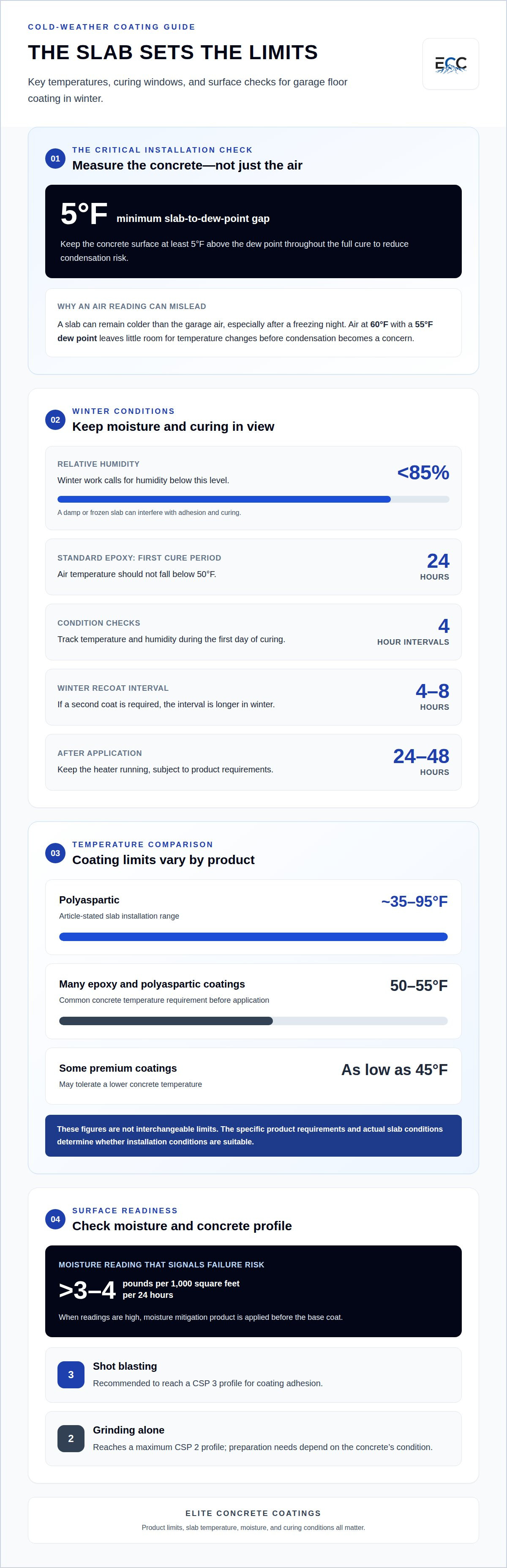
Cold-weather coating success depends on the concrete, not just the air temperature. For a garage floor coating for cold climates, the slab surface should stay at least 5°F above the dew point throughout the cure, and winter work should keep relative humidity below 85%. A warm afternoon alone doesn’t mean the floor is ready.
It’s easy to assume any coating will perform well once applied, but cold can slow curing, while condensation, snowmelt, and de-icing salts create added challenges. Choosing a garage floor coating for cold climates means considering the product’s temperature limits, the concrete’s condition, and the winter exposure the floor faces.
Learn how cold affects application, how epoxy compares with polyaspartic and polyurea, and what matters for handling winter moisture and salt. These factors help you assess installation conditions and understand why careful product selection and surface preparation matter.
Key Takeaways
- Use the slab’s temperature and the risk of condensation to judge whether winter application conditions are suitable, rather than relying on a mild afternoon alone.
- Compare epoxy, polyaspartic, and polyurea by their temperature requirements and curing behavior; the best fit depends on the specific product and garage conditions.
- Consider how snowmelt and de-icing salts reach the floor, along with moisture in the concrete, when choosing a coating system.
- Explore how professional garage-floor coating work can account for cold-weather conditions, surface preparation, and the demands of everyday use.
What temperature is too cold for a garage floor coating?
Cold weather can slow curing, while damp or frozen concrete can interfere with adhesion and leave the coating vulnerable to failure. The key threshold isn’t air temperature alone: the slab surface must remain at least 5°F above the dew point throughout the cure.
Surface Temperature and Dew Point
The dew point is the temperature at which moisture in the air can condense on a surface. For coating installation, the concrete surface should stay at least 5°F above that point for the entire cure. This matters because a slab can be colder than the surrounding air, especially after a freezing night. For example, air at 60°F with a 55°F dew point leaves little room for temperature changes before condensation becomes a concern.
Cold and Humid Installation Conditions
Cold, humid conditions raise the risk of moisture collecting on concrete and disrupting a coating’s bond. A damp slab may also prevent the coating from curing as intended, while frozen concrete creates an unsuitable base for application. Winter work calls for relative humidity below 85%, along with temperatures that meet the coating’s requirements. A warm garage air reading doesn’t prove the concrete itself is warm or dry enough.
Plan for conditions throughout curing, not just during application. Standard epoxy should not experience air temperatures below 50°F during its first 24 hours of curing. If a second coat is required, the winter interval between applications is 4–8 hours. Temperature and humidity checks every four hours during the first 24 hours help track changing conditions. These details matter when cold nights follow a milder daytime installation.
Seasonal Scheduling and Coating Timing
Season affects whether a garage offers a suitable installation window, but the coating type also matters. Polyaspartic products can be installed on slabs from about 35°F to 95°F, while epoxy has its own minimum temperature and curing requirements. That wider polyaspartic range can offer more scheduling flexibility in winter, but the actual product limits and slab conditions still guide timing.
For a garage floor coating for cold climates, schedule around the concrete’s temperature and the full cure period, not a warm afternoon forecast. Keep the heater running for at least 24–48 hours after application, subject to product requirements. In winter, a stable indoor environment can help maintain suitable conditions; fluctuating temperatures may narrow the installation windows. Choose a season when the garage can sustain the required conditions from preparation through curing.
Is polyaspartic better than epoxy in cold weather?
Polyaspartic may allow a wider cold-weather installation window, but the right choice depends on slab conditions and product requirements. Compare the concrete surface temperature, preparation needs, and seasonal freeze-thaw exposure before selecting a system.
Concrete and Air Temperature Differences
Concrete surface temperature measures the slab itself; air temperature measures the surrounding garage. The distinction matters because a slab can stay colder than the air and remain below a coating’s application threshold even when the garage feels comfortable.
Most epoxy and polyaspartic coatings require concrete temperatures of 50–55°F before application. Standard epoxy generally calls for at least 55°F, while professional epoxy typically has a 50°F minimum. Some premium coatings tolerate concrete temperatures as low as 45°F. Polyaspartic coatings can be installed on slabs from about 35°F to 95°F, offering a broader temperature range. These are not interchangeable limits: the specific coating’s requirements determine whether conditions suit installation.
For example, a sunny garage may have warmer air while the concrete remains chilled from overnight cold. The coating is applied to the slab, not the air, so an air-temperature reading alone can be misleading. The topcoat also has its own application requirements. Basing the system choice on the actual slab temperature helps the layers bond and cure as intended.
Freeze-Thaw Effects on Concrete
Freeze-thaw cycles occur when concrete cools below freezing and later warms, sometimes in the presence of moisture. Repeated temperature changes can stress the slab, so its surface condition and preparation matter before coating.
A coating doesn’t replace sound concrete or correct a weak surface. Before application, preparation should remove contaminants and create a profile suited to the system. Shot blasting is recommended to reach a CSP 3 profile for coating adhesion. Grinding alone reaches a maximum CSP 2, so preparation methods matter when the surface needs a stronger profile. The correct approach depends on the concrete’s existing condition.
Moisture evaluation also informs coating selection. A reading above 3–4 pounds per 1,000 square feet per 24 hours indicates a coating failure risk. When readings are high, moisture mitigation product is applied before the base coat. That assessment matters in cold seasons, when dampness can complicate application and freeze-thaw exposure adds stress to the slab. Careful evaluation helps match preparation and coating to the floor rather than relying on temperature alone.
For a closer look at garage floor coatings and concrete surface preparation, industry resources like vicconcretepolished.com.au highlight how slab temperature, moisture, and surface profile shape the system choice.
Polyurea versus epoxy in cold climates
Polyurea and epoxy respond differently to low temperatures, so the right choice depends on the slab, weather, and product requirements. Manufacturer temperature limits are product-specific; building-code and VOC considerations are separate and depend on the project and its location. A temperature rating alone does not establish compliance with either.
Temperature Limits by Coating Type
Temperature limits define the conditions a coating needs for application and curing, making the product label and technical requirements central to winter planning. Standard epoxy may never fully cure when temperatures fall below about 50°F. Some polyaspartic coatings can cure at 35–40°F, while some polyurea and polyaspartic formulations are rated for installation well below freezing.
These figures don’t apply to every formulation. A garage floor coating’s permitted range depends on the selected product and the measured slab conditions. Unlike epoxy, some polyurea systems can cure at temperatures as low as -20°F. That broad cold-weather capacity can expand scheduling options, but it doesn’t remove the need to meet the product’s application requirements.
Cold-Weather Coating Limitations
Cold weather affects how a coating cures, and epoxy is especially sensitive to temperatures below its specified range. At 50°F, an epoxy layer can take most of a day to cure; colder conditions can extend that process and affect the final result. A cold slab may also sit below the dew point, raising condensation concerns during application.
Some polyaspartic products tolerate lower temperatures than standard epoxy, though limits vary by formulation. Polyurea is more flexible than standard epoxy, and its elongation properties help it accommodate concrete movement. Whether you’re considering a winter installation or a summer project, compare more than coating names: the slab, air, and curing conditions must fall within the product’s range.
Cure Times for Epoxy and Polyurea
Cure time is the period a coating needs to set and reach its required performance, so it affects when a garage can return to use. Epoxy coatings typically take 2–5 days to cure, with colder temperatures slowing the process. Polyurea coatings typically cure in 6–24 hours, or about one day.
At a concrete temperature of 50–55°F, epoxy initial set may take 36–48 hours, with full cure taking 10–14 days. At 45°F, initial set may take 48–72 hours, and full cure may exceed three weeks. These examples show why the actual slab temperature matters when planning access after installation.
Installation Requirements for Coatings
Installation requirements are the product-specific conditions for application, curing, and permitted use. Follow the manufacturer’s temperature range for the coating and each layer, including any topcoat. Temperature alone does not determine building-code or VOC compliance; applicable requirements depend on the project and location.
For a coating selection discussion grounded in the garage floor’s conditions, explore garage floor coatings and how system requirements shape installation timing.
Resistance to snowmelt, moisture, and de-icing salt
Winter brings moisture into a garage on tires, boots, and vehicles carrying road salt. Coating performance depends not only on the surface layer, but also on moisture conditions in the concrete and during application.
Winter Moisture and Dew-Point Control
Dew-point control means preventing airborne moisture from condensing on the concrete during coating work. This matters because even a thin film of condensation can interfere with adhesion when the slab does not look wet.
Snowmelt adds a separate, recurring source of water after installation. Meltwater can carry de-icing salt across the floor, leaving residue as it dries. During winter coating work, humidity management and a stable environment help limit condensation while the coating is applied and curing. A standard 50-pint dehumidifier is recommended for a two-car garage during winter coating work.
Keep the distinction clear: indoor humidity is moisture in the air, while damp concrete may also release moisture vapor. Addressing one does not automatically resolve the other. Concrete can look dry while moisture still moves through it from below, so appearance alone cannot reveal every moisture condition.
Moisture Resistance and Freeze-Thaw Protection
Moisture resistance describes how a finished surface handles water exposure; freeze-thaw protection depends on the concrete and coating system together. This distinction matters when wet tires and salt residue affect the coating while temperature changes affect the slab.
In winter, water brought in by a vehicle can pool under the tires, then freeze as garage conditions change. De-icing salts may remain in the moisture and leave deposits as water evaporates. A sound coating system provides a practical surface for routine cleaning, but selection and preparation must account for the concrete beneath it. No coating eliminates the need to manage recurring snowmelt and salt.
Moisture vapor transmission is associated with up to 80% of concrete coating adhesion failures. That makes the slab’s moisture condition relevant to long-term bond, not merely the floor’s appearance on installation day. Salt residue and water on the finished floor are different concerns from vapor moving through the concrete.
Moisture Testing and Mitigation
Moisture testing evaluates conditions within the concrete and can reveal risks a surface inspection misses. After rain, cleaning, or snowmelt, it helps distinguish visible dampness from moisture vapor moving through the slab.
Let the cleaned floor dry completely before coating. Grinding removes surface contaminants and prepares the concrete for the coating system, but it does not replace moisture evaluation. When readings are high, a moisture mitigation product is applied before the base coat. This sequence addresses the slab before finishing layers are installed.
Rain tracked into a garage can wet the surface without revealing the slab’s internal moisture behavior. Testing provides that additional assessment, while mitigation responds to elevated readings. For a winter-ready result, consider snowmelt, salt exposure, surface preparation, and moisture conditions as connected but distinct factors.
Coating selection for cold climates
Choosing a coating for a cold climate means balancing application conditions, winter exposure, and the floor’s intended use. No single finish suits every garage: concrete condition, moisture movement, vehicle traffic, and the coating system all shape the decision.
Start with the installation window. If the garage cannot maintain a product’s required conditions through curing, a coating rated for a broader temperature range may better fit the schedule. That does not automatically make it the better long-term choice; preparation and substrate condition still matter. The temperature comparisons above show why the system’s stated limits should guide timing.
Next, match the material to expected wear. Snowmelt and de-icing salts bring repeated moisture exposure, while vehicles add abrasion and concentrated traffic. Polyurea’s flexibility can accommodate concrete movement. Correctly installed polyaspartic coatings can last for decades. These properties help inform selection, but durability also depends on the concrete, installation quality, and conditions after application.
Epoxy remains an option when its installation requirements fit the garage. Some coating systems use 100% solids epoxy, with selection depending on the floor and weather conditions. That figure describes the material category, not a promise of performance. Evaluate the complete system, including its base coat and topcoat, rather than choosing by the word “epoxy” alone.
- Choose for the installation window: Match the coating’s temperature requirements to the slab and the conditions it can sustain during curing.
- Choose for winter exposure: Consider recurring snowmelt, salt residue, and vehicle traffic when weighing the finish.
- Choose for the slab: Account for moisture readings, surface condition, and movement before settling on a system.
- Compare the full system: Review the base coat, topcoat, and warranty terms together.
Warranty deserves careful interpretation. Some polyurea systems carry a lifetime manufacturer warranty on the basecoat and a 15-year manufacturer warranty on the topcoat. Those terms describe warranty coverage, not an automatic lifespan for every garage floor. Confirm which layers and conditions the stated warranty addresses, and distinguish coverage duration from expected service life.
The practical takeaway is to choose based on conditions and system performance, not the coating name alone. For a garage facing cold installation windows and regular winter moisture, consider the coating’s application limits, concrete preparation needs, and documented warranty together. A well-matched system starts with the floor’s actual demands.
Elite Concrete Coatings: Parking Decks & Garages
Elite Concrete Coatings provides Parking Decks & Garages and Epoxy Garage Flooring for property owners planning a durable concrete finish. If you’re weighing winter conditions, moisture exposure, and timing, the team can help you plan a garage floor coating. The slab’s temperature and condition help shape the installation approach.
For garages that regularly take in snowmelt and road salt, consider how the space is used. Non-Slip Coatings may suit areas where traction is a priority. Matching the service to the garage’s conditions keeps the decision practical and focused on everyday use.
Discuss your garage floor coating needs with Elite Concrete Coatings.
Choose a Floor Built for Your Plans
Your garage floor should support the way you use the space, from daily parking to storage and regular cleanup. Before moving ahead, consider which demands matter most: a dependable finish through winter, traction where water collects, or a coating suited to frequent vehicle use. These priorities can guide a focused conversation about the right system and installation timing.
Elite Concrete Coatings offers Parking Decks & Garages, Non-Slip Coatings, and Warehouse Coatings. Each serves a different setting, so start with the space and its day-to-day demands. Discuss how you use your garage and the conditions its floor faces to connect your goals with a practical next step.
If you’re ready to discuss your garage flooring project, contact Elite Concrete Coatings. A clear plan can help you move toward a floor that feels right for your home and the winters ahead.
Frequently Asked Questions
Can you coat a garage floor during winter?
Winter installation can work when the coating’s requirements are met throughout application and curing. A cold snap, damp slab, or shifting garage conditions can narrow the suitable window. In Salt Lake City, Ogden, Provo, Lehi, West Jordan, South Jordan, Spanish Fork, Layton, and Syracuse, planning should account for overnight temperatures as well as daytime conditions. Elite Concrete Coatings assesses the concrete and selects an appropriate application schedule and coating system for the conditions.
How do I know if my slab is too cold?
The slab is too cold when its measured surface temperature falls below the chosen coating’s application requirement. Air temperature alone can mislead because concrete may stay colder after a chilly night. A surface reading, considered alongside the dew point and product temperature limits, gives a more useful assessment. The slab must also be free of frost and condensation before coating work begins.
Does a winter install cost more?
Winter work may involve added preparation or environmental controls, depending on the garage and coating system. The total price also depends on the floor’s condition, moisture evaluation, surface preparation, and selected coating. Elite Concrete Coatings offers a free quote after a project inquiry, so the scope can reflect the actual garage rather than an assumed standard job. No single winter surcharge applies to every floor.
What is shot blasting, and why does it matter for harsh-climate garage floors?
Shot blasting is a mechanical preparation method that propels abrasive material against concrete to create a profile for coating adhesion. This texture helps the coating grip the prepared slab. On floors exposed to snowmelt and tracked-in salt, preparation matters because the coating needs a suitable concrete surface beneath it. Shot blasting also removes surface contaminants, helping installers prepare the floor consistently before applying coating layers.
What makes polyurea so effective in snow-prone areas?
Polyurea can suit cold-weather projects because some formulations are rated for very low installation temperatures, and the material is more flexible than standard epoxy. That flexibility helps accommodate concrete movement. Polyurea coatings typically cure in 6–24 hours, though the specific system and conditions govern access. In snowy areas, the finished floor still faces water and salt brought in by tires, so surface care remains important.
Why does epoxy fail in harsh climates?
Epoxy can fail when application or curing conditions fall outside product requirements, or when moisture interferes with adhesion. Cold can slow curing, while condensation or vapor moving through concrete can compromise the bond. Winter also brings repeated snowmelt and de-icing salt. Failure is not inevitable: surface preparation, moisture evaluation, and suitable temperatures all affect performance. Choose a coating with the slab and garage use in mind.
What garage floor coatings work best in cold climates?
The best system depends on the slab, installation temperatures, moisture conditions, and everyday use. Polyaspartic and polyurea formulations may provide wider cold-weather installation options than standard epoxy, but product limits vary. When choosing a garage floor coating for cold climates, weigh application requirements alongside winter moisture and salt exposure. A professional assessment can match the system to the concrete and garage conditions.
What minimum temperature is required to apply epoxy, polyaspartic, and polyurethane garage floor coatings?
Requirements vary by formulation. Standard epoxy commonly requires a concrete surface around 50–55°F, while some polyaspartic coatings can be installed on slabs from about 35°F. Urethane topcoats may have minimum surface-temperature requirements around 40°F. For a garage floor coating for cold climates, these thresholds help frame the decision, but aren’t universal product specifications. The coating’s requirements and actual slab temperature determine suitability, since garage air can be warmer than the floor.