What if the lowest bid for your facility’s surfacing project actually becomes your most expensive line item over the next three years? It’s a valid concern for Utah business owners who have watched coatings peel due to slab moisture or crack during our intense temperature swings. You need a surface that stands up to heavy forklift traffic and meets strict safety codes, but the complexity of industrial epoxy floor cost often leads to more confusion than clarity. We believe your floor should be an asset, not a recurring headache.
This 2026 professional investment guide helps you master the variables that determine flooring ROI and explains how expert specification protects your facility. You’ll learn why professional diamond grinding is non-negotiable for a permanent bond and how to choose between specialized resins like polyaspartic or ESD coatings. We’ll explore the critical role of moisture testing and show you how the right system ensures a decade of high-performance service with minimal maintenance. Let’s look at how professional planning turns a simple coating into a long-term infrastructure win.
Key Takeaways
- Understand why 100% solids systems are the professional standard for maximizing facility safety and long-term operational efficiency.
- Discover how substrate preparation and professional diamond grinding influence the overall industrial epoxy floor cost while ensuring a bond that lasts a decade.
- Identify the specialized resin systems, such as ESD or chemical-resistant coatings, required to meet your specific industry compliance and safety standards.
- Learn how to evaluate the total lifecycle value of your flooring to avoid the high costs associated with premature coating failure and excessive maintenance.
- Leverage local Utah expertise to protect your investment against regional challenges like moisture vapor transmission and extreme temperature shifts.
The Fundamentals of Industrial Epoxy Flooring Investments
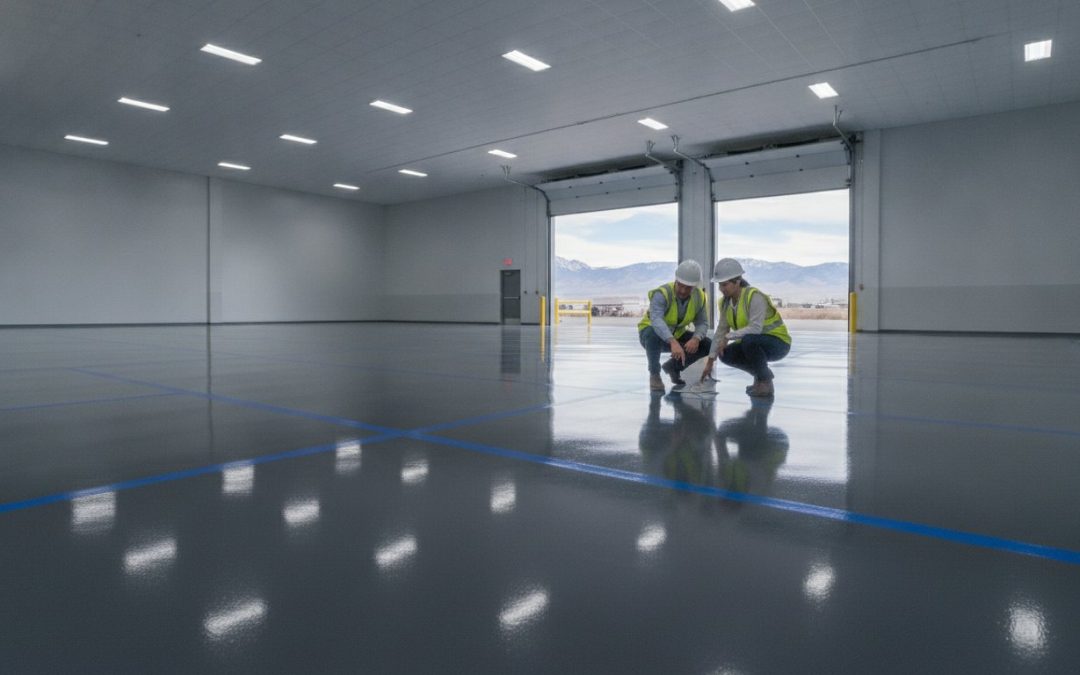
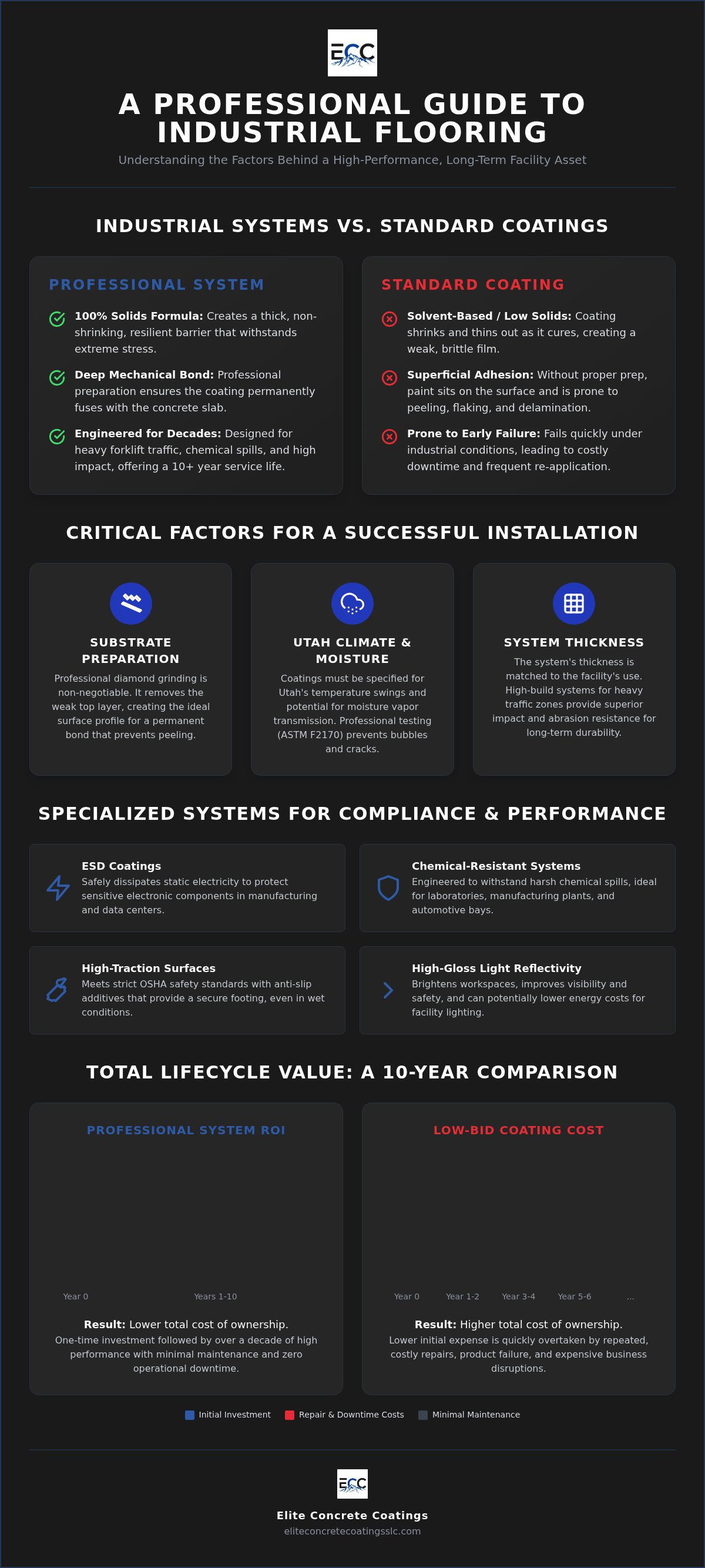
Smart facility managers in Salt Lake City don’t just buy a floor; they invest in a high-performance tool. While a standard floor paint might look decent for a few months, true Epoxy resins used in professional industrial settings are 100% solids systems. This means the coating doesn’t shrink as it cures because it contains no evaporating solvents. What you apply is what stays on the slab, creating a thick, resilient barrier. When calculating your total industrial epoxy floor cost, you must account for this material density. It directly dictates the system’s ability to withstand heavy forklift traffic and harsh chemical spills without peeling.
Beyond pure durability, these systems transform your daily operations. High-gloss finishes can significantly increase light reflectivity, which often reduces energy costs and improves visibility for your team. Safety is another non-negotiable factor for any local business. Modern non-slip coatings help facilities meet OSHA standards, which as of 2026 require a minimum coefficient of friction of 0.5 for industrial surfaces. Viewing this as a 10-year lifecycle investment rather than a one-time expense helps you avoid the massive costs associated with thin-film alternatives that fail within the first year.
Industrial Epoxy vs. Standard Commercial Coatings
Heavy machinery and constant pallet jack movement require a level of impact resistance that standard commercial paints cannot provide. Professional-grade warehouse coatings are engineered with high-build properties. These systems bridge small imperfections and provide a seamless surface that is easy to sanitize. These resins create a powerful mechanical bond with the concrete that outperforms retail products, ensuring the floor doesn’t delaminate under the shear stress of turning tires or heavy loads.
The Impact of Environment on Flooring Choice
Utah’s climate presents unique challenges for resinous flooring. Our dramatic temperature fluctuations between seasons cause concrete slabs to expand and contract. If a coating lacks the necessary flexibility or was applied during improper conditions, it will crack or bubble. Additionally, moisture vapor transmission is a silent killer of many projects in Salt Lake City logistics hubs. We use the ASTM F2170 test to measure internal slab humidity before any application. Ignoring these environmental factors is the fastest way to inflate your long-term industrial epoxy floor cost through premature repairs and downtime. Professional specification ensures the resin chemistry matches the local environment, protecting your capital investment from day one.
Primary Variables Influencing Professional Installation
Successful flooring projects are won or lost before the first gallon of resin ever touches the ground. While many facility managers focus strictly on the topcoat, the “unseen” variables of a project drive the most value. Factors like substrate integrity, existing contamination, and the required system thickness are the true engines behind your industrial epoxy floor cost. In Utah, we frequently encounter slabs that have suffered from years of salt exposure or oil saturation. Addressing these issues through professional intervention is the only way to ensure your floor doesn’t peel or delaminate when the seasons shift.
Substrate condition involves a meticulous assessment of structural cracks and spalling. We don’t just cover these eyesores; we treat them with industrial-grade joint sealants to prevent reflective cracking in the new finish. The thickness of your system also dictates its longevity. A thin-film dust-proofer might work for a light-duty storage area, but heavy-duty resurfacers are essential for zones with high impact or constant chemical exposure. Matching the system thickness to your specific traffic patterns ensures you aren’t paying for over-engineering or setting yourself up for premature wear. Facilities across the broader Intermountain West region, including those seeking warehouse floor sealing Wyoming operations depend on, face similar substrate challenges driven by freeze-thaw cycles and heavy industrial traffic.
The Critical Role of Concrete Preparation
Mechanical profiling is non-negotiable for a permanent bond. We use professional diamond grinding and shot blasting to remove the “laitance” or weak top layer of the concrete. This process exposes the sound aggregate beneath, allowing the epoxy to achieve a deep mechanical “bite” into the slab. The revised AMPP SP21513-2026 standard emphasizes the importance of confirming the correct Concrete Surface Profile (CSP) before application. Without this step, even the most expensive resins will eventually fail. If you are planning a facility upgrade, our warehouse concrete coatings team can help you identify the specific prep needs for your unique slab.
Project Scale and Mobilization
Logistics in active Utah industrial parks require careful coordination to avoid operational bottlenecks. Project scale influences crew efficiency; larger, open spaces allow our teams to maintain a steady rhythm with heavy equipment. Conversely, segmented facilities with tight site access require more mobilization and detailed planning. We prioritize scheduling that minimizes your facility downtime, often working in phases to keep your loading docks and production lines moving. Maintaining compliance with OSHA safety standards is a core part of our mobilization strategy, ensuring a safe environment for both our craftsmen and your employees during the transformation.
Specialized Systems and Performance Enhancements
Selecting the right resin chemistry is where your facility’s specific operational needs meet long-term durability. While the base industrial epoxy floor cost covers the essential protection of your slab, performance enhancements tailor the surface to high-stakes environments. In Salt Lake City, we see a wide range of requirements, from high-tech cleanrooms needing static control to food processing plants that face daily chemical washdowns. Choosing a system that isn’t rated for your specific activity is a recipe for premature failure. We prioritize matching the chemical profile of the coating to your daily workflow to ensure the floor remains a functional asset for years.
One of the biggest shifts in 2026 is the move toward hybrid systems. These often utilize a high-build epoxy base for thickness and a fast-curing polyaspartic topcoat. Polyaspartic resins are particularly valuable in Utah because they can be applied in wider temperature ranges and offer superior UV stability. They also allow for a much faster return-to-service, which is critical for local logistics hubs that cannot afford extended downtime. By aligning with current ASTM standards for industrial flooring, we ensure every specification meets the rigorous mechanical and chemical demands of modern industry.
Advanced Protection for Specialized Facilities
Precision environments like electronics manufacturing or data centers require ESD coatings to prevent catastrophic static discharge. These systems are engineered with conductive elements that safely bleed off static electricity to a grounded point. For facilities dealing with harsh acids or alkalis, specialized resinous commercial flooring provides a seamless, non-porous barrier. These high-performance systems are also designed to handle thermal shock, which is vital for Utah cold storage facilities where floors must transition from freezing temperatures to hot-water washdowns without delaminating. Regional operations that require professional warehouse floor sealing Wyoming cold storage and logistics facilities rely on face the same thermal shock demands due to the region’s extreme winter conditions.
Safety and Aesthetic Customization
Safety is a major driver of industrial epoxy floor cost, particularly when integrating commercial non-slip coatings that meet the 0.5 coefficient of friction required by OSHA. We also specialize in heavy-duty safety markings. These aren’t just painted lines; they are integrated into the coating system to achieve a functional lifespan of at least five years under heavy traffic. Modern 2026 trends also favor sophisticated aesthetics, such as muted metallic tones or matte finishes. These options provide a professional look that enhances light reflectivity without the distracting glare of traditional high-gloss surfaces. For those seeking this level of finish, Drip Epoxy Flooring offers systems that prioritize both visual appeal and industrial-grade durability, creating a more comfortable and productive environment for your team.
Smart financial planning for a facility requires looking far beyond the initial quote. While a lower bid might seem attractive on paper, the true industrial epoxy floor cost includes the price of potential failure. If a low-quality coating peels within two years, you don’t just pay for a new floor; you pay for the diamond grinding required to remove the failed material, the disposal of debris, and the massive operational losses from a second round of downtime. We’ve seen local businesses lose significant production time because they chose a system that couldn’t handle the sheer stress of heavy forklift traffic or Utah’s seasonal moisture shifts.
Investing in a professional system also delivers immediate savings in your maintenance budget. Seamless, non-porous surfaces require less aggressive chemicals and fewer labor hours to keep clean. These floors also act as a protective layer for your most expensive mobile assets. Smooth transitions and level surfaces reduce the vibration and impact on forklift tires and suspension systems, extending the service life of your fleet. When it comes time to sell or lease your facility, a professionally coated floor significantly boosts industrial real estate appraisals by proving the building is move-in ready and well-maintained.
Durability and Expected Service Life
A professional installation is engineered for a 10-year service life, whereas temporary sealants often degrade after just 18 months of heavy use. Choosing heavy duty warehouse flooring ensures that your substrate remains protected from oil saturation and structural spalling. In Utah’s industrial sector, lifecycle value represents the total operational savings generated by a floor that survives ten years of heavy traffic without requiring structural repairs or complete replacement. This longevity turns an upfront expense into a predictable, long-term asset.
Operational Efficiency Gains
High-gloss reflective coatings can brighten a warehouse significantly, often allowing you to reduce the number of active light fixtures or lower the wattage of your bulbs. This improvement in ambient light doesn’t just save on energy; it enhances employee safety by making safety markings and potential hazards more visible. Furthermore, professional systems virtually eliminate concrete dusting, which protects sensitive electronics and inventory from fine particulate damage. A clean, bright, and safe environment is a powerful tool for employee retention and overall morale. If you’re ready to upgrade your facility’s performance, contact our team for a professional facility assessment today.
The Elite Professional Approach in Utah
Elite Concrete Coatings isn’t just another contractor; we’re your neighbors who happen to be specialists in the science of resinous flooring. We understand that managing an industrial facility in the Intermountain West comes with a unique set of pressures. Our approach focuses on meticulous precision from the very first site assessment through to the final inspection. We’ve built our reputation on helping Utah business owners understand how a properly managed industrial epoxy floor cost translates into a reliable, high-performance asset. We don’t believe in shortcuts because we know that a failed floor in a high-stakes environment is a liability you can’t afford.
Our commitment to quality means we treat every square foot with the same level of care, whether we’re coating a small production zone or a massive distribution center. We prioritize clear communication and transparency, ensuring you know exactly what to expect at every stage of the transformation. By focusing on the positive outcomes of a professional partnership, we help you transition from a problematic substrate to a seamless, compliant surface that supports your business growth. Our goal is to provide a floor that looks as good as it performs, year after year.
Local Expertise for Utah Industry
We proudly serve the entire Wasatch Front, including Salt Lake City, Ogden, and Provo. This deep regional focus gives us a significant advantage. We understand the specific chemistry of Utah-sourced concrete slabs and how our local aggregates interact with high-performance resins. Many national contractors treat every slab with a one-size-fits-all mentality, but we know how local environmental conditions and salt exposure affect long-term adhesion. As a family-owned business, we’re personally invested in the success of our local industrial community. Our team applies this specialized knowledge to every warehouse concrete coatings project, ensuring your floor can handle the heavy loads and thermal shifts unique to our high-desert climate.
Next Steps for Your Facility
The journey toward a more durable facility begins with a professional site evaluation. We perform comprehensive substrate testing, including moisture vapor transmission analysis using the ASTM F2170 standard, to determine the exact requirements of your concrete. For large-scale facilities, we specialize in developing phased installation plans. This methodical approach allows you to upgrade your flooring in sections, which effectively minimizes downtime and keeps your production lines moving. Whether you’re consulting on specialized needs for parking decks or high-traffic commercial spaces, we provide the expert guidance needed to make a secure investment. Reach out to our team to schedule your assessment and take the first step toward a transformative flooring solution.
Secure Your Facility’s Future with High-Performance Surfacing
Understanding the variables of industrial epoxy floor cost is about more than just comparing initial quotes; it’s about choosing a system that supports your operational goals for the next decade. We’ve covered why 100% solids resins and professional diamond grinding are non-negotiable for a permanent bond. These specialized systems protect your slab from Utah’s unique moisture challenges while ensuring you remain compliant with the latest OSHA and safety standards. By prioritizing lifecycle value over temporary fixes, you turn your facility’s floor into a durable, light-reflective asset that reduces maintenance labor and protects your mobile equipment.
Elite Concrete Coatings brings family-owned expertise and a neighborly commitment to every project across the Wasatch Front. We specialize in high-performance warehouse coatings and include professional diamond grinding in every installation to guarantee a flawless finish. Our team is ready to help you specify the perfect system for your unique environment. Request a Professional Industrial Flooring Assessment today to see how we can enhance your facility. We look forward to helping you achieve a transformation that stands the test of time.
Frequently Asked Questions
What are the primary factors that determine industrial epoxy installation costs?
The primary factors driving your industrial epoxy floor cost include the intensity of substrate preparation, the chemical composition of the resin, and the total thickness of the applied system. We focus on mechanical profiling through diamond grinding to ensure a permanent bond. Other variables include the size of the facility and the complexity of the environment, such as the need for specialized moisture mitigation or safety markings to meet local compliance standards.
How does the condition of my concrete slab affect the overall budget?
Your slab’s current state is a major budget driver because it dictates the level of diamond grinding and repair work required. Slabs in Salt Lake City often suffer from salt damage or deep oil saturation, which must be fully remediated before any coating is applied. Addressing structural cracks, spalling, or old, failing coatings adds labor and material requirements, but skipping these steps leads to early failure and significantly higher long-term expenses.
Is there a cost difference between standard epoxy and polyaspartic coatings?
There is a notable difference in material performance and investment between these chemistries. Standard 100% solids epoxy is excellent for high-build thickness and impact resistance, while polyaspartic coatings offer superior UV stability and much faster cure times. In Utah’s extreme temperature swings, polyaspartics allow for a wider application window and quicker return-to-service. We often specify a hybrid system to leverage the strengths of both materials for maximum facility durability.
How does the size of a warehouse floor impact the efficiency of the installation?
Facility scale significantly impacts crew efficiency and mobilization. Larger, open warehouse floors in areas like Lehi or Provo allow our team to utilize heavy-duty diamond grinders and shot blasters with fewer interruptions. This economy of scale streamlines the application process compared to smaller, segmented spaces that require more manual edge work and frequent equipment relocation. We develop phased installation plans for large facilities to keep your operations running smoothly during the project.
What are the hidden costs associated with professional industrial flooring?
Hidden variables often include moisture vapor transmission issues and complex site logistics. If a slab tests high for internal humidity, a specialized moisture mitigation system is necessary to prevent the coating from bubbling. Other factors influencing the industrial epoxy floor cost include restricted site access, requirements for after-hours work to avoid downtime, and the need for specialized joint sealants. We identify these variables during our professional site evaluation to ensure your project remains predictable.
How does an industrial floor coating improve long-term facility ROI?
A high-performance coating transforms your floor from a maintenance burden into a long-term asset. By creating a seamless, non-porous surface, you reduce cleaning labor and chemical expenses while protecting expensive forklifts from vibration damage. These systems also improve ambient lighting and employee safety, which are critical for retention and productivity. In the competitive Salt Lake City industrial real estate market, a professionally maintained floor also significantly enhances the overall appraisal value of your property.
Do specialized coatings like ESD or chemical-resistant resins cost more than standard epoxy?
Specialized systems like ESD coatings or high-grade chemical-resistant resins involve more complex formulations and precise application techniques. ESD systems require conductive primers and grounding points to safely manage static discharge in electronics manufacturing. Chemical-resistant resins are engineered with advanced cross-linking to withstand harsh acids or alkalis in food processing. While these systems represent a higher initial investment, they are essential for meeting specific industry compliance and protecting your critical infrastructure from catastrophic damage.
How long does a professional industrial epoxy floor typically last in a high-traffic environment?
When installed with professional diamond grinding and high-quality resins, an industrial floor is engineered to last between 10 and 20 years. Longevity depends heavily on the volume of forklift traffic and your specific maintenance routine. We design our systems to withstand the heavy-duty demands of Utah’s logistics and manufacturing sectors. Regular cleaning and avoiding harsh abrasive damage will ensure your investment remains functional and aesthetically pleasing for at least a decade of high-performance service.