

Busy commercial floors need more than a good-looking finish. They need a surface designed to help manage slip risk during daily use. Non slip floor coatings for businesses add a traction-focused texture, and two-part epoxy is one option for high-traffic environments.
A suitable coating should withstand demanding use while helping floors feel safer underfoot. The right system depends on the concrete’s condition, traffic, and working environment, so surface preparation and coating selection both matter.
Here’s what to consider when choosing a non-slip coating, how two-part epoxy can suit heavy-use settings, and what to expect from professional installation. These practical criteria can help you match the floor’s needs with a durable finish.
Key Takeaways
- Choose a coating for the floor’s setting and condition, including whether the area is indoors or exposed to outdoor conditions.
- Match the coating system and surface texture to the floor material, traffic, and demands of the space.
- Textured epoxy can add slip resistance, while a two-part system is an option for heavy-traffic floors.
- Consider how the floor is used and maintained when selecting a coating for a commercial or industrial facility.
- Elite Concrete Coatings provides Non-Slip Coatings for business floors that need a traction-focused finish.
Indoor and outdoor applications
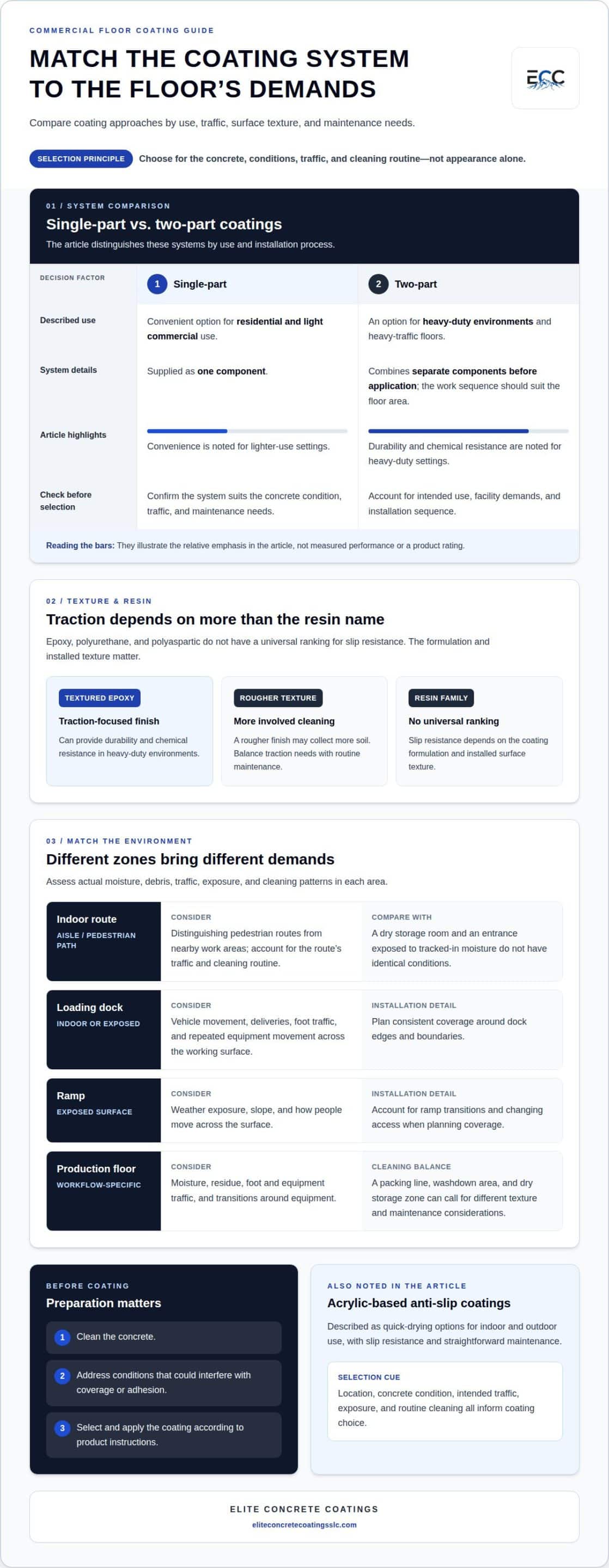
Non-slip coatings can serve indoor and outdoor walking surfaces, but the setting shapes the coating choice and preparation. Inside a warehouse, a treated pedestrian route can help distinguish foot traffic from nearby work areas. Outside, loading docks, ramps, balconies, and walkways face weather exposure as well as regular use. Each surface needs a professional installation suited to its location, condition, and intended traffic.
Loading docks combine vehicle movement, deliveries, and foot traffic, so the coating plan should account for the full working surface. Ramps need attention to their slope and how people move across them. A walkway connecting a building entrance to a loading area has different demands from an indoor aisle. A balcony is another outdoor example, but it must be considered as its own surface rather than assumed to match a ramp.
Surface preparation comes before coating. A professional installation includes cleaning the concrete and addressing conditions that could interfere with coverage or adhesion. Professionals select and apply the coating according to product instructions. Acrylic-based anti-slip coatings are described as quick-drying options for indoor and outdoor use, with slip resistance and straightforward maintenance.
Professional installers account for the coating and layout to help maintain consistent coverage around dock edges, ramp transitions, and walkway boundaries, despite changes in shape or access.
Durability depends on the coating and the conditions around it. Concrete condition, preparation, coverage, exposure, and traffic all affect how a finished surface performs over time. An exposed outdoor ramp faces different conditions from a sheltered indoor route. A loading dock may experience repeated equipment movement, while a pedestrian walkway sees another pattern of use. These differences should guide the coating system and professional installation.
Plan maintenance around the surface’s location and daily use. An indoor aisle, an exposed entrance walkway, and a busy loading dock collect different debris and face different demands. Choose a coating approach that accounts for routine cleaning and operating conditions. Matching preparation and coating type to each zone helps support a durable, slip-resistant finish indoors and outdoors.
Product selection based on floor type and requirements
Choose a coating based on the concrete’s condition, the work performed, and the cleaning routine. For non slip floor coatings for businesses, selection should reflect each area’s traffic and exposure, not appearance alone.
Non-Slip Paint and Coating Options
Non-slip coatings create traction through a textured finish, but products differ in composition and application. Single-part coatings are described as convenient options for residential and light commercial use. Two-part systems offer durability and chemical resistance for heavy-duty environments. Before choosing, consider the concrete, expected foot and equipment traffic, and maintenance needs. In production areas, include the cleaning routine in your decision.
Comparing Coating Types and Textured Coating Drawbacks
Epoxy, polyurethane, and polyaspartic coatings do not have a universal ranking for slip resistance. Traction depends on the system’s formulation and installed texture, not the resin name alone. Textured epoxy can provide durability and chemical resistance in heavy-duty environments. A rougher finish may collect more soil and require more involved cleaning, so balance traction needs with routine maintenance.
Assess food processing and production floors according to their actual workflow. A packing line, washdown area, and dry storage zone can differ in moisture, debris, and traffic. These factors influence the suitable texture and coating type. A finish that suits a dry aisle may be harder to maintain where regular cleaning is part of operations. Consider transitions around equipment and pedestrian routes as well.
Product components also affect selection. A single-part coating is supplied as one component; a two-part system combines separate components before application. This changes the installation process, which should suit the floor area and work sequence. Match the system to its intended use, the concrete’s condition, and facility demands. The label “commercial grade” alone does not establish suitability for every task.
Kit size describes how a product is supplied, not how much floor it will cover. The matte anti-slip coating kit is a two-part product supplied in a 1-gallon kit; the semi-gloss version is supplied in a 2-gallon kit. Coverage depends on the product and application conditions. Choosing non slip floor coatings for businesses means considering those details alongside the floor’s use. Commercial non-slip coatings can be matched to the surface and its demands.
Textured epoxy coatings for slip resistance
Textured epoxy gives concrete floors a traction-focused finish and a durable coating. Performance depends on the surface texture, workplace conditions, and demands placed on the floor.
Slip Resistance in Wet and Dry Conditions
A dry warehouse aisle and a wet processing floor present different traction conditions. Water, residue, or cleaning materials can change how footwear contacts the finish, so consider both regular use and cleaning periods. Textured epoxy creates a surface profile intended to improve footing, but the texture must suit the area’s daily conditions.
For example, an entrance exposed to tracked-in moisture needs a different assessment from a dry storage room. A food production area also needs a balance between traction and regular cleaning. Identify where liquids or residue occur, then match the finish to those conditions. Select a slip-resistant epoxy system for the actual floor environment, not appearance alone.
Slip-Resistant Aggregates and Finishes
Slip-resistant aggregate adds texture to an epoxy finish. Its type and distribution affect how the floor feels and how easily it can be cleaned. More pronounced texture can support traction, but may hold dirt or residue more readily than a smoother surface. Match the finish to both foot traffic and cleaning practices.
Consistent application matters. Even aggregate coverage helps prevent abrupt changes in texture across connected floor areas. Pay particular attention to transitions near drains, equipment, and walkways, where people move between surfaces. The finish should balance grip, cleanability, and the work performed on the concrete.
Slip-Resistance Standards and Regulations
OSHA 29 CFR 1910.22-.3 addresses walking-working surfaces in the workplace. OSHA 1910.21 defines a fall hazard as a walking-working-surface condition exposing an employee to harm from a fall on the same level or to a lower level.
These considerations make floor condition relevant to workplace safety, but they do not establish a specific epoxy texture. Assess the actual walking surface, including wet areas, transitions, and routine traffic. A suitable coating choice addresses those conditions through appropriate preparation, texture, and application.
Textured epoxy is used in demanding environments because two-part anti-slip coatings offer durability and chemical resistance. Chemical exposure varies by facility, however. A warehouse with occasional spills differs from a production area that uses cleaning agents regularly. Consider the coating formulation alongside the chemicals present, rather than treating “chemical resistant” as protection against every substance.
Abrasion and impact demands matter, too. Rolling loads, dropped items, and repeated movement can wear or damage a finish differently from ordinary foot traffic. Select a system suited to the work and plan cleaning around the surface texture. This helps maintain a functional, slip-resistant floor while meeting the space’s practical needs.
Non-slip coatings for commercial, industrial and institutional facilities
Commercial, industrial, and institutional floors face different traffic, moisture, and cleaning demands. A non-slip system should fit the specific floor and the way each space operates.
A professional coating assessment considers the concrete, identifies slippery areas, and matches the approach to the facility’s use. The work should account for surface preparation and the finished texture, not just the coating label.
OSHA’s 29 CFR 1910.22-.3 addresses walking-working surfaces in the workplace. That makes the condition of floors relevant in settings such as warehouses, retail spaces, and institutional corridors. The regulation does not identify one coating for every facility; the surface, traffic, and working conditions still matter.
Commercial spaces often combine public access with staff routes. A retail entrance may collect moisture, while a stockroom aisle sees carts and regular foot traffic. An office corridor has different use patterns from a commercial kitchen or service area. A textured coating can help address slippery conditions, but the finish should also suit cleaning needs and everyday movement.
Industrial floors may face heavier traffic and more demanding exposure. Warehouse aisles, production zones, and airport hangars can see repeated movement from people and equipment. Epoxy-based anti-slip coatings are described as durable, high-gloss finishes with strong adhesion for high-traffic commercial and industrial areas. Select the system with the floor’s condition and activities in mind.
Institutional facilities also need to account for how different groups use the same floor. A school corridor, healthcare support area, or public entrance may have steady pedestrian traffic and frequent cleaning. The coating texture should support traction without making routine maintenance unnecessarily difficult. Plan transitions between coated and uncoated sections carefully, especially near doorways and changes in use.
Residential floors have different demands from most business facilities. A single-part anti-slip coating can suit residential and light commercial use, while high-traffic workplaces may need a more durable system. Expected traffic, floor condition, exposure, and maintenance all affect the appropriate product grade. Do not assume a coating intended for a lightly used area will suit a warehouse route.
A professional coating process starts with the concrete’s condition and the area’s purpose. The team prepares the floor, selects a suitable system, and applies it for a consistent finish. A warehouse, retail entrance, and institutional hallway each need a tailored assessment. Matching the coating to these conditions helps create a practical surface for the work and traffic it must handle.
Two-part epoxy coating for heavy-traffic floors
Two-part epoxy combines separate components to form a concrete floor coating. In high-traffic environments, it can provide durability and chemical resistance. Results depend on more than the resin: surface preparation, application, and planned floor use all affect the finished surface. A warehouse aisle with frequent equipment movement needs a different assessment from a rarely used storage area.
Preparation starts with the concrete. A professional applicator evaluates the existing surface and prepares it so the coating can bond properly. The team then combines the epoxy components according to that system’s instructions and applies the material evenly. A described epoxy application calls for mixed A and B components to stand for 30 minutes before painting. That timing is specific to the application, not a universal rule for every epoxy product.
Application tools depend on the product and job conditions. A two-component epoxy coating may be applied with a roller, brush, or spray using appropriate equipment. A roller suits broad floor areas; a brush can reach edges and detailed sections. Spray application requires suitable equipment. Whichever method is used, maintain consistent coverage across traffic lanes, work zones, and transitions.
Plan access around curing, not just the moment the coating looks dry. At 50°F, the described epoxy system has average drying times of 12 hours to tackiness, 24 hours before walking, and 48 hours before driving. These distinct stages matter in a warehouse: foot traffic and vehicles return at different times. The figures apply at 50°F, so they shouldn’t be treated as universal schedules for every site condition.
Heavy traffic shapes the coating plan after installation, too. Forklift routes, delivery areas, and production zones expose floors to different movement and contact. Chemical resistance depends on the coating system and the substances encountered. A clear account of floor use helps match the system to the demands, while planned access limits disruption during application and curing.
The key takeaway is to treat two-part epoxy as a complete flooring system, not simply a surface layer. The concrete condition, component preparation, application method, exposure, and return-to-use timing all belong in the plan. For a high-use concrete setting, explore warehouse coating options suited to demanding floor environments.
Elite Concrete Coatings: Non-Slip Coatings
Elite Concrete Coatings provides Non-Slip Coatings for commercial floors that need a traction-focused finish. If your facility in Salt Lake City, Ogden, Provo, Lehi, West Jordan, South Jordan, Spanish Fork, Layton, or Syracuse has slippery concrete in a work area, warehouse, or parking structure, professional coating can address the floor’s condition and use.
Choosing a coating involves more than adding texture. The surface, traffic, exposure, and cleaning routine all shape the right approach. Elite Concrete Coatings also handles Warehouse Coatings and Parking Decks & Garages, tailoring the coating plan to the demands of these commercial spaces.
Share the area’s use and floor conditions to start discussing a suitable solution. Contact Elite Concrete Coatings to talk about your non-slip coating project.
Plan the next step for your floor
Focus your next decision on the facility, not just the coating name. Identify the floor area needing attention, how people and equipment use it, and the conditions it faces during regular operations. These details provide a useful starting point for discussing non slip floor coatings for businesses and the right approach for your space.
Elite Concrete Coatings offers Non-Slip Coatings, Warehouse Coatings, and Parking Decks & Garages. Share whether your project involves a work floor, warehouse area, or parking structure, and describe what you want the finished surface to address. Discuss a practical next step for your commercial flooring project.
Take the next step at a pace that works for your business. Start a conversation with Elite Concrete Coatings about your floor and its needs. A well-planned coating project can help you move toward a more functional space with confidence.
Frequently Asked Questions
What types of non-slip floor coatings are available for commercial businesses?
Options include textured epoxy systems, single-part coatings, and acrylic-based anti-slip coatings. Two-part epoxy is used in heavy-duty environments, while selection should reflect the concrete and the facility’s work. An indoor retail route and an outdoor loading area, for example, may need different finishes. Compare intended use, texture, and maintenance needs rather than choosing by product type alone.
Which non-slip coating is best for restaurants, warehouses, retail stores, and healthcare facilities?
No single coating fits every facility; floor use and cleaning routines should guide selection. A restaurant production area, warehouse aisle, and retail entrance face different moisture and traffic patterns. The same assessment applies to healthcare facilities. Businesses in Salt Lake City, Ogden, Provo, Lehi, West Jordan, South Jordan, Spanish Fork, Layton, and Syracuse can base their choice on specific floor conditions.
How is floor slip resistance measured, and what coefficient of friction should businesses target?
Slip resistance can be assessed with friction testing, which produces a coefficient of friction (COF) value. A useful target depends on the testing method and whether the floor is wet or dry, so one number should not be applied to every surface. OSHA’s 29 CFR 1910.22-.3 addresses workplace walking-working surfaces. Evaluate the floor’s actual conditions and use an appropriate assessment method.
How do contractors prepare and install non-slip floor coatings on concrete?
Professional installation typically starts with an assessment of the concrete and the facility’s needs. Contractors select and apply a suitable coating system, following the product’s specifications to achieve a consistent finish across the work area.
How long do commercial anti-slip floor coatings take to cure and how long do they last?
Timing depends on the coating system and conditions. For one described epoxy application at 50°F, average drying times are 12 hours to tackiness, 24 hours before walking, and 48 hours before driving. Separately, properly installed epoxy floors can last 10-20 years depending on the environment. These figures describe epoxy flooring and should not be treated as a schedule or lifespan for every anti-slip coating.
How should businesses clean and maintain non-slip coated floors?
Follow maintenance practices suited to the coating and work area. Textured finishes may hold soil or residue more readily than smoother floors, so cleaning needs can differ between a warehouse route and production space. Epoxy flooring is durable and low-maintenance, cleaned with regular household cleaners, and does not require special products. Align routine cleaning with the floor’s texture and coating system.