

The dust you keep cleaning may point to a weak concrete surface, not a housekeeping problem. Effective concrete floor dusting prevention starts with finding out why the surface is shedding powder instead of simply covering what you can see. Excess water in the mix, improper finishing, or inadequate curing can all contribute to a weak surface layer.
If powder returns after routine cleaning, look beyond the broom. Concrete dust can add to housekeeping demands and affect inventory, equipment, and the people who use the space. In a warehouse or other busy facility, it helps to distinguish a maintenance issue from a condition that needs professional evaluation.
This guide covers common causes of dusting, prevention practices for new concrete work, and signs that an existing floor may need attention. You’ll also learn what to document before discussing possible options, which may include polished concrete or warehouse coatings depending on the slab’s condition and facility needs. For businesses in Salt Lake City, Ogden, Provo, Lehi, West Jordan, South Jordan, Spanish Fork, Layton, and Syracuse, a clear assessment is a practical first step toward choosing an appropriate response.
Key Takeaways
- Concrete floor dusting prevention starts with investigating what may be weakening the surface, not just removing visible powder.
- Dust, surface wear, and cracking are different observations. Document each condition and consider how the floor is used before choosing a response.
- For new slab work, align the owner, concrete team, and flooring professional on intended use, traffic, finish, and maintenance needs.
- Assess an existing floor before selecting a treatment. The right option depends on the slab’s condition and the facility’s requirements.
- Polished concrete or warehouse coatings may suit some facilities after a professional evaluation.
Concrete Floor Dusting Prevention: What the Powder Means
Concrete floor dusting is the release of fine powder as the floor’s surface wears or rubs away. In an Ogden warehouse, it might appear along forklift routes, around work areas, or anywhere routine activity repeatedly contacts the slab. Dusting can also occur in retail spaces and other northern Utah facilities.
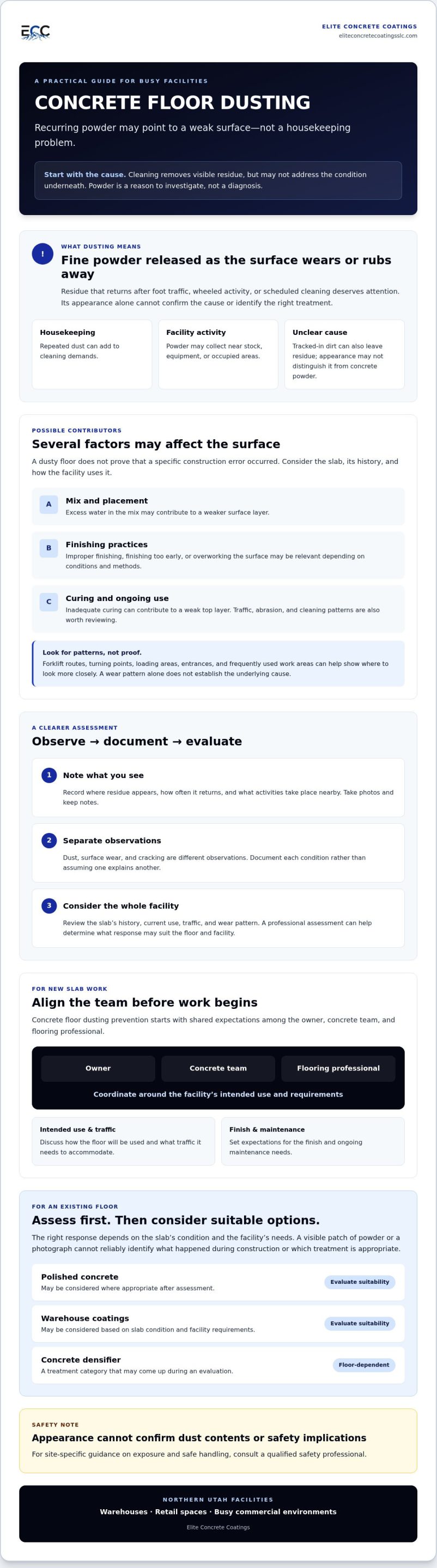
Recurring powder is a reason to investigate, not a diagnosis. Its appearance alone doesn’t reveal the cause or confirm which treatment is appropriate. Effective concrete floor dusting prevention starts with noting where and when the powder returns, then considering the slab alongside the way the facility operates.
How to recognize a dusting concrete floor
Look for fine residue that reappears after foot traffic, wheeled activity, or scheduled cleaning. Dust concentrated along a forklift route or near a frequently used work area is a pattern worth documenting, but it doesn’t prove why the surface is shedding. Tracked-in dirt can also leave residue, and appearance alone may not distinguish it from concrete powder.
Record where residue appears, how often it returns, and what activities take place nearby. Photos and notes can help a flooring professional understand the pattern and assess the slab.
Why recurring concrete dust deserves attention
Repeated dust can increase housekeeping demands and create concerns when powder collects near stock, equipment, or occupied areas. In a warehouse, cleaned areas may become dusty again during normal operations. The pattern can help identify where to look more closely, but it shouldn’t be treated as proof of a particular slab problem.
Concrete dust may contain fine particles, and its contents or safety implications can’t be confirmed just by looking at it. For site-specific guidance on exposure and safe handling, consult a qualified safety professional. Routine cleaning removes residue, but may not address the underlying condition.
Flooring decisions should account for both the slab and the facility’s needs. A professional assessment can help determine whether a particular finish is suitable. For example, commercial polished concrete may be considered where appropriate. A concrete densifier is another treatment category that may come up during an evaluation, but suitability depends on the floor. First establish what the powder indicates and what the slab needs.
What Causes Concrete Floor Dusting in Northern Utah Facilities?
A dusty surface can have more than one explanation. Concrete floor dusting may be associated with the mix, how the slab was placed and finished, whether it was adequately cured, and the demands placed on the floor afterward. The Concrete Society’s overview of dusting of concrete describes surface weakness and construction-related factors as important considerations. These are possibilities to investigate, not a diagnosis of any particular Ogden warehouse floor.
A photograph or patch of visible powder can’t reliably establish what happened during construction or identify the right response. An evaluation considers the surface condition alongside the slab’s history, current use, and pattern of wear. The same visible symptom may have different contributing factors from one facility to another.
Construction and curing factors that can weaken a surface
Concrete placement, finishing, and curing all influence the slab’s surface. Excess water in the mix, unsuitable finishing practices, or inadequate curing can contribute to a weaker top layer. Finishing too early or overworking the surface may also be relevant, depending on the conditions and methods used. Don’t assume any of these factors without evidence: a dusty floor doesn’t prove that a specific construction error occurred.
For a new slab, concrete floor dusting prevention depends on coordination among the owner, concrete team, and flooring professional. For an existing slab, available project records and an on-site review can help narrow down possible contributing conditions.
Traffic, abrasion, and maintenance patterns
Daily operations can reveal weakness that may otherwise go unnoticed. Forklift routes, turning points, loading areas, entrances, and locations where equipment or stock is regularly moved may experience concentrated wear. Traffic can aggravate a vulnerable surface, but a wear pattern alone doesn’t confirm the underlying cause.
Cleaning practices are also worth reviewing. Repeated friction or unsuitable equipment and methods may contribute to wear in some circumstances. Note what cleaning takes place, where powder returns, and whether the pattern corresponds with traffic or particular activities. Don’t assume that residue proves cleaning caused the problem.
A professional surface assessment can help distinguish visible wear from its possible causes and inform preparation before a finish is selected. Warehouse concrete coatings may be one option to discuss after evaluating the slab and facility needs.
How to Assess Concrete Floor Dusting Before Choosing a Fix
Start with evidence, not a treatment recommendation. Assess the existing concrete before choosing a surface treatment, because visible dust alone doesn’t establish whether the slab needs polishing, a coating, or another approach. Dust, worn areas, cracks, and other surface conditions are separate observations, not interchangeable diagnoses.
A practical assessment has four parts: document the pattern, review how the floor is used, inspect the surface, and seek professional evaluation. Together, these details connect the visible condition to facility needs before a finish is selected.
What facility managers should document
Record where powder appears, when it returns, and whether cleaning provides only temporary relief. Note nearby forklift routes, pedestrian traffic, turning points, entrances, cleaning routines, and operational constraints that could affect an inspection or future flooring work.
Photos and maintenance records can show how the issue changes over time. They provide useful context, but don’t replace an in-person inspection.
Questions to ask a concrete flooring professional
Ask what evidence supports the proposed cause and how the slab will be evaluated. Clarify what surface preparation and treatment are being considered, why they suit the concrete’s condition, and how the result aligns with traffic, facility operations, and the finish you want.
Dust can also raise site-specific safety questions. The Health and Safety Executive’s guidance on the health risks of concrete dust discusses construction dust, including silica. Consult a qualified safety professional for advice that applies to your facility and its conditions.
For a warehouse, the evaluation should consider whether dusting is isolated or widespread and distinguish surface wear from cracking or other concerns. A crack merits separate attention rather than being assumed to have the same cause as powder; if sub-slab settling or movement is suspected, property owners can consult structural resources like levelyourhouse.com to understand when foundation repair is warranted. The assessment should also account for traffic patterns and any finish or maintenance requirements that matter to your operation.
Compare options only after this review. Concrete floor dusting prevention isn’t a one-treatment decision: the suitable response depends on the slab’s condition, how the facility uses the floor, expected traffic, and desired finish. If a professionally finished commercial floor is under consideration, explore commercial polished concrete services as one option to discuss after assessment.
How to Prevent Concrete Floor Dusting During New Slab Work
Prevention starts before concrete placement. The owner, concrete team, and flooring professional should coordinate early so the slab’s intended use, construction plan, and eventual finish work together. This project-level planning is central to concrete floor dusting prevention, especially in a warehouse where traffic and daily operations place specific demands on the floor.
Set floor performance expectations before construction
Describe how the space will operate, not just how you want the finished floor to look. A warehouse with regular vehicle traffic has different planning needs from a retail area with mostly pedestrian use. Before work begins, document:
- Expected vehicle and pedestrian traffic, including equipment and travel routes.
- Cleaning routines and maintenance expectations.
- Operational constraints that may affect construction or later flooring work.
- The desired finish and any flooring treatment being considered.
Share these details with the project professionals so they can coordinate the slab plan and flooring goals. Reviewing warehouse concrete coating options can also help facility teams identify finishes to discuss during planning. The right choice depends on the project and the eventual condition of the concrete.
Coordinate placement, finishing, and curing
Placement, finishing, and curing should follow the project’s specified plan and be managed by the qualified professionals responsible for the concrete work. Experienced contractors like Born Integrated Construction focus on proper slab work and execution during these critical phases. These stages affect the slab surface, but appropriate methods depend on project conditions. Avoid treating one technique or instruction as universal guidance for every slab.
Keep communication clear as work progresses. If conditions prompt a proposed change to the finishing or curing plan, the team should discuss it with the responsible professional before proceeding. This keeps decisions aligned with project requirements and intended floor use.
Verify technical recommendations about mixes, finishing, and curing for the specific project before treating them as general rules. The owner can support coordination by confirming expectations early and keeping the relevant project professionals aligned. That’s more useful than relying on a generic recipe or one-size-fits-all schedule.
Planning a warehouse floor in Ogden or elsewhere in northern Utah? Review intended use, traffic, finish, and maintenance needs with the project team before work begins. To discuss flooring options for your facility, explore warehouse flooring solutions.
Professional Options for Existing Dusting Floors in Northern Utah
Recurring dust, broad areas of powder, or visible surface deterioration are reasons to arrange a professional assessment. The goal is to understand the concrete’s condition before choosing a treatment. A finish that suits one slab may not suit another, so no option should be treated as a universal fix.
A flooring professional can inspect the surface, consider how the facility operates, and recommend next steps based on the findings. Surface preparation may be part of the plan, but the approach depends on the slab and the treatment being considered. This condition-first process is central to lasting concrete floor dusting prevention.
How professionals match a treatment to the floor
Recommendations should account for the slab’s condition, intended use, traffic, desired appearance, and maintenance needs. Depending on the evaluation, options may include densifying or sealing, polishing, or an appropriate coating. Each approach has different considerations. Ask why the proposed treatment fits the floor and what results can reasonably be expected.
Polished concrete or warehouse coatings may suit some facilities, but neither is right for every dusty slab. Readers comparing finishes can review this warehouse concrete coatings resource as part of their planning. Confirm suitability by evaluating the actual floor.
When to arrange an on-site assessment
Consider professional evaluation if dust keeps returning, affects a broad area, or appears alongside visible wear or other deterioration. An inspection can help distinguish the conditions present and guide a recommendation based on the slab, rather than on dust alone.
Elite Concrete Coatings is a family-owned Utah concrete flooring company serving Ogden, Layton, Salt Lake City, and surrounding northern Utah communities. For a useful first conversation, describe where dust appears, how often it returns, the facility’s traffic and operations, and any visible changes to the floor. These details help explain what needs attention.
If a commercial or warehouse floor continues to shed powder, talk with a northern Utah concrete flooring professional about discussing the existing slab and suitable options.
Take the Right Next Step for Your Concrete Floor
Recurring concrete dust is a signal to look closer, not a diagnosis on its own. Its cause may relate to the slab’s construction, surface condition, or facility use, so treatment should follow professional evaluation. For future concrete work, early coordination around intended use, traffic, finish, and maintenance can guide decisions from the start.
Effective concrete floor dusting prevention means matching the response to the floor. Elite Concrete Coatings is a family-owned Utah company offering commercial and industrial flooring solutions. Depending on the slab and facility needs, options may include polished concrete, grind and seal, or warehouse coatings.
If powder keeps returning or the surface shows signs of deterioration, share what you’re seeing and how your space operates. Discuss your concrete floor with Elite Concrete Coatings and explore an appropriate next step. With a careful evaluation, you can make an informed choice for your facility.
Frequently Asked Questions
What causes a concrete floor to dust?
Concrete floors dust when powder releases from the surface as it’s rubbed or worn. Possible contributing factors include placement, finishing, curing, concrete composition, and later abrasion from traffic or operations. Visible powder alone can’t identify which factor is responsible. A flooring professional should consider the slab’s condition, use, and available history before recommending a treatment, since one repair or coating won’t suit every dusty floor.
How can concrete floor dusting be prevented?
For new slab work, prevention starts with planning for the floor’s intended use and coordinating placement, finishing, and curing with the qualified project professionals. For an existing floor, first assess why powder is appearing, then match preparation and treatment to the slab and facility demands. Routine cleaning removes residue but may not address its source. This condition-first approach supports practical concrete floor dusting prevention without assuming one solution fits every facility.
Can a concrete sealer stop floor dusting?
A sealer may be appropriate for some concrete floors, but it isn’t a guaranteed fix for every dusty slab. Suitability and results depend on the concrete’s condition, preparation, selected product, and how the space is used. Ask a flooring professional to assess the surface and explain whether sealing, densifying, polishing, or another option fits your facility. The recommendation should be based on the slab, not powder alone.
Is concrete floor dust harmful?
Concrete dust can create housekeeping and operational concerns, particularly if it collects near equipment, inventory, or occupied areas. It may contain fine particles, including silica, but appearance alone can’t establish what’s present or determine the level of risk. Exposure concerns depend on the material and site conditions. Follow qualified site-safety guidance, and seek appropriate professional advice if recurring dust raises concerns for workers or facility operations.
What is the difference between concrete dusting and concrete spalling?
Dusting describes powder released from the concrete surface, while spalling generally means pieces or flakes are breaking away. They’re distinct visible conditions, although a floor can show more than one issue. Neither appearance alone explains the underlying cause. Note where each condition occurs and arrange a professional evaluation before choosing a repair or finish. This helps prevent separate symptoms from being mistaken for the same diagnosis.
Can polishing prevent concrete floor dusting?
Polishing may be considered for some existing concrete floors, but it isn’t a universal dusting solution. A professional should first evaluate the slab and determine whether suitable preparation is possible. The recommendation also needs to account for traffic, appearance, and maintenance needs. Before selecting polished concrete as a finish, ask what the floor’s condition allows, what preparation is proposed, and what outcome is realistic for your facility.
When should I call a concrete flooring professional about a dusty warehouse floor?
Arrange an evaluation if powder returns after routine cleaning, spreads across multiple areas, interferes with operations, or appears with other surface deterioration. Describe where dust occurs, traffic and cleaning patterns, and any other visible changes. Elite Concrete Coatings serves northern Utah communities, including Ogden, Layton, Salt Lake City, Provo, Lehi, West Jordan, South Jordan, Spanish Fork, and Syracuse. A professional can consider the slab’s condition and discuss suitable options.