

Could your floor be the most overlooked piece of safety equipment in your entire Utah aviation facility? For many hangar managers, the reality of bare concrete involves constant dusting, dangerous slips, and permanent staining from aggressive aviation fluids. It’s a common struggle to keep a professional workspace when your foundation is working against you. Choosing the right airport hangar floor finishes is about more than just a clean look; it’s about protecting your investment from heavy point loads and corrosive chemicals like Skydrol.
We know your hangar needs to be a bright, high-performance environment that meets strict 2026 safety standards. In this guide, we’ll compare the top systems for Utah’s unique climate, from high-build epoxies to UV-stable polyaspartics. You’ll learn how to eliminate concrete dusting and create a light-reflective surface that enhances visibility for critical maintenance tasks. We’ve gathered the latest insights on chemical resistance and slip-prevention to ensure your facility remains compliant with OSHA 29 CFR 1910.22 and the 2024 Utah State Building Code.
Key Takeaways
- Learn why aviation environments require specialized engineering to handle extreme point loads and heavy maintenance equipment.
- Compare the durability and cure times of various airport hangar floor finishes, including high-build epoxy and UV-stable polyaspartic systems.
- Discover how light-reflective coatings improve visibility under aircraft while resisting corrosive fluids like Skydrol and Jet A fuel.
- Understand the critical role of mechanical surface preparation and moisture vapor management for long-lasting results in Utah’s unique soil conditions.
- Identify the specific safety features needed to comply with 2026 standards, including non-slip textures and reflectivity requirements.
Why Airport Hangar Floor Finishes Require Specialized Engineering
Airport hangar floor finishes are more than just a cosmetic upgrade; they’re a vital layer of defense for your facility. These high-performance resinous or polished systems are designed specifically to withstand the unique rigors of an aviation environment. Because of the specialized engineering for hangars, the flooring must be as robust as the structure itself. Standard garage paints or thin sealers simply can’t handle the intense pressures and chemical exposures found in a modern hangar.
Think about the extreme point loads. A single aircraft tire exerts thousands of pounds of pressure on a very small contact patch. Standard coatings often succumb to “hot tire pickup,” where the heat from the tires causes the coating to bond to the rubber and peel away from the concrete. Professional-grade commercial and industrial coatings are engineered to resist this delamination, ensuring the finish stays permanently bonded to the slab. This protection is essential for maintaining the integrity of the concrete beneath the surface.
The Role of Durability in Aviation Environments
Aviation maintenance is physically demanding on a floor. Crews regularly drop heavy tools, move massive jacks, and drag equipment across the surface. Without specialized airport hangar floor finishes, your concrete slab is vulnerable to cracking, spalling, and deep gouges. These systems provide exceptional impact and abrasion resistance, keeping the underlying concrete safe from corrosive fluids like Skydrol, de-icing agents, and Jet A fuel. Protecting the slab from these chemicals is critical, as they can seep into bare concrete and cause structural degradation over time.
Aesthetic Standards and Professionalism
A hangar serves as a showroom for high-value assets. Whether you’re housing a private jet or a fleet of commercial aircraft, the environment should reflect that level of excellence. A bright, high-gloss finish does more than just look good; it has a real psychological impact on your maintenance team. Clean, organized spaces naturally encourage higher levels of precision and care during inspections. We also offer extensive customization options, including safety striping, designated walkways, and company logos, to ensure your Utah facility is as functional as it is impressive. It creates a professional atmosphere that inspires confidence in clients and crew alike.
Comparing High-Performance Systems: Epoxy, Polyaspartic, and Polished Concrete
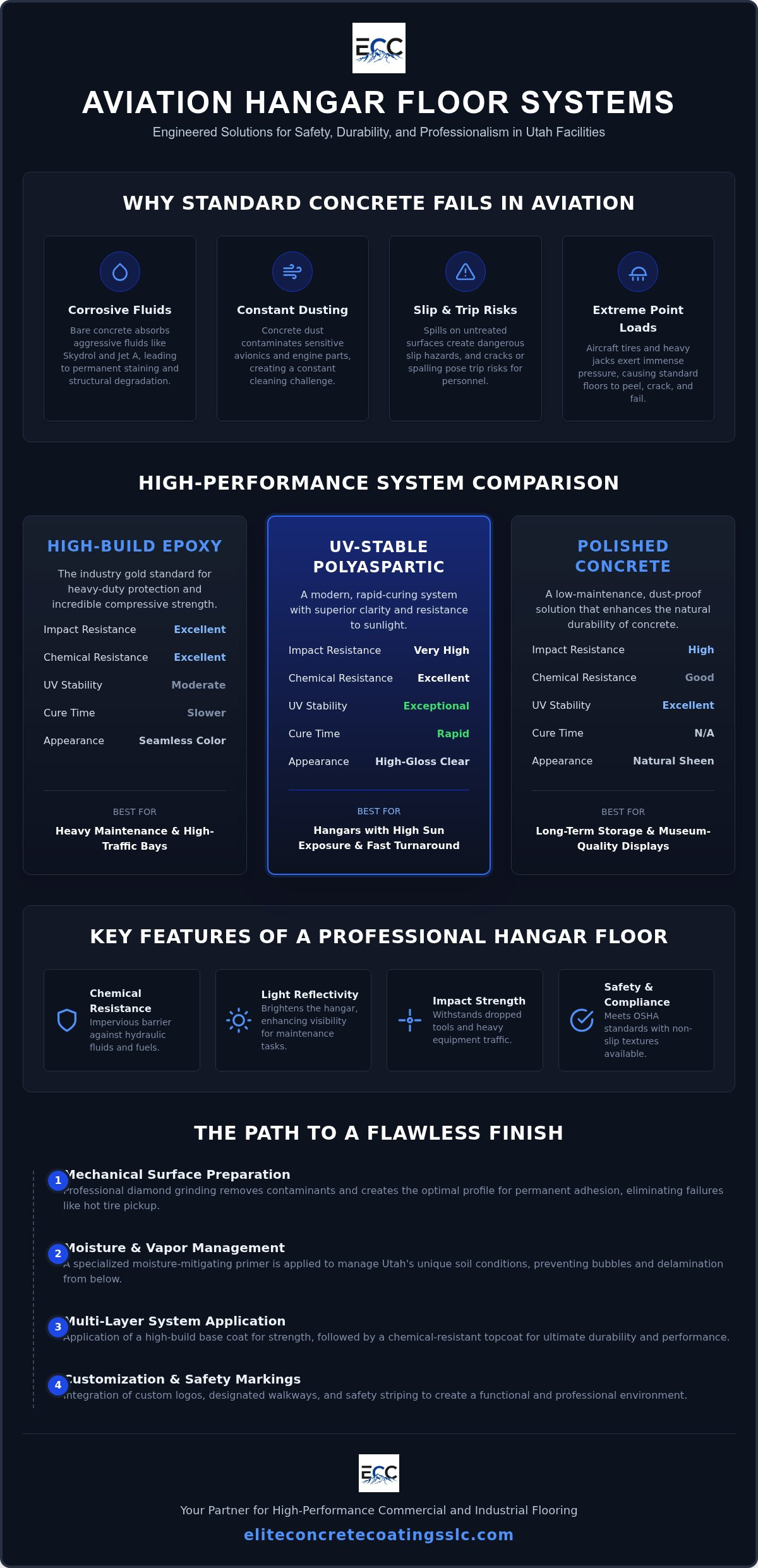
Not all airport hangar floor finishes are built the same. While some might consider a simple sealer, professional aviation facilities require a multi-layered approach to handle the physical and chemical stress of daily operations. The gold standard for decades has been 100% solids epoxy. This system provides a thick, high-build barrier that levels out minor concrete imperfections and offers incredible compression strength. However, modern technology has introduced polyaspartic coatings as a high-performance alternative that solves specific Utah challenges, particularly regarding installation speed and sunlight exposure.
Resinous Coatings: Epoxy and Polyaspartic Systems
Choosing between epoxy and polyaspartic often comes down to your operational needs. Polyaspartic coatings are prized for their rapid cure times and exceptional UV stability. In Utah, where hangar doors are frequently open to the bright high-altitude sun, UV resistance is non-negotiable. While epoxy can yellow or chalk over time when exposed to direct sunlight, polyaspartic maintains its clarity and color. These chemical resinous coatings also provide a dense surface that prevents Skydrol and fuels from penetrating the slab. A professional system typically involves a moisture-mitigating primer, a high-build base, and a chemical-resistant topcoat. This layered strategy ensures the coating doesn’t just sit on top but becomes part of the floor’s structure.
Polished Concrete for Aviation Storage
For hangars used primarily for long-term storage or museum-quality displays, commercial polished concrete is an excellent low-maintenance choice. This process uses heavy-duty diamond grinders to refine the concrete surface to a high sheen. We use professional densifiers to “dust-proof” the floor, which is a major benefit for sensitive avionics and engine parts. Keep in mind that while polished concrete is incredibly durable and easy to clean, it doesn’t offer the same level of chemical barrier as resinous systems. If your hangar sees frequent maintenance or fluid changes, a coating is usually the safer bet. Following Professional Installation Standards ensures that regardless of the system you choose, the preparation and application meet the rigorous demands of the Department of Defense and civil aviation alike. If you’re unsure which system fits your specific flight operations, exploring our commercial flooring solutions can help clarify the best path forward for your facility.
Essential Features: Chemical Resistance, Light Reflectivity, and Safety
Designing the perfect foundation for your flight operations requires looking beyond simple aesthetics. While durability is the baseline, the most effective airport hangar floor finishes serve as active tools that improve workflow and safety. These systems must be engineered to handle the harsh chemical realities of aviation while providing a workspace that maximizes visibility for precision maintenance. By selecting High-Performance Systems, you ensure your facility meets the rigorous standards required for modern corrosion control and structural protection.
Resistance to Aviation Fluids and Salts
In the aviation world, Skydrol is often considered the “acid test” for any coating. This hydraulic fluid is notoriously aggressive and can eat through standard paints in a matter of hours. Professional-grade finishes create an impermeable barrier that allows Skydrol, Jet A fuel, and de-icing fluids to bead on the surface for easy cleanup. This is particularly vital for Utah facilities, where winter salt brine is frequently tracked in by tugs and service vehicles. Without a resilient finish, these salts can penetrate the concrete slab, leading to “concrete rot” and expensive structural repairs. A high-quality coating turns a potentially hazardous spill into a simple wipe-down task, keeping your operation moving without delay.
Optimizing Hangar Visibility and Safety
One of the most significant yet overlooked benefits of high-gloss floor finishes is light reflectivity. Mechanics often struggle to see into the dark recesses of a fuselage or landing gear assembly. A floor with high lumen efficiency reflects overhead lighting upward, significantly reducing the need for cumbersome portable light towers. This creates a safer, more efficient environment where inspectors can spot leaks or hairline cracks more easily. We can even use color-coded safety zones to designate hazard areas or movement paths, keeping personnel safe during busy flight days.
Safety also demands a strategic approach to traction. We integrate commercial non-slip coatings into high-traffic areas and walkways to prevent accidents when floors are wet. We apply the same non-slip coatings for commercial kitchens logic to hangar environments, ensuring a balance between aggressive grip and ease of cleaning. For facilities handling sensitive avionics or electronics repair, we also offer specialized ESD coatings. These systems prevent static discharge that could damage expensive flight hardware, providing an extra layer of protection for your most valuable assets.
Professional Installation Standards for Utah Aviation Facilities
High-performance airport hangar floor finishes are only as good as the preparation beneath them. In an environment where aircraft tires exert immense pressure and chemical spills are a daily reality, the bond between the coating and the concrete must be absolute. Achieving this bond requires a level of precision that goes far beyond basic cleaning. Professional installation ensures that the resinous layers undergo proper chemical cross-linking, creating a unified structure that won’t peel or delaminate under stress. Without this technical oversight, even the most advanced materials will eventually fail.
Surface Prep: The Foundation of Every Hangar Floor
In the aviation world, cleaning a floor is merely the first step. We utilize heavy-duty mechanical surface preparation, such as diamond grinding or shot blasting, to achieve a specific Concrete Surface Profile (CSP). This process opens the “pores” of the concrete, allowing the primer to penetrate deeply and anchor the system. Professional mechanical preparation provides the necessary “tooth” needed for heavy aircraft loads and long-term adhesion. Before any coating is applied, we also perform meticulous repairs on existing cracks and spalls. This attention to detail prevents minor imperfections from telegraphing through the finished surface or becoming points of structural weakness.
Utah Climate Considerations for Coating Success
Utah’s unique environment presents specific hurdles for resinous systems. Along the Wasatch Front, from Salt Lake City to Provo, we deal with extreme temperature swings and notoriously low humidity. These factors directly impact the open time and curing speed of the resins. We constantly monitor slab temperature and ambient conditions to ensure the coating cures at the correct rate for maximum strength. If the air is too dry or the slab too cold, the chemical bond is compromised.
Managing moisture vapor transmission is another critical step. Utah’s varied soil conditions can trap moisture beneath a slab, which then tries to escape upward. If not addressed with a moisture-mitigating primer, this pressure can cause the floor finish to bubble or blister. Additionally, precision concrete joint sealant application is vital to accommodate the natural expansion and contraction of the slab during our intense freeze-thaw cycles. This prevents movement from cracking the finish at the joints. For a deeper look at how we manage these local variables, check out our guide on warehouse floor coatings in Utah. If you want to ensure your hangar is protected by a team that understands local concrete, contact our Utah flooring experts to discuss your project requirements.
Choosing Elite Concrete Coatings for Your Utah Hangar Project
At Elite Concrete Coatings, we’re more than just a contractor; we’re your neighbors. As a family-owned operation based right here in Utah, we take immense pride in delivering top-tier airport hangar floor finishes that stand up to the rigorous demands of our local aviation community. We understand that your hangar isn’t just a garage; it’s a critical asset where safety and precision are paramount. That’s why we leverage high-performance materials like polyaspartic and 100% solids epoxy to create surfaces that are as resilient as they are beautiful.
Our commitment to excellence begins with the technical prep work required for long-term adhesion. We don’t cut corners because we know exactly how Utah’s climate can impact a finish over time. By specializing in commercial and industrial coatings, we provide the specialized engineering required for heavy aircraft loads and extreme chemical resistance. Whether you’re managing a private collection or a busy commercial fleet, we bring the same level of meticulous attention to every square inch of your floor.
A Local Partner for High-Stakes Projects
Serving the Wasatch Front from Ogden to Spanish Fork gives us a unique perspective on the specific challenges Utah facility managers face. We don’t just apply a product; we solve problems. We know that in the aviation world, downtime is a major concern for active facilities. Our team works proactively to coordinate installations that minimize disruption to your flight schedule. Because we’re local, you get direct communication and personalized care that national franchises simply can’t match. We’re here to ensure your transformation is seamless and your satisfaction is absolute.
Next Steps for Your Aviation Facility
Every hangar has its own unique set of requirements based on the aircraft it houses and the maintenance performed within its walls. A heavy maintenance facility for corporate jets needs a different approach than a storage hangar for light piston aircraft. The first step toward a professional-grade transformation is a thorough site evaluation. We’ll assess your current slab condition, moisture levels, and operational goals to recommend the perfect system for your specific needs.
Don’t settle for a generic floor that won’t survive the first chemical spill or heavy point load. Trust the experts who live and work in your community. Reach out to the Elite Concrete Coatings team today to schedule your expert assessment. Let’s work together to build a bright, safe, and durable foundation for your Utah aviation facility. We’re ready to help you achieve the professional look and high-performance protection your aircraft deserve.
Elevating Your Utah Hangar Standards
Your hangar floor is more than just a surface; it’s a critical safety component that must withstand extreme point loads and corrosive fluids. By choosing the right airport hangar floor finishes, you’re investing in long-term durability and a professional workspace that enhances visibility for every inspection. We’ve explored how specialized resinous systems and precision installation can transform your facility into a bright, chemical-resistant environment that meets the highest 2026 standards.
As a local, Utah-owned and operated business, we understand the specific challenges of our high-altitude climate. We bring deep expertise in chemical-resistant resinous systems and static dissipative floor coatings to every project along the Wasatch Front. Our team is ready to help you navigate the technical requirements to ensure your floor remains a high-performance asset for years to come.
Take the first step toward a safer, more professional aviation facility today. Contact Elite Concrete Coatings for a Professional Hangar Evaluation and let us provide the expert guidance your project deserves. We look forward to helping you achieve a showroom-quality finish that stands the test of time.
Frequently Asked Questions
What is the best floor finish for a private aircraft hangar?
High-performance polyaspartic and 100% solids epoxy systems are the most effective solutions for private facilities. These airport hangar floor finishes provide a seamless, non-porous surface that resists heavy point loads and chemical staining. In Utah, polyaspartic is often preferred for its UV stability, ensuring the floor doesn’t yellow when hangar doors are open. This creates a long-lasting, showroom-quality environment that protects your high-value aviation assets while maintaining a professional look for years.
Can hangar floor coatings resist Skydrol and other hydraulic fluids?
Professional resinous coatings are engineered to be impermeable to aggressive fluids like Skydrol and Jet A fuel. These substances are notoriously corrosive to bare concrete and lower-grade sealers. Our high-performance systems create a chemical-resistant barrier where fluids bead on the surface rather than soaking in. This makes cleanup simple and prevents the structural degradation of the slab, which is essential for maintaining a safe, compliant, and durable aviation facility in the long term.
How long does it take to professionally install a hangar floor coating?
Most professional installations require two to four days depending on the hangar’s size and condition. The process begins with intense mechanical surface preparation to ensure the coating anchors properly. We then apply multiple layers, including a moisture-mitigating primer and a durable topcoat. While Utah’s dry air helps with certain stages, we ensure each layer has adequate time for chemical cross-linking, providing a finish that survives the rigors of daily flight operations and maintenance schedules.
Are polished concrete floors suitable for active maintenance hangars?
Polished concrete is an excellent choice for storage-focused hangars, but resinous coatings are better for active maintenance areas. While polished surfaces are durable and easy to clean, they lack the dense chemical barrier provided by epoxy or polyaspartic systems. For hangars in Ogden or Spanish Fork that handle frequent fluid changes, a coating is necessary to prevent hydraulic fluids from penetrating the concrete. We help you choose the right finish based on your specific maintenance needs and operational goals.
How do I make my hangar floor slip-resistant but still easy to clean?
We integrate specialized fine aggregates into the final topcoat to provide traction without creating a rough, hard-to-clean surface. This balance is critical for safety in high-traffic areas, especially when floors are wet from rain or snow tracked in from the apron. The resulting finish meets OSHA standards for slip resistance while remaining smooth enough for simple sweeping and mopping, keeping your Utah facility both safe and professional. It is the ideal solution for busy flight crews.
Does Utah’s climate affect how hangar floor coatings are applied?
Yes, the low humidity and high altitude of the Wasatch Front require specific timing during installation. In cities like Lehi and Provo, we monitor the slab’s temperature and the dew point to ensure the resin cures correctly. Our team adjusts the application process to account for these local factors, preventing the coating from curing too quickly or failing to bond during Salt Lake City’s intense seasonal shifts. This local expertise is vital for achieving a permanent, reliable bond.
What is the difference between professional resinous systems and standard thin-film coatings?
Professional systems utilize 100% solids resins that create a thick, high-build barrier. Standard thin-film coatings often lack the chemical cross-linking required for aviation environments. We use heavy-duty mechanical preparation to ensure the airport hangar floor finishes bond deeply into the concrete. This structural bond is necessary to prevent peeling under the extreme heat and pressure exerted by aircraft tires during movement. It ensures a level of durability and protection that standard industrial paints simply cannot provide.
How do high-reflectivity floors help with aircraft maintenance?
High-gloss finishes act as a powerful light multiplier by reflecting overhead illumination into the shadowed areas under an aircraft. This lumen efficiency is a game-changer for mechanics in West Jordan or South Jordan who need to inspect landing gear or fuselage components. By improving visibility, these floors help teams spot hairline cracks or fluid leaks early, creating a safer and more efficient environment for precision aviation work. It significantly reduces the reliance on cumbersome portable lighting during critical inspections.