
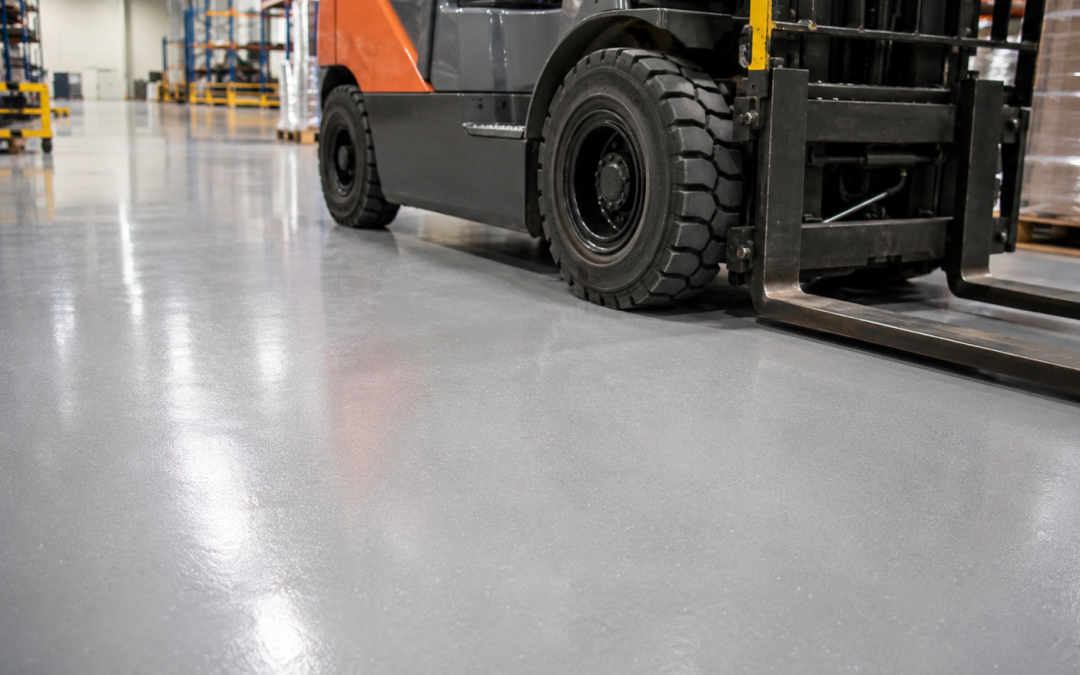
Warehouse floors endure a lot of abuse.
Doors being opened and closed, forklifts constantly driving around, pallet jacks, heavy equipment, rolling carts, dropped tools, chemical spills, employees coming in and out… With enough wear and tear, your average concrete floor can become scuffed, stained, cracked, and otherwise tough to clean and keep nice looking.
That’s why it’s important to choose the right coating for your warehouse floor.
If you’re a Utah warehouse owner, facility manager, manufacturer, or commercial property owner, then the right coating can help your floors be more durable, safe, attractive, and easy to maintain. But not all coatings are created equal. Some can withstand a lot more punishment before they start cracking or getting damaged.
Elite Concrete Coatings helps business owners protect their concrete floors with durable coatings that are made for commercial and industrial use.
Let’s take a look at some of the top warehouse floor coating options for areas with heavy traffic and forklift usage.
1. Epoxy Flooring
The epoxy flooring system is one of the most popular flooring options for warehouses and industrial facilities.
It establishes a hard surface that adheres to concrete that has been properly prepared. When finished and cured properly, epoxy flooring can be very resistant to abrasion, impact, staining, and many chemicals.
Here are just some of the places that could benefit from warehouse epoxy flooring:
- Distribution centers
- Manufacturing facilities
- Storage warehouses
- Auto and equipment shops
- Production areas
- Commercial workspaces
Epoxy can be very beneficial in places where cleanliness is important. Since epoxy is installed as a liquid and cures into a hard finish, there are no seams for dirt and debris to hide in.
Another advantage of epoxy flooring is its ability to stand up to heavy use. In facilities that see heavy forklift traffic, a quality epoxy floor can go a long way toward improving untreated concrete.
2. Polyaspartic Floor Coatings
Polyaspartic coatings are another excellent option for commercial warehouse flooring.
This type of coating offers fast cure times, durability, and resistance to wear. Some polyaspartic systems offer excellent abrasion resistance and can often be installed faster than traditional epoxy systems.
This can be key for businesses that cannot afford long downtimes.
Businesses that may benefit from polyaspartic systems include:
- Busy warehouses
- Commercial garages
- Industrial work areas
- Retail storage spaces
- Facilities needing a fast turnaround
Polyaspartic coatings can also be used as a protective topcoat over other flooring systems.
3. Epoxy With a Polyaspartic Topcoat
Sometimes you can get the benefits of multiple materials by combining them. Using epoxy as a primer with a polyaspartic top coat can often work well in busy commercial settings.
The epoxy provides good thickness and adhesion to the concrete. Then the polyaspartic adds superior abrasion resistance, chemical resistance, and easy maintenance.
Consider this option if your facility has:
- Frequent forklift traffic
- Heavy rolling loads
- Constant equipment movement
- High cleaning demands
- Exposure to oils or chemicals
The right system can be tailored to your warehouse’s specific use.
4. Quartz Broadcast Flooring
Quartz broadcast flooring consists of colored quartz aggregate that is spread into a resin coat.
These floors are textured and durable. Applications where traction is critical:
- Loading areas
- Production spaces
- Food-related facilities
- Wet areas
- Utility rooms
- Heavy-traffic work zones
Quartz flooring provides slip resistance along with the strength and durability of a commercial grade coating.
5. Flake Flooring Systems
While flake flooring may conjure images of garage floors, heavy-duty industrial flakes systems can also be appropriate for some commercial applications.
Vinyl flakes are sprayed or “broadcast” into the coating while wet and then rolled into place, creating a texture that is locked into the clear topcoat.
Benefits of flakes include:
- Improved appearance
- Better hiding of minor imperfections
- Additional texture
- Easier maintenance
- Resistance to stains and wear
While designed to hold up in warehouse environments, flakes can offer aesthetically pleasing alternatives to simple gray epoxy floors.
What Makes a Warehouse Floor Coating Forklift-Ready?
Just because a floor coating can stand up to foot traffic doesn’t mean it can handle forklift traffic.
Large machines carrying heavy loads, sharp turns, braking, and wheels rolling over the same spots again and again can quickly deteriorate weak coatings.
When looking for a floor coating that can handle forklift traffic, you should seek out one that has excellent:
- Abrasion
- Impact
- Tire wear
- Scraping
- Heavy rolling loads
- Chemical exposure
The coating should also have excellent adhesion to the concrete below. That’s why surface preparation is key when applying a new coating.
If appearance/performance, you may want a flake system for a more seamless gray finish rather than plain old gray epoxy.
Proper Surface Preparation Is Critical
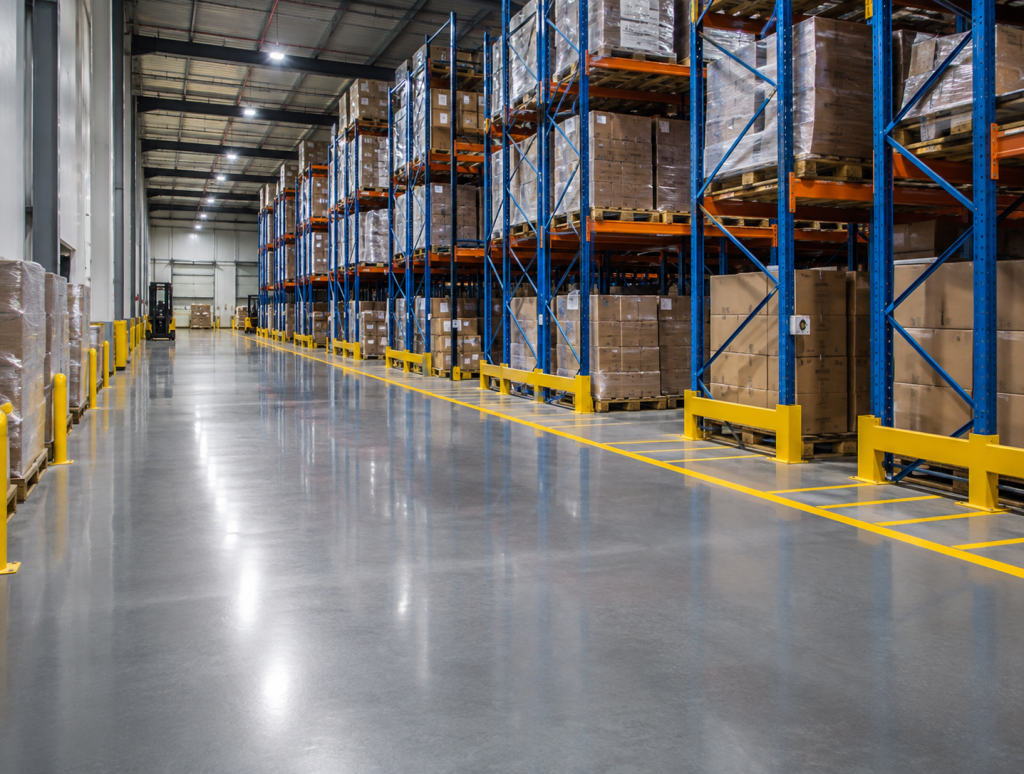
Commercial Warehouse Floor Coatings
You can have the best coating money can buy but if the concrete isn’t prepared correctly, your coating will fail.
Warehouses floor can have:
- Oil
- Grease
- Dirt
- Existing sealers
- Old coatings
- Surface damage
- Moisture issues
Professionals will grind, clean, crack repair and remove any contaminates before coating is applied.
We try to get down to a clean surface we can properly profile for the coating to make a good mechanical bond.
If you don’t properly prepare your surface you can get:
- Peeling
- Delamination
- Bubbling
- Premature wear
- Uneven appearance
Commercial Flooring: If you don’t prep you reduce the life of the complete system.
How Thick Should a Warehouse Floor Coating Be?
How Thick Does Warehouse Floor Coating Need To Be?
One coating thickness does not fit all situations when it comes to warehouses.
Several factors go into choosing the right system such as:
- Forklift weight
- Traffic frequency
- Type of equipment
- Chemical exposure
- Existing concrete condition
- Cleaning procedures
- Temperature changes
A lightly-trafficked storage room will most likely need a different system than a busy manufacturing floor with forklifts running constantly.
That is why you should have your commercial floor evaluated by use instead of opting for the cheapest coating.
Can Warehouse Floor Coatings Handle Chemicals?
A lot of commercial coating systems can resist oils, cleaners, automotive fluids, and common chemicals.
But not all coating systems resist chemicals the same way.
If your facility frequently works with:
- Solvents
- Oils
- Acids
- Cleaners
- Manufacturing chemicals
- Automotive fluids
You’ll want to choose a coating designed for those substances.
Consult with your installer. They can help pick the right system for the conditions at your facility.
How Do Coatings Improve Warehouse Safety?
Did you know your warehouse coating can increase safety too?
Depending on the elements and traffic your concrete is exposed to, it can become dusty, stained, or slippery.
Commercial coatings can provide a cleaner, more controlled surface and allow you to add:
- Slip-resistant texture
- Safety lines
- Walkway markings
- Loading zone markings
- Equipment areas
- Color-coded work zones
These are just a few ways coatings can help you better organize your traffic flow and keep your work environment professional.
Are Coated Warehouse Floors Easier to Clean?
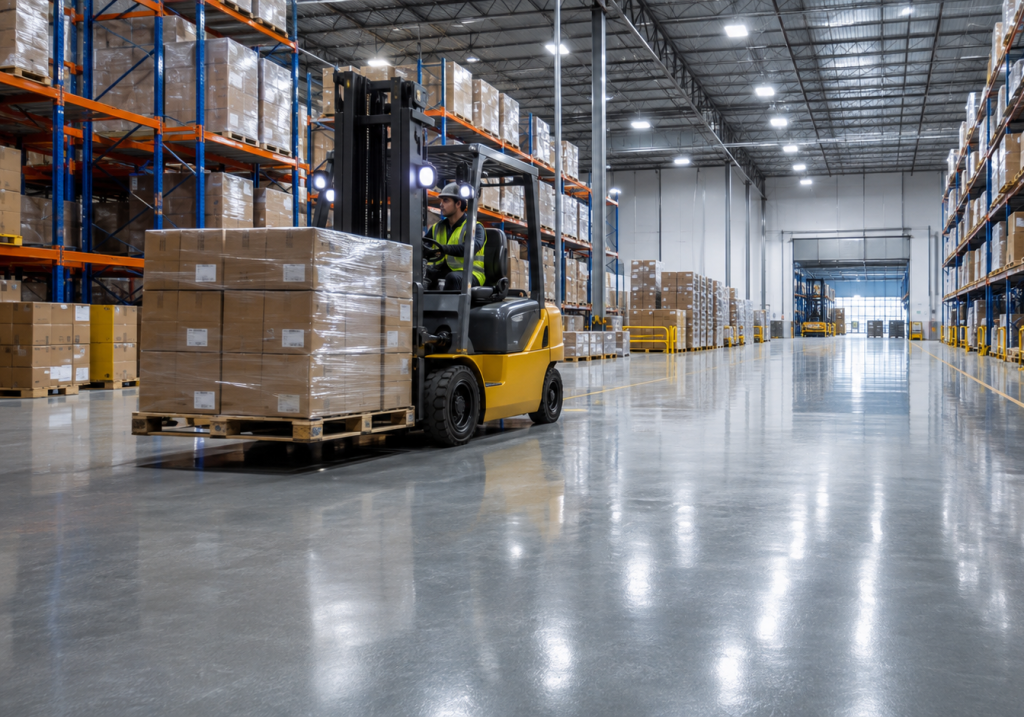
Heavy-Duty Warehouse Floor Coating
Yes.
One of the major advantages of a seamless coating system is that it can be much easier to maintain than bare concrete.
Concrete is porous. If left uncoated, concrete can absorb:
- Oil
- Dirt
- Grease
- Chemicals
- Moisture
When you install a quality coating, you are creating a surface that is easier to sweep, mop and clean.
Maintenance time adds up. In high-traffic warehouses, easily maintained floors can save you hours over the lifetime of your floor.
When Should You Recoat a Warehouse Floor?
You may need to recoat or repair your warehouse floor when you notice:
- Peeling or flaking coating
- Bare concrete showing through
- Deep scratches
- Worn forklift paths
- Cracks
- Heavy staining
- Loss of traction
- Surface delamination
Addressing wear early can sometimes simplify restoration versus waiting until your floor is significantly damaged.
Which Warehouse Floor Coating Is Best?
Choosing the right warehouse floor coating depends largely on your facility.
Epoxy flooring continues to be a great option for many warehouses due to its durability, affordability, and ability to hold up under heavy traffic. But for facilities that require quicker turnaround times or extra abrasion resistance, polyaspartic flooring may be a better solution. High-traction areas may benefit from quartz toppings or a textured system.
Ultimately you should choose a system that is going to work with the traffic, equipment, chemicals, and maintenance your space will experience.
Warehouse Floor Coatings in Utah
Got an aging warehouse floor that’s faded, stained, cracking, or can no longer withstand heavy forklift traffic? Let Elite Concrete Coatings help you out.
We offer commercial concrete coatings that enhance durability, aesthetics, maintenance, and performance in even the toughest work conditions.
Need warehouse epoxy flooring, warehouse coatings, or just a tough commercial coating system? We can help you find the right solution for your warehouse floor.
Reach out to Elite Concrete Coatings today to discuss your options for warehouse floor coatings and get a free estimate for your commercial space. See how a professionally installed floor coating can prolong the lifespan of your Utah warehouse floor by improving safety, aesthetics, and long-term performance. If you’re ready to upgrade your commercial flooring, contact Elite Concrete Coatings today by filling out our online form or calling (801) 946-0929.