

The floor that costs least to install isn’t always the least expensive to maintain. For high-traffic commercial spaces, polished or sealed concrete can be a strong low maintenance commercial flooring choice because it combines a durable surface with straightforward routine care. The best fit still depends on how the space is used and the finish it needs.
It makes sense to compare more than the initial installation cost. Cleaning, upkeep over time, and how well each option suits your facility all matter when choosing low maintenance commercial flooring. This guide compares polished concrete, epoxy coatings, luxury vinyl, commercial carpet tile, and terrazzo, with practical factors to consider for your space.
Key Takeaways
- Match the flooring finish to traffic, spills, slip-resistance needs, and the look your commercial space requires.
- Compare routine cleaning and upkeep alongside installation cost to understand long-term value.
- Consider sealed or polished concrete when you want a durable finish that works with an existing concrete floor.
- Review how each option handles wear and repairs, since maintenance needs vary across concrete, coatings, vinyl, carpet tile, and terrazzo.
- Use the space’s purpose and daily demands to narrow your shortlist before choosing a commercial flooring system.
Best Durable Floor Finishes for High-Traffic Areas
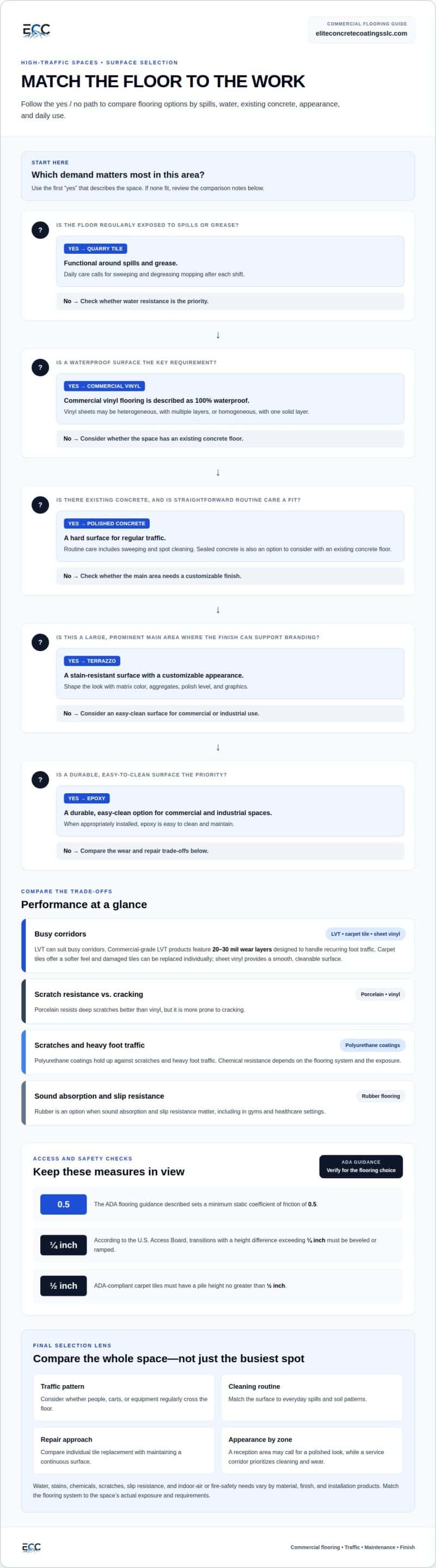
For busy entrances, corridors, and work areas, compare flooring by traffic, durability, cleaning needs, and the wear it must resist. Polished concrete offers a hard surface with routine sweeping and spot cleaning; epoxy is easy to clean when appropriately installed. The right low maintenance commercial flooring choice depends on how the space is used, not just its appearance.
Water, stains, chemicals, and scratches call for different strengths, so no single material suits every exposure. Commercial vinyl flooring is described as 100% waterproof, while epoxy terrazzo is stain-resistant, and polyurethane coatings hold up against scratches and heavy foot traffic. Chemical resistance depends on the flooring system and exposure, so match those requirements to the space.
Polished concrete, luxury vinyl tile, epoxy, and porcelain each have trade-offs. Polished concrete is straightforward to clean, LVT can suit high-traffic areas, and properly installed epoxy is easy to maintain. Porcelain resists deep scratches better than vinyl but is more prone to cracking.
Terrazzo suits large main areas where a durable surface can also support branding. Choose its matrix color, aggregates, polish level, and graphics to shape the finish. Commercial vinyl sheets come in heterogeneous, multiple-layer construction, or homogeneous, one solid layer. Quarry tile, commonly available in 6×6 or 8×8 formats, is functional around spills and grease; daily maintenance calls for sweeping and degreasing mopping after each shift.
For slip resistance, the ADA flooring guidance described sets a minimum static coefficient of friction of 0.5. According to the U.S. Access Board, transitions with a height difference exceeding 1/4 inch must be beveled or ramped, and ADA-compliant carpet tiles must have a pile height no greater than 1/2 inch.
Health, indoor-air-quality, and fire risks vary by flooring material, finish, and installation products. Carpet can retain dust, for example, while coatings and adhesives can affect indoor emissions. Choose products suited to the building’s fire-safety criteria and cleaning needs.
| Flooring option | Durability and resistance | Maintenance and best fit |
|---|---|---|
| Polished concrete | Hard surface for regular traffic | Sweeping and spot cleaning |
| Luxury vinyl tile | Suitable for high foot traffic | Practical for busy interiors |
| Epoxy | Durable, easy-clean surface | Commercial and industrial spaces |
| Porcelain tile | Scratch-resistant, but can crack | Hard-wearing finished areas |
| Quarry tile | Functional around spills and grease | Frequent sweeping and degreasing |
| Terrazzo | Stain-resistant and customizable | Large, prominent main areas |
To choose, rank the space’s main demands, then compare upkeep, resistance, and appearance across commercial flooring options.
Flooring choices for high-traffic commercial spaces
Match each floor to its traffic pattern, cleaning routine, and likely wear. Hallways, open lobbies, and work zones place different demands on flooring, so one material may not suit every area.
High-Traffic Hallway Flooring
Hallways concentrate foot traffic along the same routes, making easy cleaning and wear resistance key priorities. Commercial carpet tiles and sheet vinyl are both practical options: vinyl offers a smooth, cleanable surface, while carpet tiles provide a softer feel. If an area becomes worn or damaged, individual carpet tiles can be replaced without replacing the whole carpet.
Luxury vinyl tile is another option for busy corridors. Commercial-grade LVT products feature 20-30 mil wear layers, which are designed to handle recurring foot traffic. Consider how carts, tracked-in debris, and spills affect the route, too. A hallway near a loading area may call for different cleaning and replacement planning than an office corridor.
Finishes for Busy Floors
Finishes affect how a floor handles daily wear and how much care it needs to stay presentable. Terrazzo can suit high-traffic main areas and, with proper maintenance, may last for the lifetime of a building. Unlike modular flooring, damaged carpet tiles can be replaced individually.
Commercial carpet tiles offer a softer surface for busy spaces where localized replacement is useful. Rubber flooring is another option when sound absorption and slip resistance matter, including in gyms and healthcare settings. The right finish depends on what the area encounters, such as rolling loads, repeated spills, or foot traffic tracked in from outside.
Flooring choices should reflect the building’s use, not just the busiest area. A reception zone may need a polished appearance, while a service corridor prioritizes cleaning and wear. Polished concrete offers an alternative for commercial spaces with existing concrete; explore how commercial polished concrete flooring can suit a facility’s traffic and finish needs.
To narrow the options, map the areas with the most foot traffic, then consider these criteria:
- Traffic type: Note whether people, carts, or equipment regularly cross the floor.
- Cleaning routine: Choose a surface that fits the building’s everyday spill and soil patterns.
- Repair approach: Compare individual tile replacement with maintaining a continuous surface.
- Appearance: Consider how the finish supports the purpose of each zone, from lobby to back corridor.
This area-by-area approach helps avoid choosing one material based on a single room’s needs. It also makes maintenance planning more specific: modular carpet allows targeted replacement, while a continuous floor finish has a different appearance and repair approach.
Commercial flooring lifecycle costs and value engineering
Installed cost per square foot varies by flooring type, existing surface condition, preparation, and finish; the project-specific figure follows a quote request. For a useful comparison, include installation, routine cleaning, periodic maintenance, and repairs across the floor’s expected service life.
Initial installation is only one part of the calculation. Commercial flooring costs over a building’s lifetime may exceed 35 times the initial cost, so a material that needs fewer interventions can offer stronger long-term value. Compare each option against the space’s traffic, cleaning needs, and likely damage rather than choosing on appearance alone.
Polished Concrete: Installation and Maintenance
For polished concrete, the existing slab’s condition affects the installation work. Cracks, uneven areas, or surface damage can change the preparation required, while the desired polish influences the finished appearance. Regular sweeping and spot cleaning help maintain the surface, with occasional deep cleaning as part of ongoing care.
Polished concrete may need resealing every 1-3 years, depending on traffic. Include that maintenance interval in lifecycle planning, especially for offices or corridors with concentrated foot traffic. A sustainable decision weighs the current slab, desired finish, cleaning routine, and future upkeep together.
Laminate and Repair Planning
Laminate flooring decisions should account for both the installed material and the repair approach. A damaged area may need a different repair plan from wear across a large, continuous surface. Before comparing options, consider whether the layout allows repairs without disrupting adjoining areas.
Porcelain tile offers a useful contrast: it is less prone to deep scratches than vinyl, but more prone to cracking. That difference matters when estimating potential repair needs. For either material, traffic patterns, spills, and cleaning routines shape performance over time.
Epoxy Terrazzo Over Its Service Life
Epoxy terrazzo is described as the most cost-effective flooring material over a 40-year lifespan. Its durability and low maintenance can balance higher upfront material and installation costs, particularly in large main areas. The total value depends on how long the floor serves the building and the maintenance it requires.
Value engineering means matching the specification to the space, not automatically choosing the lowest initial cost. Compare polished concrete, laminate, porcelain, and epoxy terrazzo by installation needs, cleaning, repair, and long-term upkeep. Then prioritize the factors that most affect the building’s lifecycle budget.
That range can help frame a quote alongside the preparation and finish already under consideration, rather than serving as a standalone lifecycle estimate. Regular cleaning with appropriate products helps commercial flooring last longer and look good, so include cleaning choices in the value comparison alongside installation and periodic maintenance. For facilities coordinating long-term upkeep, commercial cleaning specialists such as Indlovu Hygiene Solutions can help maintain specialized floors and preserve their finish over time.
Sealed and polished concrete for commercial spaces
Concrete can provide a durable foundation for busy commercial spaces, especially when an existing slab is suitable for finishing. Polishing refines the surface for a smoother appearance, while a sealed finish preserves a more natural concrete look. Both approaches make the slab itself part of the finished floor rather than covering it with separate tiles or planks.
The distinction matters for the building’s design and maintenance plan. Polished concrete offers a more refined finish, while a sealed surface can retain visible concrete character. In either case, the result depends on the slab’s condition, selected finish, and expected traffic. A commercial kitchen, showroom, and warehouse each present different demands.
Installation planning also affects how the floor fits a project schedule. Polished concrete installation is listed as taking 1-3 weeks, with the existing concrete condition affecting the work. The project plan should account for preparation and finishing, as well as how workers and customers move through the space during the work.
Before selecting a finish, professionals assess the slab and the building’s daily use. They consider cracks or uneven areas, expected foot and equipment traffic, and the desired appearance. They also determine whether the concrete should be polished or sealed. These steps help match the finished surface to the commercial space instead of applying one finish everywhere.
Routine care should match the finish and traffic pattern. For polished concrete, regular sweeping and spot cleaning help manage dust and localized messes; occasional deep cleaning supports ongoing upkeep. A sealed surface also needs a care plan suited to its finish and use. A busy entry, for example, needs a different cleaning routine than a lightly used office.
Concrete isn’t automatically right for every area. Spaces with frequent spills, grease, or specific operational demands may need another flooring system. In high-traffic areas, evaluate how the chosen surface handles actual use, not just its initial appearance. This helps avoid choosing an attractive finish that doesn’t suit the work taking place.
Polished or sealed concrete can be a practical alternative to covering an existing slab, without requiring an expensive decorative floor. The best result balances the slab’s condition, required finish, and cleaning needs. For commercial spaces with usable concrete, consider the intended traffic and appearance first, then choose a finish that supports both.
What are the lowest-maintenance commercial flooring options?
Epoxy coatings, polished concrete, terrazzo, and commercial vinyl can all simplify routine floor care. The best fit depends on the space’s traffic, spills, and cleaning routine. Compare the regular work each surface needs, along with periodic deep cleaning or resealing, before choosing.
Properly installed epoxy flooring is easy to clean and maintain, including in commercial and industrial settings. A practical routine includes daily sweeping, spot cleaning as needed, and a deep clean every few months. This can make epoxy a strong option for spaces where dust or tracked debris accumulates between deeper cleaning sessions.
Polished concrete has a straightforward maintenance pattern: sweep regularly, spot clean spills, and schedule occasional deep cleaning. Traffic affects how the surface wears and whether resealing is needed. Polished concrete may need resealing every 1-3 years, depending on traffic. That interval is worth including in maintenance planning, especially for busy corridors and work areas.
Commercial vinyl can suit areas where spills and frequent cleaning are part of daily use. Use a pH-neutral cleaner, avoid vacuum cleaners with beater bars, and clean spills promptly to help prevent staining or damage. Sheet vinyl provides a continuous surface, while vinyl tiles and planks divide the floor into separate pieces. The format affects the appearance and how localized damage is handled.
Terrazzo needs regular care, but routine cleaning can be simple. Sweep with a dry mop, then damp-mop lightly soiled floors weekly using a neutral cleaner. Its nonporous surface allows routine dirt and grime to be removed with clean water and a mop. Avoid wax and all-purpose cleaners, which may be unsuitable for terrazzo.
Use the building’s cleaning schedule to compare options in practical terms. A facility that already sweeps daily, for example, may find epoxy’s routine easy to incorporate. A building seeking low-intervention care may prefer polished concrete, while an area with frequent liquid spills may benefit from vinyl’s cleaning practicality. Terrazzo’s simple routine may suit prominent areas that also need a durable finish.
- For daily sweeping and periodic deep cleaning: Consider epoxy flooring.
- For an existing concrete surface: Compare polished concrete and its resealing needs.
- For frequent spills: Consider commercial vinyl and its prompt-cleaning routine.
- For nonporous, prominent flooring: Review terrazzo’s weekly damp-mopping routine.
Before deciding, list the daily, weekly, and periodic care required for each option. Then compare those tasks with the building’s actual cleaning capacity and traffic. This schedule-based comparison helps reveal which floor will be easiest to maintain in your facility.
Elite Concrete Coatings: Epoxy Garage Flooring
Elite Concrete Coatings installs epoxy garage flooring for spaces that need a durable, easy-to-clean floor. For commercial facilities, the right coating depends on how the area is used, including its traffic, cleaning demands, and finish requirements.
Consider Warehouse Coatings for busy work areas, Non-Slip Coatings where traction is a priority, or Parking Decks & Garages for vehicle spaces. Polished Concrete can also be a good fit when the existing slab and desired finish allow it. Each option addresses different floor conditions and facility needs.
If you’re considering epoxy flooring for your facility, contact Elite Concrete Coatings for a quote and discuss your project.
Plan the Next Step for Your Floors
Make the flooring decision practical by identifying what each space needs from its surface: a particular finish, easier cleaning, or traction suited to its use. That clarity turns a broad search for low maintenance commercial flooring into a focused project plan. Decide which areas need attention first and how the floor should support daily operations.
Elite Concrete Coatings provides Warehouse Coatings, Non-Slip Coatings, and Parking Decks & Garages for different commercial settings. The right option depends on the area being improved and the demands placed on its floor. Bring those priorities into the conversation, including how the space is used and the finish you want.
Take the next step with a clear picture of your project. Contact Elite Concrete Coatings to discuss flooring options for your commercial space and identify a practical path forward.
Frequently Asked Questions
How do commercial flooring materials compare for durability and lifespan?
Durability and lifespan depend on traffic, cleaning, installation, and the existing floor’s condition. Properly installed epoxy floors can last 10-20 years, depending on the environment, and may last up to 20 years before refinishing is needed. For other materials, consider how they handle the space’s daily use and how repairs can be managed. That comparison helps identify a suitable floor for each area.
Which commercial flooring is easiest to clean and sanitize?
Epoxy flooring is durable and low-maintenance. It can be cleaned with regular household cleaners and does not require special products. For sanitizing, use products suitable for the facility’s requirements and the floor’s care instructions. Consider the spills and soil the space encounters. A warehouse may have different cleaning needs from a food-service or healthcare setting, so follow the facility’s established cleaning protocols.
What commercial flooring works best for high-traffic areas?
The best option depends on what moves through the space. For low maintenance commercial flooring in a warehouse, consider a coating suited to commercial traffic; where traction matters, consider a non-slip surface. Reception areas may have different appearance needs from production floors. Note the busiest routes and whether people, carts, or equipment use them before narrowing the options.
What maintenance schedule and cleaning products are required for each flooring type?
Set the cleaning schedule according to the material and the building’s routine. Vinyl care calls for a pH-neutral cleaner and prompt spill cleanup, while quarry tile may need degreasing after each shift. For carpet tile, plan regular soil removal and watch high-wear sections for localized replacement. Keep product instructions with the facility’s cleaning plan so staff can use appropriate methods for each surface.
How do professionals select and install low-maintenance commercial flooring, and what should businesses provide?
Professionals match the flooring system to the space’s use, existing surface, and cleaning demands. Businesses can support planning by sharing the floor’s purpose, traffic patterns, equipment, spill exposure, and preferred appearance. Professional installation is recommended for epoxy flooring; typical installation takes 1-4 days, and traffic can resume up to 24 hours after coating application. Those details help guide projects in Ogden, Layton, and Syracuse.
Which commercial flooring resists water, stains, chemicals, and scratches?
No single option is identified as resisting all four equally. Commercial vinyl is waterproof, epoxy terrazzo resists water and stains, polyurethane coatings hold up against scratches, and chemical resistance depends on the flooring system and exposure.