
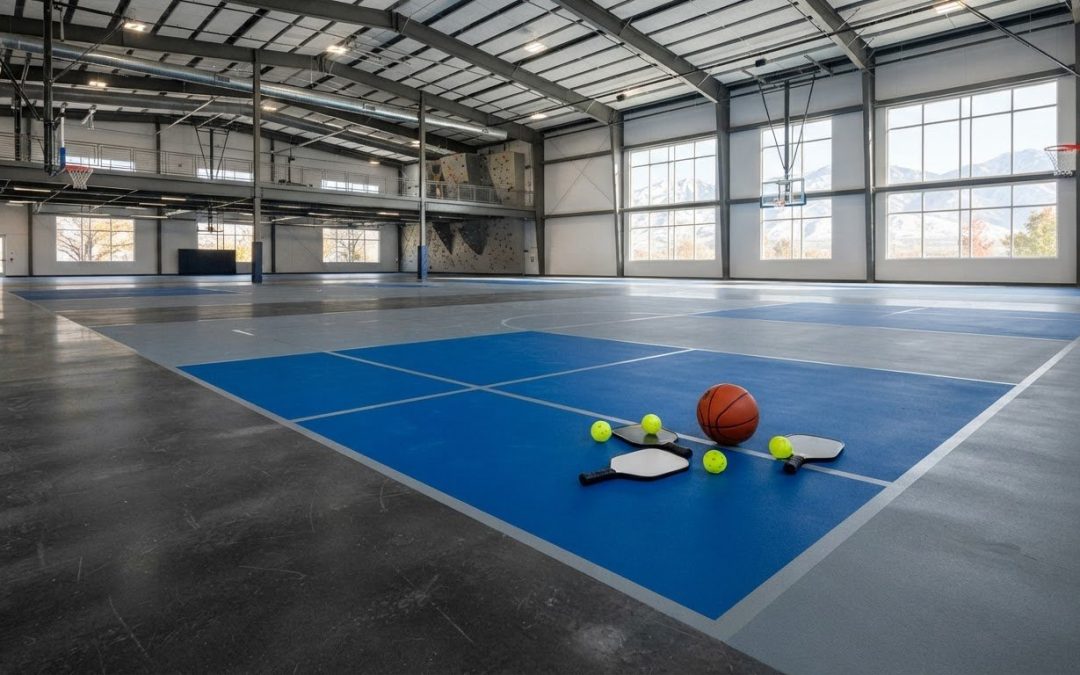
Choosing multi purpose sport court flooring means balancing traction, comfort, ball response, and upkeep with the sports you’ll actually play. The court’s location matters too: a surface plan for an indoor space has different considerations from one exposed to Northern Utah’s seasonal weather.
One court can support basketball, pickleball, and other activities, but no surface is automatically right for every game. Start by identifying the primary sport, who will use the court, and whether play will be occasional or frequent. A high-performance indoor court and an outdoor recreational space have different needs.
This guide compares modular tiles, coated concrete, indoor gym flooring, and other surface categories. You’ll find practical questions to consider about the court’s layout, site, and users, along with common planning mistakes to avoid. These comparisons can help you narrow the options and choose a surface approach that fits your space and goals.
Key Takeaways
- Choose multi purpose sport court flooring around the games you plan to play, the people using the court, and its indoor or outdoor setting.
- Compare modular tiles, coated concrete, and indoor gym flooring by their typical applications and the priorities that matter for your court.
- Consider outdoor exposure and seasonal weather in Northern Utah when assessing the court location and planning its layout.
- Define your sports, users, and surface priorities before narrowing your options for a multi-game court.
- Elite Concrete Coatings provides sport court surfaces for residential and recreational concrete court projects in Northern Utah.
What Makes Multi-Purpose Sport Court Flooring Work for Several Games?
Multi-purpose sport court flooring supports more than one activity, with the planned sports, players, and setting guiding the court’s layout and surface choice. Unlike a single-sport court, a multi-use court needs to account for different games sharing the same area. That doesn’t mean every sport is a practical fit for every surface or space. It means prioritizing the activities that matter most and planning around the site’s limits.
Start by listing the sports, how often each will be played, and who will use the court. A family recreation space may have different priorities from a community court shared by many players. The surface category is only part of the decision: the layout, markings, and indoor or outdoor setting also affect how well the court serves its users.
Which sports commonly share a multi-purpose court?
Basketball, volleyball, pickleball, and tennis are examples of sports that can share a court when the available space and layout support them. They aren’t automatically a workable combination. A Multi-Use Games Area (MUGA) is a general example of a space planned for multiple sports, but the specific activities still depend on the court design.
Markings should make it clear which boundaries apply to each activity. If lines overlap, use distinct colors and deliberate placement to improve visibility. Plan for the sports that will be played most often instead of adding every possible marking. Too many competing lines can make a shared court harder to read.
Indoor and outdoor courts solve different use cases
Indoor courts are protected from direct sun and precipitation, while outdoor courts face changing weather and other exposure. This affects planning and ongoing care, so don’t assume a surface suited to an indoor recreation space will also suit an outdoor court.
Consider how the court will be used as well as where it will be located. Occasional family games, frequent play, and use by a mix of younger and older players can bring different priorities. Think about how the surface should feel during activity, how clearly players will see the markings, and what maintenance the setting calls for.
For concrete court projects, the playing surface is only one part of the flooring plan. Nearby work areas may need a different finish, such as resinous commercial flooring, rather than a sport court surface. Match each area to its purpose.
Multi-Purpose Sport Court Flooring Options: A Practical Surface Roundup
Surface categories describe how a court is built, not which sports it automatically supports. Compare the format, setting, and intended activities together. Modular sport tiles are a configurable option often considered for recreational courts, coated concrete is a fixed surface for concrete court areas, and indoor gym flooring is designed for indoor recreation settings. First identify where the court will be and how it will be used, then compare the surface categories that fit those conditions.
Keep the surface choice separate from the sports and layout decision. A basketball and pickleball court still needs markings and dimensions planned around the usable space, whatever surface category you choose. The material can support the plan, but it can’t determine which activities will fit.
Modular sport tiles and interlocking court systems
Modular court flooring consists of separate pieces that connect to form a playing surface. This configurable format is one reason it is considered for residential and recreational courts. The format alone doesn’t establish which games are a good match, so consider how the tile layout, court markings, and intended users fit together.
If you’re comparing a fixed concrete surface instead, explore sport court surfacing for concrete. Comparing these formats helps focus the decision on the court’s setting and planned activities.
Coated concrete and other fixed court surfaces
Coated concrete is a fixed-surface category for projects planned over concrete. Unlike modular flooring made of connected pieces, it is applied over the concrete surface. The intended activities, markings, and site conditions all factor into the plan. Professionally coated concrete is one option to consider for multi purpose sport court flooring, particularly for residential or recreational use.
Indoor gym flooring is a separate category for indoor recreation spaces such as schools and community facilities. Because its setting differs from an outdoor concrete area, don’t assume an indoor gym surface is interchangeable with an outdoor court coating. Compare each category against the court’s location and intended activities.
Use these distinctions to narrow the comparison:
- Modular tiles: Consider the configurable format and how it fits the planned court layout.
- Coated concrete: Consider this fixed-surface category for a court planned over concrete.
- Indoor gym flooring: Consider it for indoor recreation settings.
Once you’ve identified the setting and surface format, compare options against the sports and users. This helps keep a product description from driving a decision before you’ve defined what the court needs to do.
How to Compare Sport Court Flooring for Your Activities and Users
Compare surfaces against the way the court will actually be used. An occasional recreational court has different priorities from a facility organized around one primary sport or frequent shared use. The right multi purpose sport court flooring depends on the sports, players, setting, and court plan, not on a universal ranking of materials.
| Surface category | Typical setting | Key selection question | Planning consideration |
|---|---|---|---|
| Modular sport tiles | Residential or recreational courts | Does the planned layout fit the activities and usable space? | Coordinate the tile layout with court markings and boundaries. |
| Coated concrete | Fixed concrete court areas, indoors or outdoors | Does a fixed surface suit the site and intended use? | Plan the sport mix, markings, and site conditions together. |
| Indoor gym flooring | Indoor recreation spaces | Does the surface fit the sports and users who will share the facility? | Consider activity schedules, user comfort, and clear line placement. |
Match the surface to the sports and level of activity
List the primary activity first, then add secondary games. A basketball-focused court may have different priorities from a recreation space that alternates between basketball, volleyball, and pickleball. Players move differently across these games, and the importance of ball response or underfoot comfort can vary by activity. Identify which qualities matter most to the people using the court rather than assuming one surface category suits every combination.
For an outdoor court focused on basketball, concrete sport court surfacing is one category to consider alongside the site and overall layout.
Account for the people and facility using the court
A backyard court may be planned around household recreation and a limited mix of activities. A school or community recreation space may serve more users, shared schedules, and several games. Consider who needs access, how activities will take turns, and whether players can distinguish the lines when markings overlap. These factors can shape surface priorities as much as the sports themselves.
Usable dimensions matter, too. Court boundaries, run-off space, and activity markings all affect the area available for play. Plan the layout before treating the entire site as playing space, and use contrasting colors to make overlapping lines easier to read. Prioritize the games that will be played most often. Adding every possible marking can make the court harder to follow.
Use the table as a starting point, then compare each category with the court’s users and schedule. The decision is clearer when the activities, available dimensions, and location are considered together.
Planning a Multi-Purpose Sport Court for Northern Utah Conditions
A practical court plan starts with how people will use the space, then accounts for the setting and site. For homeowners and recreation planners in Ogden, Layton, Syracuse, Salt Lake City, and nearby Northern Utah communities, outdoor exposure is one consideration. The condition of existing concrete and the details of the project also inform a suitable surfacing plan.
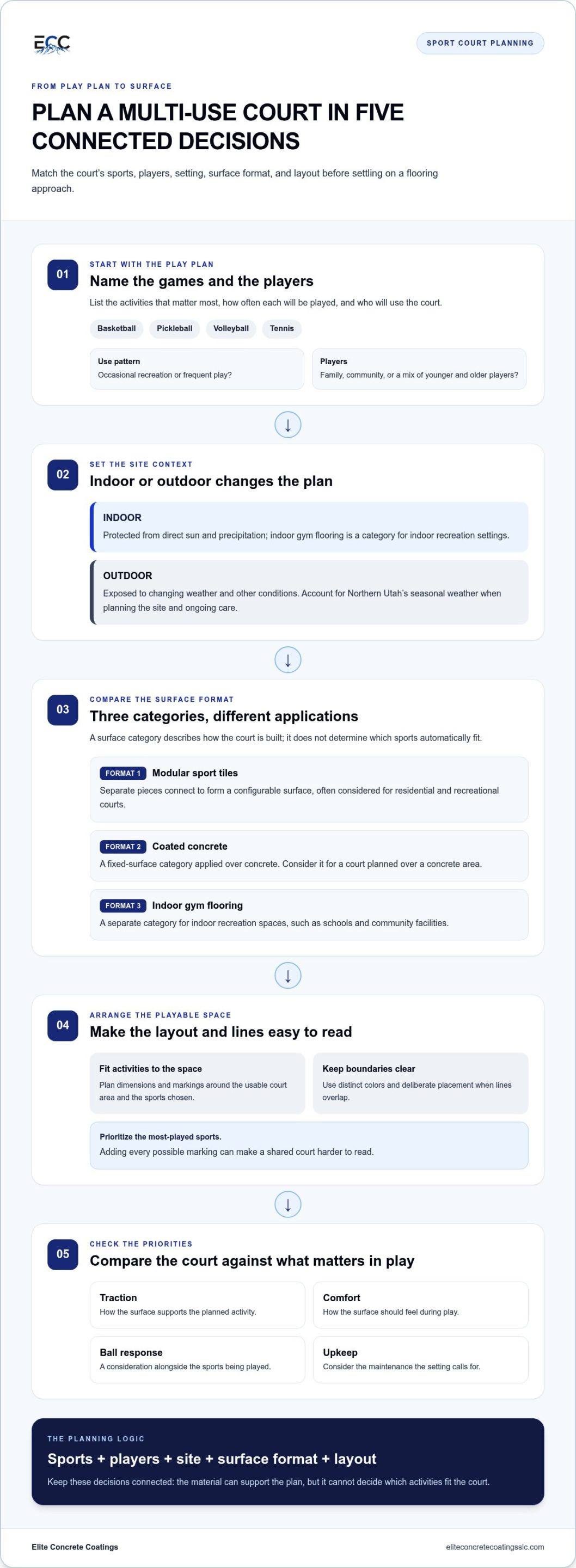
Use this sequence to connect the decisions:
- Define the activities: Identify the primary sport, secondary games, intended users, and expected frequency of play.
- Assess the location: Decide whether the court is indoors or outdoors, and note its exposure.
- Review the site: Record the available area, access, and condition of an existing slab if the project involves concrete.
- Plan the layout: Fit boundaries and markings to the usable area and selected sports.
Keep the steps in order. Choosing a layout before measuring the usable area or considering site access can create conflicts later. Likewise, choosing a surface without accounting for the planned games may lead to a poor fit.
Indoor or outdoor: start with the court location
Outdoor courts face sun, precipitation, temperature changes, and other exposure. Account for these conditions when planning multi purpose sport court flooring, but don’t treat them as a reason to assume one material is right for every site. Consider the court’s specific surroundings and seasonal exposure as part of the project.
An indoor court avoids direct outdoor exposure, so planning focuses more on the activity mix, frequency of use, and whether the space serves one group or a shared facility. A backyard recreation area and a busy indoor community space have different needs. Start with the setting, then compare surface priorities against how the court will be used.
Check the court area and plan the layout
Record the usable area and access to the court, then map the sports you want to include. A basketball-first layout needs room for its play area and markings, while a shared court may need additional lines for other activities. Plan clear boundaries and contrasting markings so players can follow the layout.
For concrete projects, include the existing slab’s condition in professional planning. The slab, intended use, and site details all help shape the surfacing approach. Bring these considerations together before finalizing the layout, especially when the project involves an existing concrete area.
With your activities, location, and site details in view, explore sport court surfacing as a concrete-focused option for a residential or recreational court.
Choosing a Sport Court Surface with a Local Concrete Coatings Specialist
By now, you can narrow the decision to a few priorities: which sports the court should support, where it will be located, who will use it, and what matters most in the surface. Bringing those details together turns a broad comparison of multi purpose sport court flooring into a plan shaped around the actual site.
For a fixed court area over concrete, professionally coated concrete is one option to compare. Consider the planned sports, whether the court is indoors or outdoors, and the existing site details. No single surface suits every project. A residential recreation court and a shared community facility can have different goals, even when both are planned for multiple activities.
When a concrete court surface may fit the project
A concrete court surface is relevant when a project centers on an existing concrete area or a fixed court layout. Consider how the games will use the space, how the setting affects the court, and whether the available area supports the planned layout. These details help shape a surfacing plan around the site rather than choosing a category in isolation. Explore sport court surface options when comparing approaches for a concrete court project.
What to prepare before discussing a court project
A few notes can make early planning more focused. Gather the location, approximate court area, intended activities, and information about who will use the space. Note whether the project is residential or for a community facility. If there’s an existing concrete slab, include what you know about its condition and the site. These details provide a useful starting point without locking you into a layout too soon.
- Location: Where the court will be placed and whether it’s indoors or outdoors.
- Approximate area: The usable space available for play and markings.
- Activities and users: The primary sport, additional games, and intended players.
- Project setting: Whether the court is residential or for community recreation.
Elite Concrete Coatings provides sport court surfaces for concrete court projects in Salt Lake City, Ogden, Provo, Lehi, West Jordan, South Jordan, Spanish Fork, Layton, and Syracuse. Our sport court surfaces serve residential and recreational projects, with the planned activities and site details guiding the approach.
Turn Your Court Idea Into a Clear Next Step
A court can become more than a place to play. Thoughtful planning creates a space people can return to, share, and enjoy. Let the way you want the court to feel and function guide your decisions, so the finished space reflects your priorities rather than a one-size-fits-all idea of multi purpose sport court flooring.
As you move from comparing options to planning a project, keep the intended use at the center. A clear direction makes it easier to explore a concrete court surface that fits the space and the experience you want to create. Elite Concrete Coatings is a family-owned Utah company providing sport court surfaces as part of its concrete coating services.
Explore sport court surfaces for your project and take the next step toward a court planned around the games you have in mind.
Frequently Asked Questions
Can one sport court surface work for basketball, pickleball, and volleyball?
Yes, a court can be planned for all three if the available area and layout can accommodate the games. Decide which activity takes priority and whether the others will be occasional or regular uses before settling on a surface. A court used mostly for basketball may need a different layout emphasis from one shared evenly across several sports. Keep the lines visually distinct so players can follow the markings for each game.
What is the difference between modular sport tiles and coated concrete?
Modular sport tiles consist of individual flooring units joined into a court surface, while coated concrete is a fixed finish applied over a concrete area. The formats affect how the court is planned and the types of projects they may suit. Compare the planned sports, indoor or outdoor setting, available layout, and existing site. Neither format alone determines whether the court will suit every activity.
Is multi-purpose sport court flooring suitable for outdoor use in Northern Utah?
Some surface categories are intended for outdoor courts, but suitability depends on the specific system and project conditions. In Salt Lake City, Ogden, Provo, Lehi, West Jordan, South Jordan, Spanish Fork, Layton, and Syracuse, account for exposure to sun, precipitation, and seasonal temperature changes. An indoor or outdoor label alone doesn’t settle the decision. Consider the actual site and planned activities together.
How do you choose flooring for a school or community multi-sport court?
Start with the facility’s schedule and intended users, not just the list of sports. A school may serve different groups throughout the day, while a community space may host activities at varied times. Map the games to the usable area, then plan line colors and boundaries so one activity’s markings don’t obscure another’s. Include access patterns and expected frequency of use in the project plan.
Can sport court flooring be installed over an existing concrete surface?
An existing concrete area can be part of a court project, but the slab’s condition and the project’s needs should inform the surfacing plan. Note visible wear, surface irregularities, and how the area is currently used so those details can be considered during professional planning. The planned sports and layout matter, too. Don’t assume a concrete surface is ready for every type of court finish.
What should a multi-purpose court layout include?
A useful layout accounts for the games, available space, and how players will move around the playing areas. Before choosing line placement, distinguish the primary activity from secondary ones and identify the usable boundaries. Clear contrast between markings helps players tell which lines apply. For a school or shared facility, consider how the court will look and function when different groups use it for different games.
How do outdoor court surfaces differ from indoor court flooring?
Outdoor court planning needs to account for weather exposure and site conditions. Indoor choices are more closely shaped by the facility, scheduled activities, and the people using the space. A shared indoor recreation room, for example, may need to accommodate several groups, while an outdoor court also has environmental exposure to consider. Compare surfaces based on the actual location rather than assuming an indoor option transfers directly outdoors.