
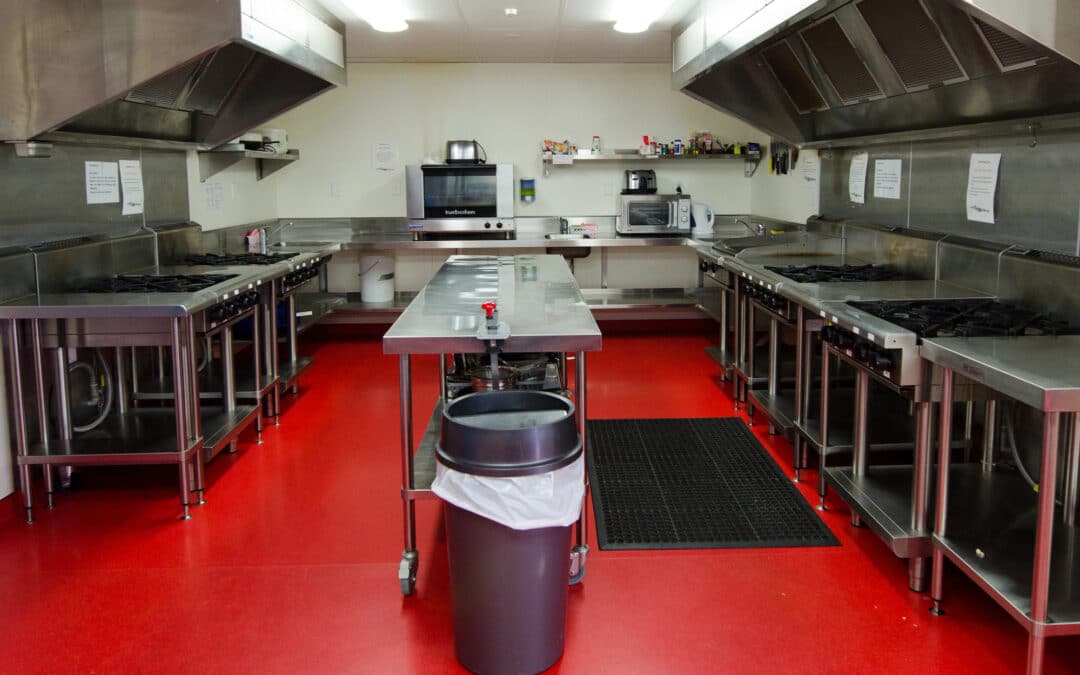
The commercial kitchen is one of the most challenging areas for any flooring. It is subject to all manner of abuses including heavy foot traffic, rolling carts, extreme heat, corrosive chemicals, and spills. Add to that, the need to create a safe work environment for your team and comply with the highest levels of hygiene and sanitation and the demands on your kitchen floor are huge. For this reason, many kitchen operators choose resinous flooring. This durable, seamless and high performance flooring is an ideal solution for the harshest conditions.
In this guide, we explain everything you need to know about resinous flooring for your commercial kitchen. We cover the benefits of choosing resinous flooring, the different types available, as well as how to choose, install and maintain the right system for your facility.
What is Resinous Flooring and Why is it so Critical for Kitchens?

Resinous Commercial Kitchen Flooring
The commercial kitchen is one of the most challenging areas for any flooring. It is subject to all manner of abuses including heavy foot traffic, rolling carts, extreme heat, corrosive chemicals, and spills. Add to that, the need to create a safe work environment for your team and comply with the highest levels of hygiene and sanitation and the demands on your kitchen floor are huge. For this reason, many kitchen operators choose resinous flooring. This durable, seamless and high performance flooring is an ideal solution for the harshest conditions.
In this guide, we explain everything you need to know about resinous flooring for your commercial kitchen. We cover the benefits of choosing resinous flooring, the different types available, as well as how to choose, install and maintain the right system for your facility.
The 4 Top Advantages of Resinous Flooring
Choosing the right floor is a significant investment. Resinous systems provide a strong return by offering a combination of safety, durability, and operational efficiency that is hard to beat.
Exceptional Hygiene and Food Safety
The seamless, non-porous nature of resinous flooring is its greatest asset in a food environment. It prevents bacteria, mold, and mildew from penetrating the surface, simplifying sanitation and helping you meet or exceed health code requirements. Many systems can also be installed with an integral cove base, where the flooring extends up the wall by several inches. This creates a smooth, bathtub-like basin that is exceptionally easy to clean and sanitize.
Durability and Longevity
Commercial kitchen floors endure a lot. Resinous flooring is engineered to handle it all. It resists damage from heavy rolling equipment, dropped pots and pans, and constant foot traffic. Its chemical-resistant properties protect it from degradation caused by acidic food spills, grease, and aggressive cleaning agents. This resilience means fewer repairs and a longer service life compared to other flooring options.
Safety and Slip Resistance
Slips and falls are a major concern in any kitchen. Resinous flooring systems can be customized with aggregates like quartz sand to create a textured, slip-resistant finish. This texture can be adjusted from light to aggressive, providing the exact level of grip needed for different areas, from busy cook lines to dishwashing stations.
Ease of Maintenance
The easiest floor to clean is the one that is seamless and non-porous. With resinous flooring, dirt and spills stay on the surface, and can be easily wiped or mopped away without hours of scrubbing. This translates to less time and labor required for daily cleaning, reduced water and chemical use and more time for your maintenance staff to focus on other priorities.
Types of Resinous Flooring Systems
While often grouped together, “resinous flooring” includes several different chemical formulations, each with unique strengths.
1. Epoxy Flooring
Perhaps the most widely recognized type of resinous flooring, epoxy flooring is a two-component system, a resin and a hardener, which combine to form a rigid, strong surface through a chemical reaction.
- Best For: General kitchen areas, dry storage and walkways that see heavy foot traffic.
- Pros: Great concrete adhesion, high compressive strength, good chemical resistance and overall value.
- Cons: Susceptible to UV degradation (yellowing) if in direct sunlight. Less flexible than urethane, which can be a factor if the concrete shifts.
2. Urethane Concrete (Cementitious Urethane)
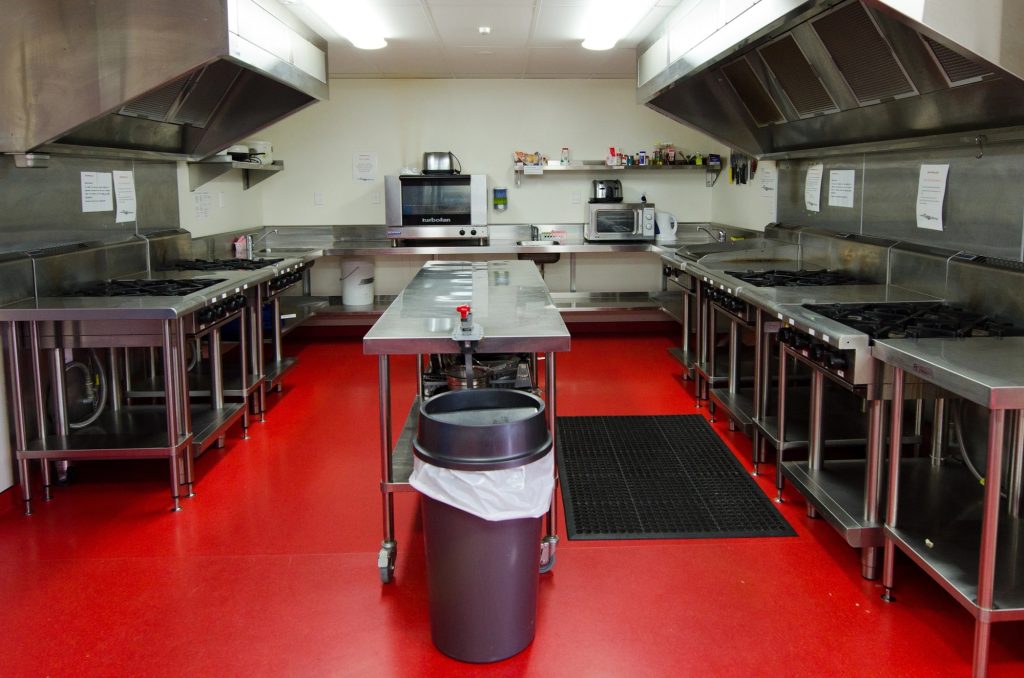
Commercial Kitchen Flooring
The go-to for the most demanding kitchen environments, urethane concrete (aka urethane mortar) is a blend of urethane resin, cement and aggregates that form a system with an unyielding bond to concrete.
- Best For: Cook lines, dish pits, walk in coolers and freezers, anywhere thermal shock is an issue.
- Pros: Superior resistance to thermal shock (rapid change in temperature from hot water/ovens, etc. ), unmatched chemical and moisture resistance and ultra durability.
- Cons: Typically has a higher upfront cost than epoxy systems.
3. Methyl Methacrylate (MMA)
A fast-curing acrylic resin system, MMA can be completely cured and ready for service in as little as one to two hours.
- Best For: Kitchen renovations where downtime needs to be minimized (24/7 facility, restaurant that can only close for a few hours, etc.).
- Pros: Extremely fast cure time, can be installed in very low temperatures (down to -20°F) and excellent chemical resistance.
- Cons: Emits a strong odor during installation that requires significant ventilation. Often the most expensive option and requires specialized installers.
Choosing the Right Resinous Floor
There are numerous considerations that can help determine which system will be best suited for your kitchen’s specific operational needs.
- Thermal Shock: If hot-water washdowns, steam cleaning, ovens or fryers sit directly on the floor then a urethane concrete system is necessary to prevent cracking and delamination.
- Downtime: How long can the kitchen be out of service? If speed is a major factor, MMA is the way to go. New construction or jobs with wider time windows can often take advantage of the outstanding performance of epoxy or urethane.
- Slip Resistance: You’ll need to evaluate your zones. Cook lines and dishwashing areas will need a more aggressive texture than dry storage areas. Custom textures can be mixed by your installer to address each specific area.
- Budget: Both MMA and urethane concrete have higher initial costs but lower repair and replacement costs over the lifespan of the floor. Epoxy is an ideal, less expensive, more robust option for less demanding areas.
Installation and Maintenance Considerations
Installation is as critical as the right material selection. A professional installer will follow a critical, step-by-step process to maximize the success of the floor.
The Installation Process
- Surface Preparation: This is the single most important step in the process. The concrete slab is mechanically prepared, typically by diamond grinding or shot blasting, to expose a clean, porous profile to which the resin can bond.
- Crack and Joint Repair: Any cracks or joints in the concrete are filled and repaired to create a smooth, stable substrate.
- Primer Application: A primer coat is applied to seal the concrete and optimize the bond of the next layers.
- Body Coat Application: The main resinous system (epoxy, urethane, or MMA) is applied. This is when aggregates for slip resistance are broadcast into the wet coating.
- Topcoat Application: A final protective topcoat is applied to seal the system, providing UV stability and increased chemical and scratch resistance.
Maintenance Tips for a Long-Lasting Floor
With proper care, a resinous floor can last for decades. Here are a few simple tips to ensure longevity:
- Clean Spills Promptly: Even though your new floor resists damage from grease and acidic liquids, don’t allow them to stand for long periods.
- Use the Right Cleaner: Stay away from harsh, caustic cleaners unless directed by the manufacturer. In most cases, a pH-neutral cleaner is all you need for daily mopping.
- Regular Deep Cleaning: Periodically deep-clean the texture using a deck brush or low-speed auto-scrubber to remove any accumulated grime.
- Inspect and Repair: Check periodically for any deep gouges or damage that might compromise the system. Have them repaired by your installer.
A Foundation for Success
Your commercial kitchen floor is more than just a surface to walk on. It’s an important part of your operation’s safety, hygiene, and efficiency. Resinous flooring provides a durable, long-term solution that stands up to the toughest demands. Understanding the different types available and matching them to your kitchen’s unique needs allows you to install the best commercial kitchen flooring that will be a durable and reliable foundation for your business for years to come.
For a free estimate and consultation, contact Elite Concrete Coatings today to speak with someone about your commercial kitchen flooring options and if resinous flooring for commercial kitchens is right for you. You can reach us at (801) 946-0929 or fill out our online estimate form.
Elite Concrete Coatings
7879 S 1530 W, West Jordan, UT 84088
(801) 946-0929
https://eliteconcretecoatingsslc.com/
Check out our reviews!