

The cost of an epoxy garage floor in Lehi, Utah, depends on the garage’s size, the concrete’s condition, the preparation required, and the coating and finish you choose. A useful estimate accounts for the work beneath the surface, not just the final appearance.
It’s natural to want a straightforward way to compare options and understand what affects the total. Coating systems vary in appearance, traction, and suitability for your garage, and concrete preparation is a key part of installation.
Learn how coating options and finishes compare, what influences epoxy flooring costs in Utah, and what professional preparation and installation involve. This guide also explains how the process can turn a worn garage floor into a cleaner, more finished space.
Key Takeaways
- See how coating types and finishes differ in appearance and practical use for garage floors.
- Learn why concrete condition and surface preparation influence how a coating performs.
- Understand which project details shape an estimate, including floor size, preparation needs, and finish selection.
- Follow the main stages of professional installation and what affects when a coated floor is ready for vehicles.
- Compare solid-color and flake finishes to narrow down an option that suits your space.
What are the different types of epoxy floor coatings?
Common garage floor coating systems include epoxy, polyurea, polyaspartic, and polyurethane. They can be applied in layers, such as an epoxy base with a polyaspartic topcoat. The right combination depends on the concrete, the finish you want, and how you use the space.
Permit requirements depend on the project’s scope and applicable Lehi rules. A surface coating project differs from work that changes a structure, so the details of the planned work matter; the coating material alone does not determine whether a permit is required.
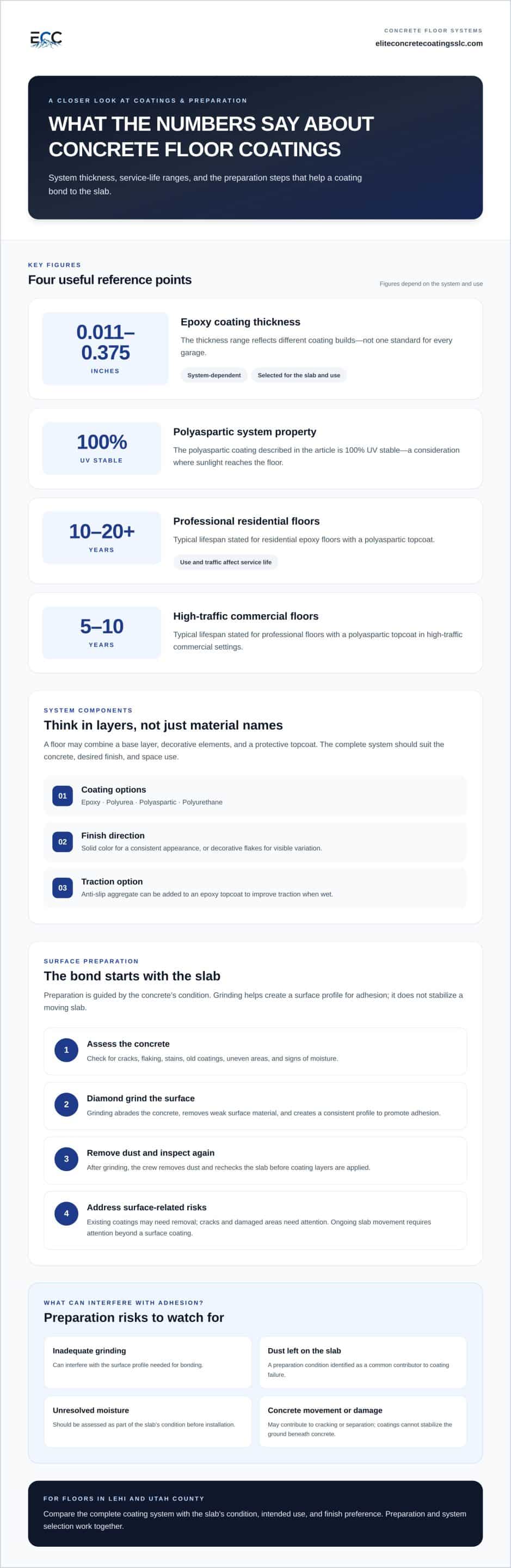
Epoxy creates a resinous floor coating over prepared concrete. Epoxy coating thickness can range from 0.011 inches to 0.375 inches, depending on the system. That range reflects different coating builds, not a single standard for every garage. In a Lehi home, the choice may depend on the existing slab, vehicle use, and finish preference. A solid color creates a consistent appearance, while decorative flakes add visible variation. A garage floor coating can combine a base layer, decorative elements, and a protective topcoat.
Preparation affects how well a coating bonds. Diamond grinding creates a suitable concrete surface for adhesion, and the installer assesses cracks, stains, old coatings, and uneven areas. These conditions can affect the preparation and coating selected. A previously coated floor, for example, may need its old coating removed before a new system is applied. Anti-slip aggregate can also be added to an epoxy topcoat to improve traction when wet.
Polyurea and polyaspartic systems offer alternatives to an epoxy-only build. Polyaspartic commonly serves as a topcoat, and the coating described for this system is 100% UV stable. That property can matter where sunlight reaches the garage floor. Polyurethane is another coating type to discuss as part of a system, but the layers should be selected together. Comparing the complete system is more useful than comparing material names alone.
How long does an epoxy garage floor last? Professional residential epoxy floors with a polyaspartic topcoat typically last 10-20 or more years. In high-traffic commercial settings, professional floors with that topcoat typically last 5-10 years. Use and traffic levels help explain the difference.
Maintenance starts with routine cleaning that removes dirt and grit before they build up. Wipe spills promptly, use cleaning products suited to the coating, and avoid dragging sharp or abrasive objects across the surface. For a Lehi shop, the cleaning routine should reflect daily traffic and the types of materials handled. A garage used for parking needs a different routine from a work area exposed to frequent dirt or spills.
Concrete grinding and surface preparation
For an epoxy floor in Lehi, preparation starts with assessing the concrete, not choosing a color. The installer checks for cracks, flaking, stains, old coatings, and signs of moisture. Each condition affects the work needed before the coating can bond. An older coating, for example, may need removal before a new system can be applied. Sharing details about past repairs and how you use the space helps shape the preparation plan.
Diamond grinding is a key professional preparation step. It abrades the concrete to promote adhesion, remove weak surface material, and create a consistent profile. After grinding, the crew removes dust and examines the slab again. Cracks and damaged areas need attention during preparation, but a coating cannot correct a slab that continues to move. Addressing surface conditions before applying the coating layers supports a better finish.
Concrete settling also deserves attention. Where caliche soil is present, assess the soil and slab together rather than assuming a coating will solve movement. A shifting or uneven slab can affect the finished surface, and recurring movement may cause cracking or separation. In Lehi and elsewhere in Utah County, distinguishing a surface crack from continuing slab movement helps guide the next step. Preparation can improve the coating’s bond, but it cannot stabilize the ground beneath the concrete.
Common causes of coating failure include inadequate grinding, dust left on the slab, unresolved moisture, and movement or damage in the concrete. These conditions can interfere with adhesion or contribute to peeling, bubbling, or cracking. Proper preparation addresses surface-related risks before installation begins.
Cost varies with the floor’s size and condition, removal of existing coatings, crack repair, and finish selection. Because each slab requires different work, there is no single useful figure for concrete floor installation costs. Concrete staining is a separate finish approach that changes the floor’s appearance but does not replace repairs or preparation. A metallic appearance is another design direction to discuss as part of a coating system, and the selected finish affects the work involved.
Preparation is also different from installing new concrete. A coating crew works with the existing slab; if settling or significant damage points to a concrete problem, that issue needs attention before a finish can deliver a sound result. For a garage or commercial floor, review coating options in light of the slab’s condition and intended use.
How much does epoxy flooring cost in Utah?
There isn’t one useful price for every epoxy floor in Lehi. The total depends on floor area, concrete condition, preparation, coating system, and finish. A garage with sound concrete needs different work from a slab with failing paint, cracks, or an old coating. An estimate is more meaningful when it describes these project details instead of comparing material names alone.
For a garage, the main cost drivers are floor area and the work required before coating. The installer assesses the slab, determines whether existing material needs removal, and selects a system suited to vehicle use. Decorative flakes, a solid-color finish, or a polyaspartic topcoat can change the specified system. Consider each choice alongside preparation, since an attractive finish cannot make up for a poorly prepared surface.
Commercial floors in Utah County involve different considerations. A warehouse, retail floor, or parking structure may have distinct traffic patterns, operating needs, and surface conditions. These details shape the coating system and installation scope. A premium specification should describe what the floor needs to withstand and which preparation steps support adhesion. Comparing a commercial project with a residential garage by floor area alone can overlook important differences.
Basement concrete differs from a vehicle garage. Intended use and moisture conditions affect which finish is appropriate, so a garage estimate should not be treated as a basement estimate. When reviewing estimates for different spaces, make sure the coating system, preparation scope, and performance needs match the specific floor.
For Lehi homeowners, a useful estimate explains the work in clear stages: assess the concrete, prepare the surface, apply the selected coating layers, and complete the chosen finish. The scope should account for visible damage and existing coatings. If the project includes a polyaspartic topcoat, the estimate should identify it as part of the system rather than treating every epoxy floor as identical.
Nearby Utah County communities may have similar project considerations, but every slab needs its own assessment. A Lehi garage with an intact surface, for example, may require different preparation from a shop floor with worn coatings. Location alone does not determine the scope; the concrete and intended use do.
An estimate is provided after a quote request, with floor area, slab condition, coating selection, finish, and preparation all affecting the project scope. Clear communication helps align the proposed work with the space. Share how you use the floor, any existing coatings, and visible damage so the estimate addresses the actual job, not a generic garage-floor example.
Installation process and vehicle-ready time
Professional installation moves from concrete assessment to surface preparation, coating, and curing. The schedule depends on the slab, selected system, and conditions in the garage.
Professional Installation and Repairs
Before coating, the installer assesses the concrete for cracks, old finishes, and damage that could affect adhesion. Preparation may include diamond grinding, cleaning, and addressing repairable surface defects. Removing an existing coating can add work, while movement beneath the slab requires attention beyond a surface finish.
Garage epoxy installation costs depend on floor area, preparation, repairs, coating layers, and finish. A useful project scope explains these factors instead of treating every residential garage as the same job. A clean slab, for example, involves different preparation from a floor with failing coating.
Garage Floor Installation Duration
Most two-car garage floor installations in Utah County take one to three days from preparation to the final coat. A standard two-car garage installation typically takes 1-2 days. The difference reflects varying descriptions of installation schedules, not a promise that every garage follows one timeline.
Surface condition, removal work, and the selected coating system can affect the work sequence. A new-construction slab in Lehi is usually allowed to cure around 30 days after pouring before coating. That curing period is separate from the coating crew’s installation duration.
Installation and Curing Timelines
Installation completion doesn’t mean the floor is immediately ready for every use. Guidance recommends waiting 24 hours before walking on an epoxy surface and 72 hours before driving a vehicle on it. Coated garage floors in Lehi are also described as typically ready for vehicles within 24 hours after installation.
Timelines vary, so distinguish the coating system and its stated instructions. Ask for the planned milestones: final coat, foot traffic, and vehicle return. This schedule helps you coordinate parking and access without assuming a walkable floor is ready for vehicle traffic.
Climate Effects on Installation and Durability
Utah’s seasonal conditions can affect the concrete and the coating’s curing process. Temperature and moisture at the slab matter during application, so installation timing should reflect actual garage conditions, not the calendar alone. A covered space and an exposed work area can also present different conditions.
For Lehi homes, the installer evaluates the slab and working environment before setting the schedule. Temperature changes during installation can influence how coating layers cure, and moisture in the concrete can affect adhesion. Discussing these conditions helps align the work plan with the space and selected system.
Solid-color and flake-system pricing
A solid-color coating creates a consistent appearance across the garage floor. A flake system adds decorative chips for visible color variation. Both options depend on the same basic project factors: floor area, concrete condition, preparation, coating layers, and finish selection. The estimate for a particular floor depends on the project and is provided after a quote request.
The finish affects both the look and the specified coating system. A solid color may suit a garage where a simple, uniform surface is the priority. Flakes add contrast and a more varied appearance. For example, a homeowner might choose colors that complement the garage walls or stored vehicles. Choose a combination that works with the space’s lighting and the look you want.
Flake epoxy finishes are built in layers, so the estimate should describe more than the decorative chips. It should identify the surface preparation, base coating, flake application, and protective topcoat included. These details clarify what the proposed finish involves. Two estimates that both say “flake floor” may describe different preparation or coating scopes.
Color selection is one decision; concrete condition is another. A stained or previously coated slab may need different preparation from clean, sound concrete. Grinding and repair work affect the scope before color is applied. The finish should also suit the floor’s intended use, whether the garage mainly stores vehicles or serves as an active workspace. A durable result starts with a system designed around the slab, not color alone.
For a useful estimate, include the garage’s floor area, visible stains, cracks, and existing coatings in the project description. Name your preferred finish, such as solid color or decorative flakes. These details help clarify the preparation and materials required. No single finish automatically costs the same across different garages because the condition and required work vary.
Ask for the coating layers and preparation scope to be described in plain language. This makes it easier to see whether the estimate accounts for the concrete and chosen design. A flake finish adds visual texture, while a solid color keeps the appearance more uniform. Compare complete project scopes, not just finish labels.
Ready to discuss a solid-color or flake finish for your garage? Request a coating quote with the floor’s condition and your preferred look in mind.
Elite Concrete Coatings: Parking Decks & Garages
Elite Concrete Coatings provides parking deck and garage coating solutions for Lehi property owners seeking a professionally finished concrete floor. Its epoxy garage flooring suits residential garages, while warehouse coatings address commercial spaces with different floor-use needs. Non-slip coatings are an option when added traction is a priority.
Turn to Elite Concrete Coatings when you’re ready to discuss a garage floor project, compare coating options, or plan a coating for a parking structure. Share how you use the space and the condition of the concrete to focus the conversation on relevant finishes and preparation.
Contact Elite Concrete Coatings to talk about your garage floor.
Make the Next Move Toward a Finished Garage
Choosing an epoxy garage floor in Lehi, Utah, is an opportunity to make the space work better for your household, not just change its appearance. Consider how you use the garage, the finish you prefer, and what you want the floor to handle. These priorities can guide a practical conversation about the right coating approach.
Elite Concrete Coatings also offers warehouse coatings, non-slip coatings, and parking deck and garage coatings for different surface needs. Whether you’re planning a residential garage or a commercial concrete project, describing the floor and how you use it is a useful place to begin.
Take the next step when you’re ready to discuss your project. Contact Elite Concrete Coatings to talk through your flooring goals and move toward a finish that suits your space.
Frequently Asked Questions
Does epoxy flooring scratch easily?
Epoxy is durable and wear-resistant, but scratches can still occur. Grit tracked in on tires or shoes can abrade the surface, while dragging heavy items may leave marks. Regular cleaning with household cleaners helps remove dirt before it gets ground into the finish. In a Lehi garage used as a workshop, consider how tools, stored equipment, and vehicle traffic may affect the floor’s appearance over time.
How long does installation take?
Professional installation typically takes 1-4 days, depending on the project’s size, shape, concrete condition, and customization. A garage with a straightforward layout differs from one needing extensive surface work or a detailed finish. The installation window is also separate from the time needed before the floor can handle normal traffic. Plan around both milestones when arranging vehicle parking or access to the garage.
What is the difference between epoxy and polyaspartic?
Epoxy and polyaspartic are different coating materials, and a floor system can use them in separate layers. For example, epoxy may form the base while polyaspartic serves as a topcoat. Polyaspartic topcoats are described as 100% UV stable, a consideration for garages exposed to sunlight. The best comparison is between complete systems, including their layers and intended use, rather than material names alone.
What is the average cost to epoxy a garage floor in Lehi, Utah?
There isn’t one reliable average for every Lehi garage. The estimate depends on floor area, concrete condition, preparation or repairs, coating layers, and finish choices such as solid color or flakes. Elite Concrete Coatings provides a free estimate, so the proposed scope can reflect your actual garage rather than a generic example. Don’t assume a coating price based on another project’s size or finish.
Which garage floor coating companies serve Lehi, Utah, and what are their reviews?
Elite Concrete Coatings provides garage floor coating services in Lehi and serves Salt Lake City, Ogden, Provo, Lehi, West Jordan, South Jordan, Spanish Fork, Layton, and Syracuse. When reviewing project feedback, look for comments about preparation, communication, finish quality, and how the floor performs in daily use, not just a general impression or rating.
How long does professional garage floor coating installation take, and how soon can you park on it?
Installation typically takes 1-4 days, with timing shaped by concrete condition, floor layout, and finish customization. The coating needs additional time after application before normal traffic resumes. Elite Concrete Coatings states that drying can take up to 24 hours before traffic resumes. Follow the project’s specific instructions for vehicle access, since walking on a floor and parking on it are different uses.
How do professionals prepare a concrete garage floor before applying epoxy?
Professionals first assess the slab for cracks, stains, damage, moisture concerns, and old coatings. They determine which areas need repair or coating removal before preparing the concrete for the new system. Diamond grinding creates a surface that promotes adhesion, followed by cleaning to remove dust. An older garage with peeling paint, for example, may need more removal work than sound, uncoated concrete.
What warranties do garage floor coating contractors in Lehi offer?
Warranty terms can differ by contractor and project, so review the written coverage rather than assuming it matches the floor’s expected lifespan. Pay attention to what the warranty covers, its duration, exclusions, and any care requirements. A clear document should identify the coating system and explain how covered problems are handled. Keep the written terms with the project details for reference after installation.