

A professional epoxy garage floor installation can cost more or less depending on the floor’s size, condition, preparation needs, and finish. The cost to install an epoxy garage floor reflects more than the coating itself: labor, repairs, and surface preparation also shape the project scope.
It’s easy to focus on materials when comparing flooring options, but preparing the concrete and applying a durable finish matter just as much. This guide explains the factors that affect epoxy garage floor estimates, including labor, supplies, floor condition, and finish. You’ll also learn what professional installation involves, so you can assess the full project before deciding what suits your garage.
Key Takeaways
- Compare coating options by finish and intended use, not just the material itself.
- Account for floor size, concrete condition, and preparation needs when reviewing an estimate.
- Understand how labor, equipment, and job supplies contribute to professional installation costs.
- Use the decision guide to weigh the work involved and choose an installation approach that suits your garage.
How Much Does It Cost to Epoxy a Garage Floor?
There isn’t one set price for every garage. Floor area, concrete condition, coating choice, and labor all influence the estimate. Compare the complete installation and ongoing maintenance, not just the coating material.
Professional Coating Prices
A professional estimate accounts for more than epoxy. It may include the measured floor area, surface preparation, repairs, application labor, and selected finish. A two-car garage with sound concrete can require different work from one with cracks or an old coating, even if their floor areas are similar.
The project price depends on the floor’s condition, size, preparation, and finish, and is provided after a quote request. Review the work included in the estimate so you can understand how those factors shape the complete floor coating project.
Epoxy Compared With Other Floor Coatings
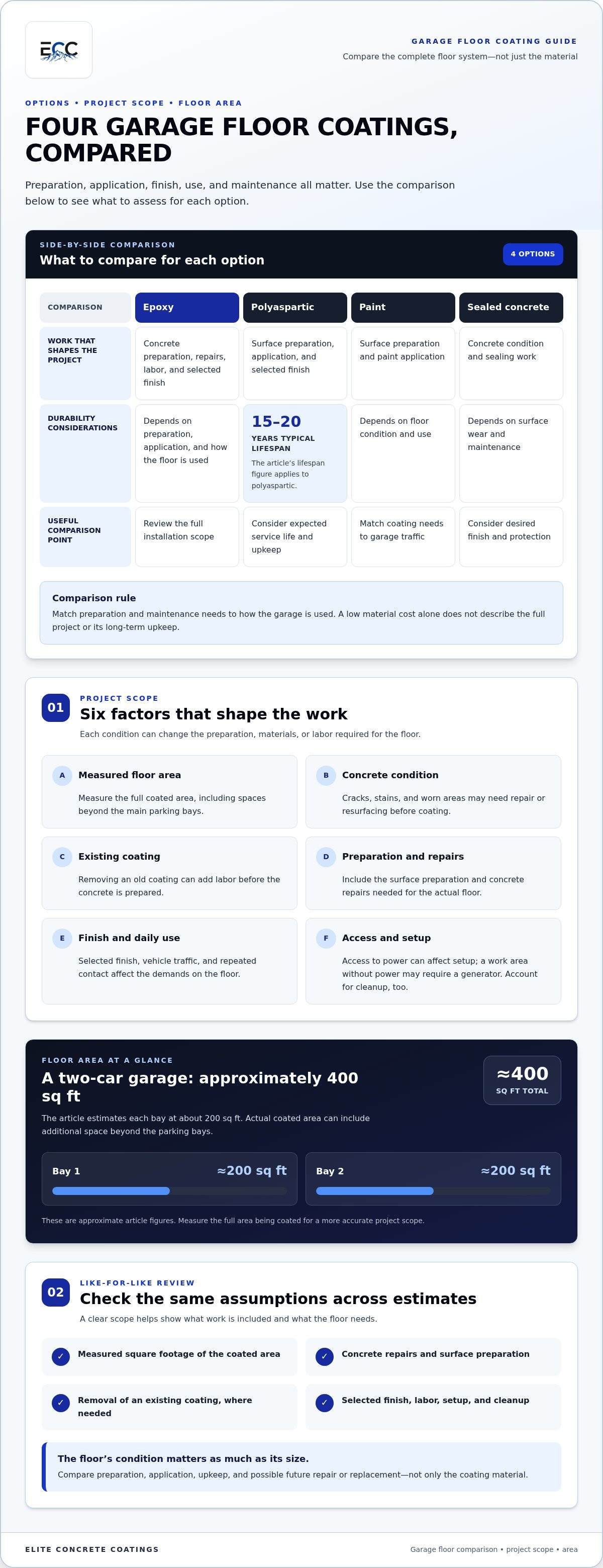
Epoxy is one option among floor treatments such as polyaspartic systems, painted concrete, and sealed concrete. These options differ in materials, application, finish, and maintenance. Compare the preparation and application each requires, along with how the garage will be used, rather than judging by material alone.
| Option | Cost factors | Durability comparison | Useful comparison point |
|---|---|---|---|
| Epoxy | Concrete preparation, repairs, labor, finish | Depends on preparation, application, and use | Assess the full installation scope |
| Polyaspartic | Surface preparation, application, selected finish | Typical lifespan is 15 to 20 years | Compare expected service life and upkeep |
| Paint | Surface preparation and paint application | Depends on floor condition and use | Compare coating needs for garage traffic |
| Sealed concrete | Concrete condition and sealing work | Depends on surface wear and maintenance | Consider the desired finish and protection |
Choose a coating by matching its preparation requirements and maintenance needs to how you use the garage.
Coating Durability and Expected Lifespan
Coating life depends on the concrete beneath it, the preparation, the application, and daily use. Vehicle traffic and repeated contact can affect wear, so a garage used for parking may face different demands from one used mainly for storage. Polyaspartic coatings have a typical lifespan of 15 to 20 years; avoid treating that figure as an epoxy lifespan.
For a useful comparison, consider how long each coating is expected to meet your needs and what maintenance it requires. A low material cost alone doesn’t show the full cost over time.
Crack Repair and Old Coating Removal
Cracks, stains, and significant wear can require repair or resurfacing before a new coating goes down. Crack repair products are an additional project expense, and the work needed depends on the condition and extent of the damage. Removing an old coating can also add labor when it must be cleared before the concrete is prepared.
Ask for these tasks to be clearly described in the project scope. An estimate that includes crack repair and coating removal covers different work from one that allows for application over a prepared floor.
Long-Term Cost of Replacing Coatings
Replacing a coating involves more than applying a new finish. The project may require removing the existing layer, preparing the concrete, making repairs, and applying the new coating. The floor’s condition can therefore affect the scope of a future replacement, too.
Compare options over the period you expect to use the garage. Include likely maintenance and replacement work, rather than comparing only the first installation. A coating that needs substantial removal or repair before renewal can change the long-term cost calculation.
Estimate assumptions and project conditions
An estimate is useful only when its assumptions match the actual garage. Floor area, concrete condition, access to power, preparation, and finish choice can all affect the project scope.
Factors Affecting Project Cost
Start by noting the floor’s square footage and visible condition. Cracks, stains, and worn areas may need repair or resurfacing before coating begins. Preparation, finish choices, and labor also affect the estimate. Each factor changes the work required, so an assessment of the concrete matters as much as the measured area.
Access and setup can affect the job, too. For example, a work area without power may require a generator. Include preparation and cleanup in your budget rather than considering only coating materials.
Garage Size and Project Cost
Floor area determines how much coating and preparation work a project needs. A standard two-car garage is estimated at approximately 400 square feet, with each bay representing about 200 square feet. Measure the entire coated area, including spaces beyond the main parking bays, to make the estimate more accurate.
Larger floors may use coating materials more efficiently, but they still require more material and work overall. Compare estimates using the same measured area and preparation scope, rather than assuming the total project will cost less because the floor is larger.
Project Budget and Average Cost
An average project figure provides broad context, not a tailored budget. It can’t account for a particular garage’s square footage, cracks, old coating, or finish. Use an average as a starting point, then compare it with the work your own floor needs. A 250-square-foot garage, for example, has a different material requirement from a 400-square-foot garage.
For a project budget, separate the estimate into coating, preparation, repairs, labor, and cleanup. This makes it easier to see which conditions drive the scope. A professional garage floor coating project is priced according to the floor’s size, condition, preparation, and selected finish; the exact figure is provided in a quote for your case.
Before comparing estimates, confirm that each uses the same assumptions:
- Measured square footage of the coated area
- Concrete repairs and surface preparation included
- Removal of any existing coating included where needed
- Selected finish and required job setup
- Cleanup and labor included in the project scope
For instance, an estimate based on sound concrete won’t match one for a floor needing crack repairs. Aligning these details helps you compare the actual work, not just the totals.
Professional garage floor installation costs
A professional estimate reflects the garage floor’s size, condition, preparation, and selected coating system. Installation and the time before driving on the floor depend on the product and curing conditions. Keep vehicles off the floor until the coating instructions allow traffic. Poor preparation or moisture beneath the coating can contribute to adhesion problems, including peeling.
National Average Epoxy Floor Costs
A national average is only a broad reference, not an estimate for your project. Figures vary according to what’s included, such as surface preparation, repairs, and finish selection. Review the stated scope before using an average to plan your budget. A figure for coating alone may not represent the full work needed for a garage with stains or damaged concrete.
Costs Excluded From Estimates
Some estimates may exclude work beyond basic coating application. Check whether concrete repairs, removal of an old coating, resurfacing, cleanup, and specialized setup appear in the written scope. An estimate that excludes crack repairs doesn’t account for the same work as one that includes them. Reviewing inclusions helps explain differences between estimates without treating every total as an identical package.
Check whether the estimate covers the entire measured floor or only a defined area. A partial-area scope represents different work, even if both estimates describe a garage floor coating.
Garage Floor Resurfacing Costs
Resurfacing is additional concrete preparation for floors that need more than routine cleaning before coating. Cracks, stains, and worn sections can affect the amount of repair or surface correction required. Since the work depends on the condition and extent of the damage, distinguish resurfacing from applying the coating itself.
For a clear comparison, identify which repairs are included and which areas need attention. A floor with isolated damage differs from one needing broad surface correction. This helps explain why projects with similar dimensions may require different preparation.
Materials and Equipment Costs
Material and equipment needs depend on the coating system, floor area, and preparation. A professional estimate may include coating materials, preparation equipment, and tools needed for application. Equipment rental or setup may be relevant if the work area lacks power, and a particular finish may require different materials from a basic coating.
Use the estimate’s line items to distinguish materials from labor and preparation. This makes the project easier to assess than a single total that doesn’t explain what it covers.
| Estimate item | What it covers | What to compare |
|---|---|---|
| Preparation | Cleaning and surface work | Included repairs and removal |
| Resurfacing | Concrete correction | Areas and damage addressed |
| Materials | Coating system and finish | Selected application scope |
| Equipment | Tools and job setup | Required access and equipment |
Before comparing estimates, use these practical checks:
- Confirm the measured area and coating scope.
- Separate preparation and repair work from coating application.
- Review curing instructions before scheduling vehicle use.
DIY versus professional installation
Professional installation is especially helpful when a garage has details that make an even finish harder to achieve. Door thresholds, floor edges, posts, and built-in storage create boundaries that need careful attention. A clear plan for these areas helps the coating look consistent throughout the space, not just across the open parking area.
Concrete joints also deserve attention during project planning. Their placement can affect the finished floor’s appearance and how the coating meets adjoining surfaces. For example, a control joint running across the garage may need deliberate treatment rather than being covered without consideration. Discussing these details before work begins helps align the finished appearance with the existing slab.
Finish selection is another useful part of the conversation. Solid, flake, and metallic epoxy create distinct visual effects, and the chosen finish should suit the garage’s appearance and everyday purpose. A professional can explain how the selected look fits the project and how details such as edges and transitions will be addressed.
Good project coordination starts with a practical review of the space. Identify fixed equipment, floor drains, door tracks, and areas that must remain accessible. These details can affect how the work area is organized and where the coating is applied. A thoughtful plan also helps prevent missed sections around obstacles.
Before approving the project scope, clarify the expected appearance and the areas included. Decide, for example, whether the coating should extend into a side alcove or stop at a defined threshold. Clear boundaries make it easier to understand what the installation covers and reduce confusion about the final result.
Professional installation helps connect decisions about the concrete condition, finish, garage layout, and intended use. If appearance is a priority, discuss how the finish will look beside walls, doorways, and permanent fixtures. Point out unusual features during the assessment so they can be included in the scope.
Use a focused discussion to make the project more specific:
- Identify joints, drains, thresholds, and permanent obstacles.
- Choose the finish based on the look you want in the garage.
- Define exactly which floor areas the coating will cover.
- Describe how the space is used and which details matter most.
These decisions help shape a professional installation around your garage’s actual layout and priorities. Much like relying on specialized contractors for exterior property maintenance—such as scheduling professional lawn fertilization and weed control Mt. Juliet TN—working with trained experts ensures the job is handled with the proper equipment and dedicated preparation.
Basic labor and job supplies
Labor and job supplies cover more than spreading coating across a garage floor. A 129-square-foot estimate example includes labor, while the work also involves preparation and cleanup. The crew’s time depends on the concrete, the floor’s layout, and the tasks required before application. A clear scope separates this work from coating materials and identifies what the finished project includes.
Preparation is a key part of the labor. The crew needs to ready the floor, address surface conditions included in the scope, and keep the work area organized. A floor with stains or damaged sections, for example, may need different preparation from a clean, even surface. These steps create a suitable base for the coating and take time beyond applying the finish.
Labor estimates can also account for minimum time on site. One example uses a minimum labor charge of 2 hours, even though the project area is 129 square feet. That illustrates why labor doesn’t always scale directly with floor size: setup, equipment handling, edges, and cleanup also take time. The actual scope depends on the work involved.
Job supplies support preparation and cleanup. Trash bags and cleanup materials help contain debris and leave the garage orderly after the work. Other supplies and equipment depend on the surface and installation plan. If the work area lacks power, a generator may be needed. These project-specific setup needs differ from basic cleanup supplies, so the estimate should identify relevant requirements.
Review labor and supplies as distinct parts of the project:
- Preparation labor: Work needed to ready the concrete surface.
- Application labor: Time spent placing the coating and completing the finish.
- Job setup: Equipment and access needs, such as power for the work area.
- Cleanup supplies: Materials used to collect debris and tidy the garage.
- Project scope: The measured area and tasks included in the work plan.
Before work begins, move stored items out of the garage if you can do so safely. Clearing the floor gives the crew access to the full work area and avoids spending preparation time moving belongings. Shelves, bins, and parked vehicles can block edges or sections that need coating. Confirming the usable area also helps keep the measured scope aligned with the garage floor.
When comparing estimates, look for labor, preparation, equipment, and cleanup as clearly described scope items. A complete description shows how the crew’s work and job supplies contribute to the finished floor, rather than treating the coating material as the entire project.
Elite Concrete Coatings: Warehouse Coatings
Elite Concrete Coatings helps property owners match concrete coatings to their space and its demands. Warehouse Coatings are designed for busy working environments, while Non-Slip Coatings, Parking Decks & Garages, and ESD Coatings serve other specialized settings. For a residential garage, the company offers Epoxy Garage Flooring.
Turn to a professional coating team for an assessment of the concrete, preparation needs, and finish options. Sharing how you use the floor and describing visible damage helps shape a project scope around its actual condition. Elite Concrete Coatings serves customers in Salt Lake City, Ogden, Provo, Lehi, West Jordan, South Jordan, Spanish Fork, Layton, and Syracuse.
Contact Elite Concrete Coatings to discuss your flooring project.
Plan Your Next Step for a Better Garage Floor
A reliable estimate for the cost to install an epoxy garage floor starts with a clear picture of how you use the space and what you want from its finish. Before moving ahead, note your priorities, such as improving traction or choosing a coating suited to the setting. Elite Concrete Coatings offers Epoxy Garage Flooring, along with Warehouse Coatings, Non-Slip Coatings, and Parking Decks & Garages.
Use those priorities to guide a conversation about your floor. Share what matters most, from the concrete’s current condition to the finished look and how the garage will serve your household. A focused discussion can connect your goals with an appropriate coating project and a clear next step.
Ready to talk through your garage flooring plans? Connect with Elite Concrete Coatings about your project and take the next step toward a floor designed for your space.
Frequently Asked Questions
Can the price change after you see my garage?
Yes, the project scope may change if an assessment reveals conditions that weren’t apparent beforehand. For example, a floor drain, hidden crack, or coating residue can affect the preparation plan. Share what you know about previous treatments or water exposure, and make the full floor accessible for review. A project-specific estimate can then reflect the garage’s actual surface, layout, finish choices, and required work.
Epoxy vs Polyaspartic vs Polyurea: Which Is Worth It?
The best fit depends on your garage’s use, desired appearance, and priorities for the finished surface. Epoxy, polyaspartic, and polyurea are different coating systems, so compare the proposed application and maintenance expectations for each. Consider how the floor will be used, whether a decorative finish matters, and how the concrete will be prepared. These details make the comparison more useful than choosing by coating name alone.
How long does each coating actually last?
Properly installed epoxy floors can last 10-20 years depending on the environment, and may last up to 20 years before refinishing is needed. Polyaspartic coatings typically last 15 to 20 years. For any system, the actual service life depends on the installation and conditions in the garage. Ask how the expected lifespan relates to your floor’s use and the maintenance it will receive.
Why is one quote thousands less than another?
Quotes can cover different work, even when they describe similar garage floors. One may include removing an existing coating, while another may exclude that task or address fewer damaged areas. Compare the measured floor area, preparation scope, selected finish, and cleanup details. A proposal that includes treating a side alcove, for example, covers more than one limited to the main parking space.
What is the average cost to install an epoxy garage floor in the United States?
A broad average won’t tell you what an individual garage project will cost in northern Utah. The estimate depends on floor area, concrete condition, preparation requirements, and finish selection. For a relevant project budget, describe the garage and its intended use, then review a scope based on the actual space. Conditions can vary from property to property in Salt Lake City, Ogden, and Provo.
How much does epoxy garage flooring cost per square foot, including labor and materials?
The per-square-foot estimate depends on the coating system, labor, preparation, and concrete condition. An open layout may require a different scope from a garage with narrow edges, steps, or damaged sections. In Layton or West Jordan, for example, the measured floor area and required work are more useful than a generic rate. A tailored quote can outline the project components.
What factors affect the cost of an epoxy garage floor, such as size, condition, and coating type?
Floor dimensions, concrete condition, coating choice, and layout all affect the scope. Drains, thresholds, and built-in obstacles may also influence the application plan. Consider whether the garage is used for parking, storage, or both, and which finish suits that use. Sharing these details helps build a practical estimate for homes in Lehi, South Jordan, Spanish Fork, Syracuse, and nearby communities.
How much does concrete floor preparation, crack repair, or moisture mitigation add to epoxy installation costs?
Additional work depends on what the concrete needs before coating. A localized crack calls for a different preparation plan from widespread surface damage, while signs of moisture may require assessment before application. Point out stains, recurring damp areas, and previous coatings during the project review. Every garage floor in northern Utah has its own condition, so the estimate should reflect its actual preparation needs.