
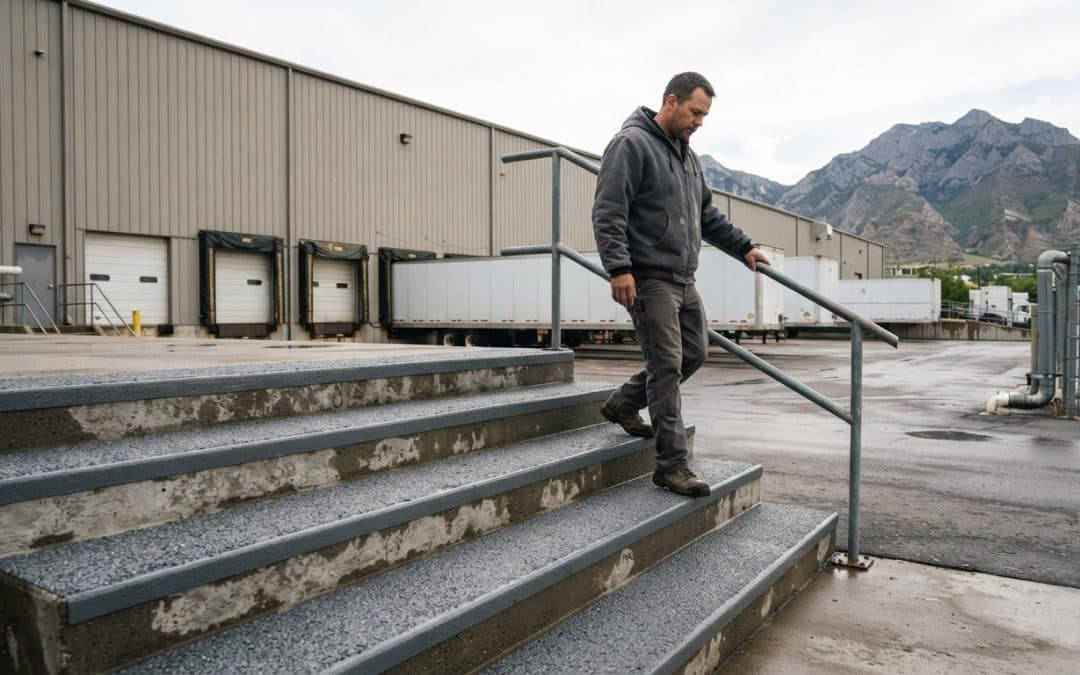
A smooth-looking finish isn’t always the best choice for outdoor concrete. Anti-slip concrete coatings in Utah can add texture to walkways, stairs, driveways, and patios, helping provide traction where it matters, especially when surfaces are wet or exposed to the weather.
It makes sense to want an exterior surface that feels dependable underfoot and still looks finished. Textured coatings create a more pronounced surface profile to increase friction; some systems use additives such as silica sand or aluminum oxide. The right texture depends on the concrete and how people use the area.
Learn which outdoor concrete surfaces may benefit from an anti-slip coating, how textured finishes work, and what professionals consider when planning an application. You’ll also see how Elite Concrete Coatings’ Non-Slip Coatings can fit your project, with practical context for property owners in northern Utah communities.
Key Takeaways
- Assess how each outdoor concrete area is used and exposed to moisture before choosing a coating approach.
- Recognize how cracks, crumbling, and uneven spots can affect the surface and the coating plan.
- Learn why textured finishes can improve traction and what factors shape the choice of texture.
- Explore coating options for different outdoor surfaces, from pedestrian paths to parking areas.
- See when Elite Concrete Coatings’ non-slip coating service may suit a project in northern Utah.
Concrete floor coating customer review
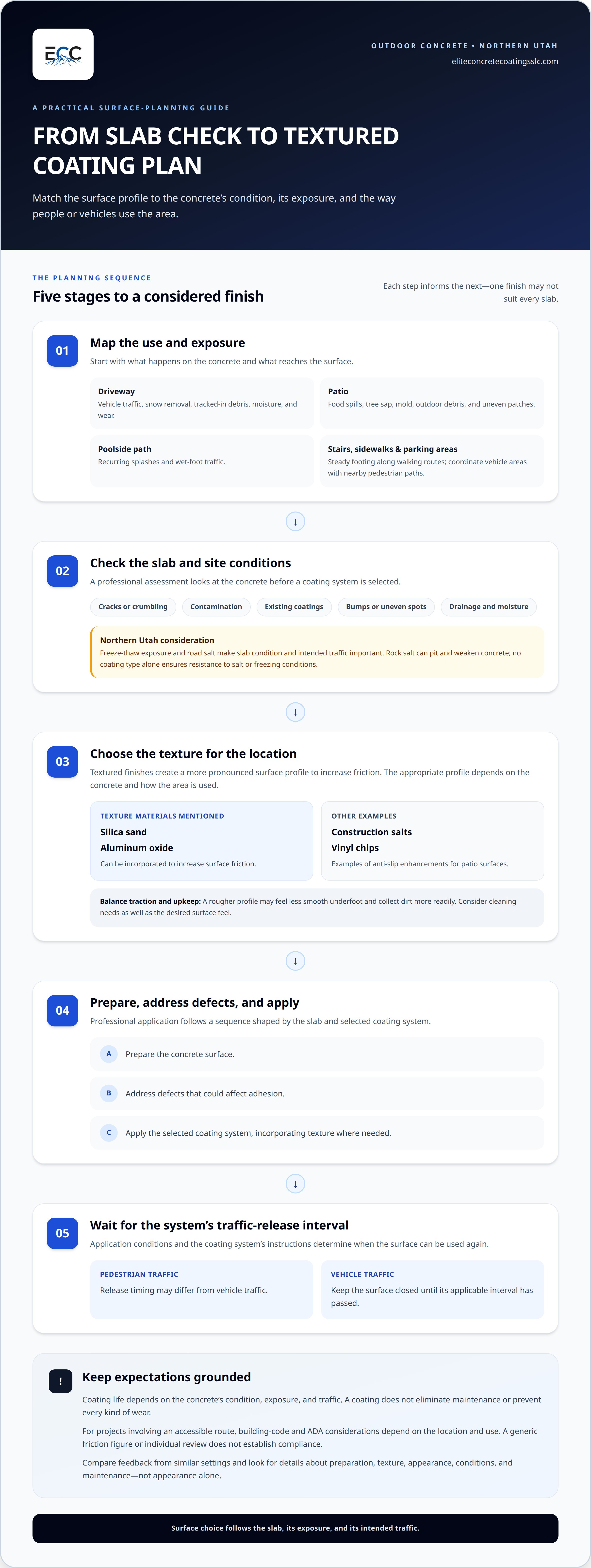
In northern Utah, freeze-thaw exposure and road salt make the slab’s condition and intended traffic important factors in coating selection. No coating type alone ensures resistance to salt or freezing conditions. Rock salt can pit and weaken concrete, so consider the slab’s condition and exposure when choosing a coating.
Customer reviews can show how a finished surface performs, but one account can’t guarantee the results of another project. Compare feedback about similar settings, such as an outdoor walkway or an indoor warehouse floor. Look for details about preparation, texture, appearance, and the conditions described.
Warranty terms deserve the same careful comparison. Review what coverage includes, its exclusions, and any maintenance conditions. Terms can differ between coating systems. A review about a polished finish also shouldn’t stand in for feedback on a textured surface. For another finish approach, commercial polished concrete has a different surface objective from added texture.
Building-code and ADA considerations for projects in northern Utah depend on the location, use, and whether the concrete is part of an accessible route. These factors shape project requirements and surface design. A generic friction figure or individual review doesn’t establish that a surface meets those requirements.
Professional application begins with assessing the slab for cracks, crumbling, contamination, and existing coatings. The installer prepares the surface, addresses defects that could affect adhesion, and applies the selected coating system. Where texture is needed, silica sand or aluminum oxide can be incorporated to increase surface friction.
The coating system’s instructions and application conditions determine when foot or vehicle traffic can resume. Release times may differ for pedestrians and vehicles, so keep the surface closed until the applicable interval has passed. A review that omits curing details can’t establish a schedule for another project.
How long a coating lasts in northern Utah depends on the concrete’s condition, exposure, and traffic. Don’t assume a coating eliminates maintenance or prevents every kind of wear.
Texture also involves practical tradeoffs. A rougher profile may feel less smooth underfoot and collect dirt more readily. Reviews are most useful when they describe the surface’s actual use and cleaning needs, not just its appearance. Compare those details with your project priorities.
No single coating type is identified as best for freeze-thaw cycles and road salt. Selection should account for the slab’s condition and intended traffic. Where added texture is needed, silica sand or aluminum oxide can increase surface friction.
Driveways, patios, pool decks, stairs, walkways, and sidewalks
Concrete surfaces need different coating plans because traffic and exposure vary by location. A driveway carries vehicles, while a front step serves pedestrians. A poolside path encounters water, and a public sidewalk connects multiple entrances. For each surface, the installer considers its condition, use, drainage, and desired texture before choosing an approach.
Driveways face vehicle tires, tracked-in debris, snow, and repeated moisture. In northern Utah, heavy snowfall can make frequent snow removal necessary. Clearing snow promptly limits how long moisture remains on concrete. Rock salt can pit and weaken the slab, so winter care matters alongside the surface finish. Existing cracks or crumbling should also be considered during the coating assessment.
Patios are exposed to changing weather, food spills, and organic debris. Mold, mildew, fungus, and tree sap can affect outdoor concrete. Bumps, cracks, and uneven patches may create slip or trip hazards. A coating can help seal porous concrete against outdoor debris and spills, while texture adds surface profile. Construction salts and vinyl chips are examples of anti-slip enhancements.
Poolside concrete faces frequent splashes and wet-foot traffic. Paths beside lakes, ponds, hot tubs, or swimming pools can become slippery as weather and moisture change. Stairs need consistent footing across each tread, while walkways and sidewalks benefit from texture suited to regular pedestrian use. The finish should also be practical to clean, since debris can collect in a rougher profile.
Consider how each area is used and exposed before selecting a texture:
- Driveway: Account for vehicle traffic, snow removal, and surface wear.
- Patio: Consider food spills, sap, mold, and uneven concrete.
- Poolside path: Focus on recurring splashes and barefoot or shod traffic.
- Stairs and sidewalks: Prioritize steady footing along the full walking route.
These examples show why one finish may not suit every slab. A texture that works for a vehicle entrance may feel too coarse on a narrow walkway. The installer evaluates the concrete and its intended use, then matches the surface profile to the location’s traction and cleaning needs.
Commercial properties have another consideration: vehicle areas and adjacent pedestrian routes may need coordinated planning. For a facility with a parking structure, explore parking deck and garage coatings as part of the surface discussion.
Planning should account for changing exposure as well as the concrete’s current condition. Weather and nearby bodies of water, including lakes, ponds, hot tubs, and swimming pools, can contribute to patio slips, trips, and falls. The patio’s setting is therefore part of the traction decision, not a detail separate from the slab. Consider how the area is used and the moisture it may encounter, while choosing a profile that can still be cleaned.
Winter planning can also affect the driveway choice. In Utah, homeowners may need to shovel their driveways up to 3 times a day during heavy snowfall. That repeated need reinforces the importance of considering snow removal alongside vehicle traffic and surface wear. The same property may therefore call for distinct choices: a driveway finish suited to its vehicle and winter demands, and an outdoor sitting or poolside surface assessed for weather, water, and reliable footing. Reviewing each area separately helps keep traction and practical upkeep in view.
Coatings for parking lots and sidewalks
A parking lot combines vehicle lanes, parking stalls, entrances, and pedestrian routes, each with different demands on the concrete. A coating plan should account for those uses rather than treating the entire lot as one uniform surface. For example, a walkway beside a busy entrance serves pedestrians, while nearby stalls receive vehicle traffic.
Start with the site layout. A professional assesses the concrete, identifies where vehicles turn or stop, and maps pedestrian routes. This helps distinguish areas where added texture is a priority from those where a smoother finish better suits the surface. It also helps plan clear transitions between a parking lane and a sidewalk.
Sidewalks need a continuous, practical walking route. A coated section should fit the adjacent concrete, entrances, and pedestrian crossings without creating abrupt changes. At a storefront, for example, the route from parking stalls to the entrance should suit foot traffic and the conditions people encounter along the way.
Drainage matters in both settings. Water that collects on a parking surface can leave sections wet, while runoff crossing a sidewalk can affect footing. During evaluation, the installer considers where water flows and whether uneven or damaged concrete could affect the finished surface. Coatings add a finish to the slab; they don’t correct every underlying problem.
Site planning can consider these distinct zones:
- Vehicle lanes: Account for turning, stopping, and repeated tire contact.
- Parking stalls: Consider vehicle use and how people enter or leave parked cars.
- Walkways: Prioritize the pedestrian route between stalls and entrances.
- Crossings: Keep the change between vehicle and foot traffic areas coherent.
Texture should match each zone’s function. A pronounced profile may be unnecessary in one area, while a pedestrian route exposed to moisture may call for a different finish. The installer considers the concrete, expected traffic, and cleaning needs together to align surface friction with how the parking lot or sidewalk is used.
For a commercial property, the project scope also shapes the work sequence. A lot with several entrances may require planning pedestrian routes alongside vehicle access, so the coating plan reflects the whole site rather than an isolated slab. Share the layout, traffic patterns, and areas of concern during planning. These details help define an approach for each concrete surface.
How textured coatings increase surface friction
A smooth coating creates a relatively even finish across concrete. A textured finish adds small raised particles or surface irregularities, increasing contact between footwear and the coated slab. For example, silica sand or aluminum oxide can be incorporated to add texture and increase friction. This is why anti-slip concrete coatings in Utah can be tailored to different surfaces.
Think of texture as a profile of peaks and shallow spaces. A shoe sole can grip raised points instead of meeting only a smooth film. On a wet walkway, this surface profile can help provide traction. The coating still needs to suit the concrete’s use and exposure, including whether people or vehicles regularly cross it.
The choice of aggregate affects how the finished surface feels and functions. Silica sand and aluminum oxide can create texture, but the result depends on how the material is incorporated. A professional considers the area’s purpose, expected traffic, and cleaning needs before selecting a profile. Anti-slip concrete coatings in Utah should be planned for the specific slab, not given a one-size-fits-all texture.
Texture also needs to be applied consistently. If aggregate distribution varies across a stair tread, one step may feel different from another. During installation, the coating system and aggregate are applied to create an even profile. Concrete condition matters too: cracks, crumbling, or contamination can interfere with preparation and adhesion.
More texture isn’t automatically better. A pronounced profile may feel rougher underfoot and collect dirt more readily than a smoother finish. On a walkway, that can affect routine cleaning; on a vehicle area, the desired profile may differ. A professional balances traction needs with comfort, maintenance, and everyday use.
During planning, surface texture is considered alongside:
- Moisture exposure: A poolside path differs from a covered entrance.
- Traffic: A pedestrian route and vehicle lane have distinct demands.
- Concrete condition: Surface defects can influence preparation and application.
- Cleaning needs: Deeper texture may require more attention to trapped debris.
Texture is one part of a complete coating system, not a substitute for sound concrete or appropriate care. A professional assesses the slab, selects a suitable coating approach, and applies a profile suited to the area’s intended function. This helps match the finished surface to real-world use, not appearance alone.
Planning for texture also means considering surface care. Concrete is porous, so water and chemicals can seep into small holes. Cracks and crumbling can expose more of the surface and accelerate damage. Consider the coating profile alongside the slab’s condition and routine care, rather than as a stand-alone solution. Keeping concrete in good condition helps preserve the surface beneath the coating.
Routine care and appropriate maintenance help limit moisture exposure and protect concrete from damage. Cracks and crumbling can expose more of the surface and accelerate deterioration. These considerations help maintain a sound slab, while texture affects how the finished surface engages with footwear or tires. Ongoing attention to the concrete’s condition and cleaning needs helps keep the profile suited to everyday use.
What types of anti-slip concrete coatings are available in Utah?
Anti-slip concrete coatings can create texture in different ways. Some systems incorporate aggregate, such as silica sand or aluminum oxide. Others use decorative additions, including construction salts or vinyl chips. The right approach depends on the concrete’s condition, exposure, traffic, and desired finish.
Silica sand and aluminum oxide add small surface irregularities. These particles create a textured profile that can increase friction compared with a smoother finish. A professional considers the concrete’s location and how people use it before selecting a texture. A wet walkway, for example, has different demands from a vehicle parking area.
Construction salts and vinyl chips offer another way to add texture to concrete. They can also change the surface’s appearance, which may matter on a patio or entrance. Decorative effect alone shouldn’t determine the selection. The installer considers the intended use, exposure to moisture, and cleaning needs.
These approaches aren’t interchangeable in every setting. A pronounced texture may help in an area exposed to moisture, while a less aggressive profile may suit a route where comfort and routine cleaning matter. Vehicle traffic adds another consideration in a parking area. The coating plan should match the concrete’s actual role rather than apply one finish everywhere.
Before recommending a texture, a professional typically evaluates:
- Concrete condition: Cracks, crumbling, or existing surface coatings affect preparation.
- Surface use: A pedestrian route differs from a vehicle area or warehouse floor.
- Moisture exposure: An uncovered walkway faces different conditions from a sheltered entrance.
- Finish needs: Aggregate and decorative additions can affect both texture and appearance.
- Cleaning demands: A rougher profile may collect debris more readily.
This evaluation helps match the coating system and texture to the site. It can also identify damaged concrete that needs attention before coating. A textured finish won’t resolve an uneven or crumbling surface on its own; preparation and a suitable application plan remain essential.
For a surface that needs added traction, discuss a coating approach built around its use, exposure, and desired finish. Explore non-slip coating options for commercial concrete applications.
Elite Concrete Coatings: Non-Slip Coatings
Elite Concrete Coatings provides Non-Slip Coatings for concrete surfaces where added texture is needed. Choose this service for a walkway, parking area, or other concrete floor that needs a professionally applied textured finish. The coating approach can be planned around the surface’s condition, use, and exposure.
For commercial and industrial properties, Elite Concrete Coatings also offers Warehouse Coatings, Parking Decks & Garages, and ESD Coatings. Understanding the concrete area and its role helps shape a coating plan suited to the space. Share which surfaces need attention and how they’re used to start the conversation.
For non-slip coating needs in northern Utah, contact Elite Concrete Coatings to discuss your project.
Plan a safer surface for your next project
Start by identifying which concrete areas need attention and how each space is used. This gives your coating discussion a practical focus, whether you’re planning an outdoor walkway or a commercial property. For anti-slip concrete coatings in Utah, a project-specific plan connects the surface’s purpose with the finish you want.
Elite Concrete Coatings offers Non-Slip Coatings, Warehouse Coatings, and Parking Decks & Garages for different concrete settings, from pedestrian areas to working facilities and parking structures. Share the locations you want coated and the conditions they face to focus the conversation on your project in northern Utah.
A well-planned coating project starts with clear priorities: the surfaces, their use, and the finish you’re seeking. Take that next step with a team focused on concrete coatings. Contact Elite Concrete Coatings today to discuss your project. A thoughtfully selected finish can help you move forward with greater confidence in your space.
Frequently Asked Questions
Are anti-slip concrete coatings suitable for Utah patios, driveways, pool decks, and garage floors?
Yes, anti-slip coatings can suit patios, driveways, pool decks, and garage floors when the coating system matches the surface and its use. Outdoor areas and garages face different conditions, so one finish may not suit every location. Elite Concrete Coatings offers Non-Slip Coatings and Epoxy Garage Flooring. For projects in Salt Lake City, Ogden, Provo, Lehi, West Jordan, South Jordan, Spanish Fork, Layton, or Syracuse, describe the surface and its setting.
Which anti-slip coatings work best for Utah freeze-thaw cycles and road salt?
No single coating type is identified as best. Choose based on the slab’s condition and intended traffic. Silica sand or aluminum oxide can add texture, while prompt snow removal and avoiding rock salt help protect the concrete.