
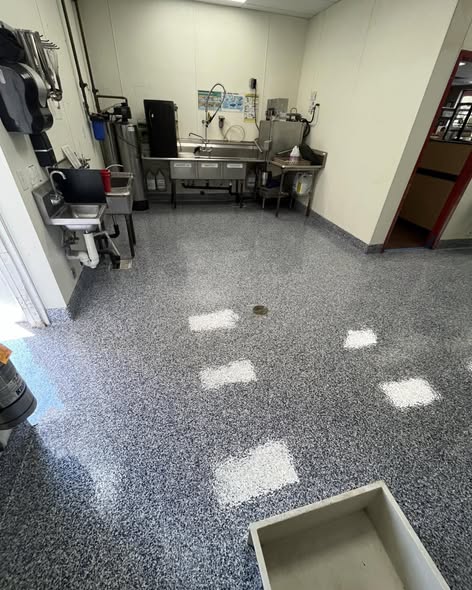
Imagine if you will, the most rugged environment possible. 24/7 foot traffic of hundreds of people. Rolling carts loaded with thousands of pounds of product. Hot grease and liquids, and spills of every kind. Sawing machines, drills, and shears. Worst of all, temperature variations and humidity swings that are guaranteed to wreak havoc with most flooring materials.
If you own a business or work in an industrial kitchen, you know these things all too well. The floor of your facility is at the epicenter of all this action, and is often the first thing a customer or client will see when they enter the building. Not only is the floor an important part of the overall aesthetics and branding of your business, but it also plays a critical role in the safety of your employees, your customers, and the sanitation of your products.
For all these reasons, it is extremely important to select the right material for the job. If you own a facility with a commercial or industrial kitchen, a heavy-duty epoxy floor coating is one of the best choices out there.
What Makes Epoxy Floor Coatings So Durable?
Industrial epoxy flooring is not your average paint or floor finish. Epoxy is a two-component thermosetting resin system that combines a resin and a hardener. The components are mixed, then poured and spread over the floor.
As the epoxy sets, a chemical reaction occurs, turning the liquid resin into a hard, plastic-like material that bonds tenaciously to the concrete substrate. This chemical reaction makes epoxy one of the toughest floor systems you can buy. The end result is a floor surface that is typically 5-10x stronger than concrete itself.
No matter what type of commercial or industrial kitchen you have, the floor will be subjected to some sort of abuse every single day. Hot pots and pans being dropped from 10 foot shelves. Refrigeration units, freezers, and industrial cooking equipment with tires that can weigh 1000 lbs each. Delivery people and staff constantly shuffling back and forth. Industrial kitchens are tough on floors, but epoxy will keep up with the challenge.
Key Benefits of Epoxy in a Kitchen Environment
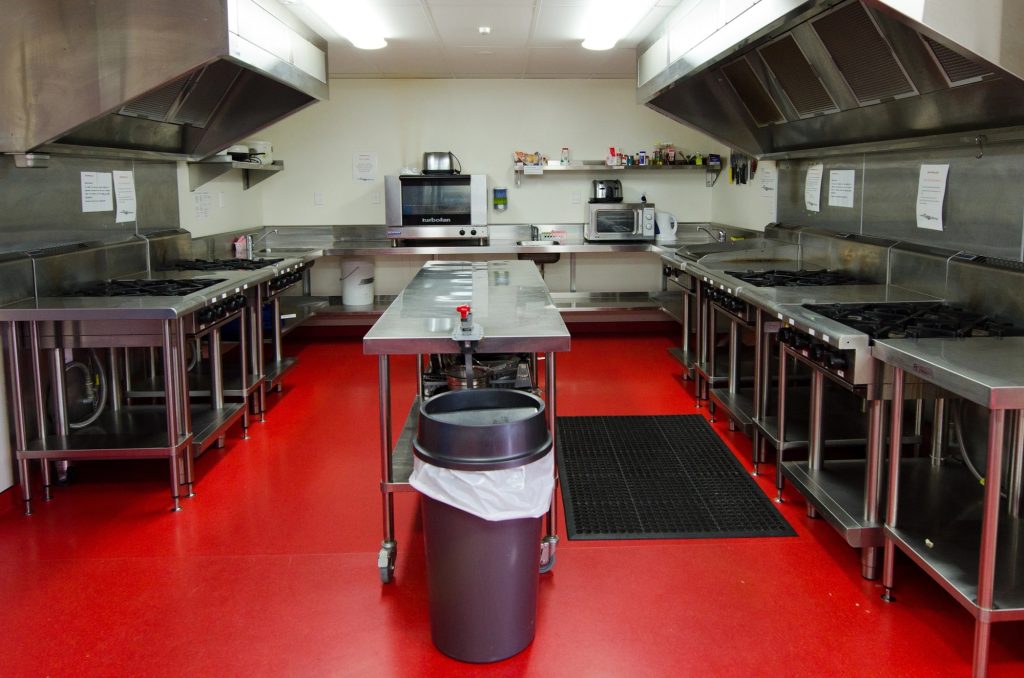
Commercial Kitchen Flooring
An epoxy coating is thick and durable, providing excellent protection against the type of heavy impact associated with a commercial or industrial kitchen. Stock pots and pans, refrigerator and freezer units, rolling equipment carts, and even employee footwear are unlikely to leave a mark on an epoxy coated floor.
On the other hand, other types of flooring materials are easily damaged by such abuse. Tile, for example, can chip or crack when struck with a hard enough blow. This doesn’t just ruin the look of your floor, but can also create a trip hazard, requiring time-consuming and expensive repairs.
Superior Resistance to Wear and Tear
Abrasion resistance is another important characteristic of an epoxy floor coating. Staff members push and pull heavy equipment and stock across the floor. Chairs and carts are scraped and dragged over the surface. All of this activity creates a sandpaper-like effect, wearing down the finish of your floor over time.
Epoxy is harder than concrete, creating a protective shield that resists scratches and scuffs. Your floor will look brand new for years, as opposed to with other flooring materials, which quickly take on a ‘beaten up’ appearance.
Superior Hygiene of an Epoxy Floor Coating
Hygiene is one of the single most important considerations for any kitchen floor coating. Tile floors have grout lines, which are notorious for trapping moisture, spills, food particles, and bacteria. No matter how much time and energy you spend cleaning them, it can be extremely difficult, if not impossible to sanitize completely.
Because epoxy floor coatings are seamless, there are no joints, seams, or grout lines for dirt and bacteria to hide in. Spills can be easily mopped or swept up completely, leaving behind a sanitized surface. This makes daily cleaning faster and more thorough, giving you more confidence that your facility will not only meet but exceed health code standards.
Chemical Resistance
Kitchens are an obvious place where all kinds of liquids will be spilled on the floor. Oil, grease, cleaning chemicals, acidic liquids like vinegar or citrus juice, and other corrosive liquids can all break down a floor coating over time. If left unchecked, it can lead to stains and discoloration that are difficult or impossible to remove.
Epoxy floor coatings are resistant to most chemicals and liquids. This means they are non-porous, and anything spilled on them will simply stay on the surface until it can be mopped up. This protects the coating itself, as well as the underlying concrete substrate.
Enhanced Safety with Slip-Resistant Finishes
Slips and falls are one of the most common types of workplace injuries. In a kitchen environment, this risk is significantly amplified. Large volumes of water, oil, grease, and other liquids will inevitably be spilled or leaked onto the floor.
To increase safety, an epoxy floor can be customized with a non-slip aggregate or sand broadcast into the coating during installation. Quartz sand, aluminum oxide, or any number of decorative aggregates can be used to provide a permanent textured finish with excellent traction. You can even change the level of texture throughout your facility, providing a non-slip coating in high-risk areas like cooking or dishwashing stations.
If you own or manage a facility with a commercial or industrial kitchen, you know these problems first hand. Epoxy flooring is built to tackle each and every one of these issues head on, providing a custom solution for your business needs.
Epoxy Flooring for Commercial and Industrial Kitchens
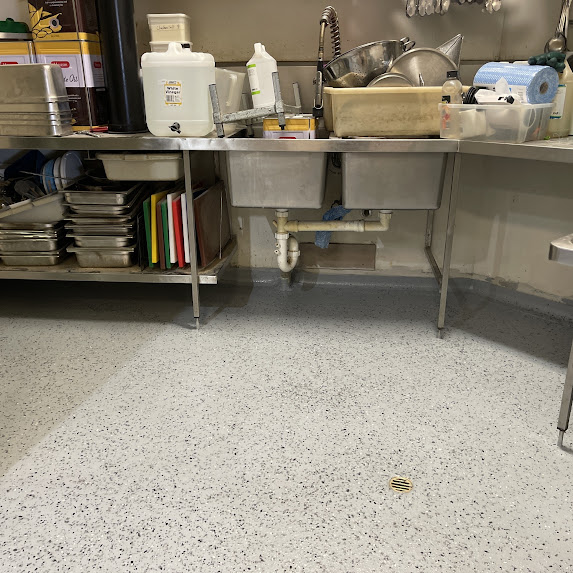
Epoxy Kitchen Flooring Salt Lake City
The versatility and robust nature of epoxy coatings make them ideal for a wide range of food-related industries.
- Restaurants and Cafes: The prep kitchen line. The restaurant dining room. The stock room, storage room, walk-in refrigerators and freezers. Epoxy is built to provide the highest level of performance in even the busiest restaurant kitchens.
- Food Processing: Industrial food processing facilities have some of the harshest environments of any facility. High forklift and equipment traffic, spills, heavy machinery, and rigorous daily cleaning all take a toll on flooring materials. Epoxy systems are engineered to withstand all of these challenges.
- Commercial Bakeries: Commercial bakeries face the same challenges as restaurants, with additional issues like fine dusting of flour on the floor, sticky spills and splashes of sugar and other ingredients, and heavy rolling racks and carts.
- Breweries and Dairies: Constant spills and splashing of water, beer, and other liquids, plus the need for floors that are acid-resistant and easy to wash down and sanitize, make epoxy an ideal solution for breweries, dairies, and similar facilities.
- Institutional Kitchens: Hospital kitchens, school cafeterias, kitchens in group homes and assisted living facilities, all have the same core needs. Durable flooring that can stand up to heavy traffic and equipment, and help create a sanitary environment where food is being prepared.
Heavy Duty Epoxy Flooring Beats the Alternatives
We have already discussed some of the common flooring options available for commercial and industrial kitchens, including tile, concrete, and vinyl. In each case, epoxy can provide a better, more durable, more hygienic, and customizable alternative.
- Tile: Tile is a common flooring choice for commercial and industrial kitchens, but it is prone to damage and sanitation issues. Tile and grout cracks under impact, and chipped or missing tile must be repaired to avoid tripping hazards. Tile floors are also nearly impossible to sanitize completely.
- Sealed Concrete: Polished concrete with an industrial-grade sealer looks nice and clean when it is new, but the sealer will wear away over time, requiring frequent, costly reapplications. Concrete also is less resistant to chemical spills and damage from heavy impact.
- Vinyl (VCT/LVT): Vinyl flooring is very susceptible to gouges and tears from heavy equipment, and the seams between tiles or vinyl sheets can trap dirt, moisture, and bacteria, creating a sanitation nightmare.
There are many other flooring options available, including vinyl, tile, and linoleum. But epoxy offers a complete system solution that simply outperforms these alternatives in durability, hygiene, safety, and total cost of ownership. While the upfront cost may be comparable, the savings on repairs and maintenance make epoxy a more economical choice in the long run.
Epoxy Flooring is Your Best Choice For Commercial Kitchen Flooring
The floor in your kitchen is one of the most important elements of your business. It affects the safety of your employees, the cleanliness of your products, and the efficiency of your operations. Choosing a flooring system that doesn’t meet the demands of your kitchen environment will result in downtime, safety hazards, and repair and maintenance costs year after year.
Heavy-duty epoxy floor coatings have been tried and tested for use in the toughest kitchen environments. With unrivaled durability, unmatched hygiene, and customizable safety features, an epoxy kitchen flooring is the smart investment for the long-term success and stability of your business.
If you are ready to take your kitchen flooring to the next level, it’s time to explore the power of epoxy. Call a professional installer today and discover how a custom epoxy floor system can be designed to meet the specific needs of your business.
For a free estimate and consultation, contact Elite Concrete Coatings when it’s time to upgrade your commercial kitchen flooring. You can reach us at (801) 946-0929 or fill out our online estimate form.
Elite Concrete Coatings
7879 S 1530 W, West Jordan, UT 84088
(801) 946-0929
https://eliteconcretecoatingsslc.com/
Check out our reviews!