
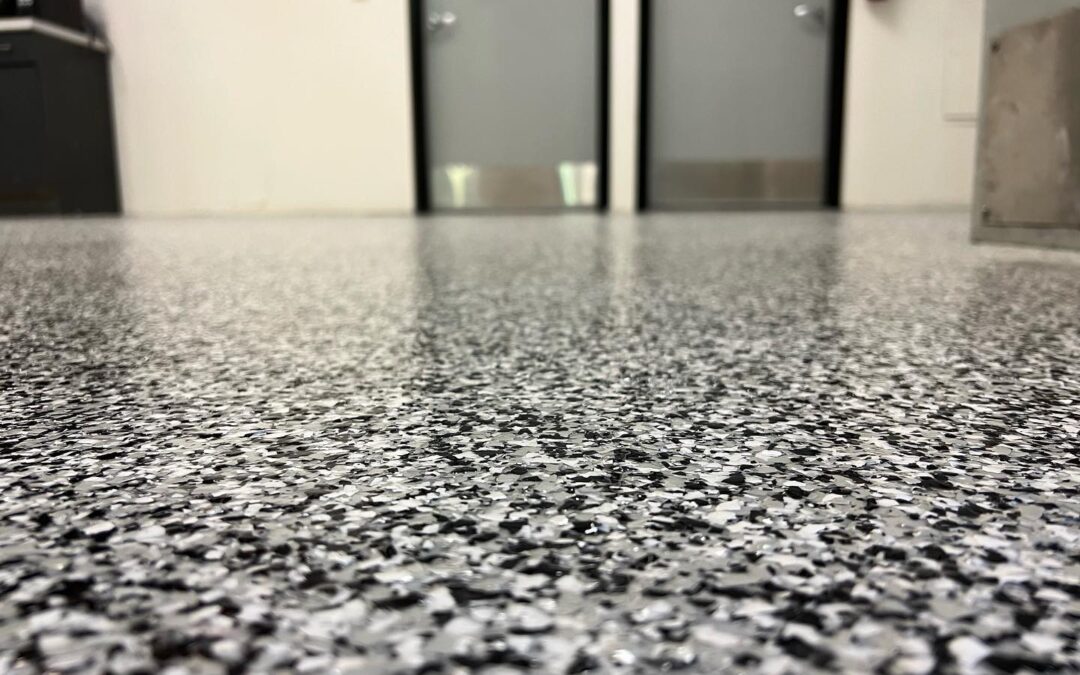
Concrete is a sensible and hard-wearing surface finish, but that doesn’t mean it’s impervious to damage. Bare concrete can crack, stain, and attract dust and grime over time. This makes your floors look dull and feel dirty. The good news is that there’s a high-performance coating available that can prevent this. Polyaspartic concrete coatings are the latest floor coating technology available and are far superior to regular concrete in terms of both performance and looks.
In this article, we will provide an overview of what polyaspartic coatings are, their key benefits, and where they’re used, among other things. We will also compare this solution to traditional epoxy coatings and highlight some of the key features to consider when selecting one for your property.
What Are Polyaspartic Concrete Coatings?
Polyaspartic concrete coatings are a type of polyurea, which is a subcategory of polyurethane. The solution was originally developed in the 1990s as a protective coating for steel bridges but was later adapted for use on concrete floors due to its durability and fast-curing properties. A polyaspartic coating is produced when an aliphatic polyisocyanate is combined with a polyaspartic ester, which is a type of diamine.
This reaction creates a strong and flexible clear topcoat that can be applied directly to concrete, or as a sealant for decorative floor systems. Polyaspartics can also be applied in a wider temperature and humidity range than most other coatings.
The Top Benefits of Polyaspartic Coatings
Polyaspartic is quickly becoming one of the most popular coatings for concrete surfaces, and there are many reasons why! Polyaspartic coatings are extremely durable and offer a fast installation process with minimal downtime. Let’s look at some of our favorite benefits of polyaspartic flooring.
Durability and Resistance
Polyaspartic is one of the toughest floor coatings on the market. It resists abrasion, scratches, and impacts better than many other coatings. In addition, it forms a seamless, non-porous surface that protects against chemical stains from oil, gas, and household cleaners.
Extremely Fast Curing Time
Time is money, and most people like to have the job done in a short amount of time. Curing times are one of the most significant advantages of polyaspartic coatings over other systems, such as epoxy. A typical epoxy floor can take anywhere from two to five days to fully cure, but a polyaspartic system can be ready for foot traffic in only a few hours and for vehicle traffic in 24 hours. This shorter down time means less lost revenue for business owners and faster return of use for homeowners.
UV Stability
Standard epoxies will yellow and amber with time and direct exposure to the sun. Polyaspartic coatings are UV stable, so you won’t have to worry about the coating fading or changing colors. This makes it a perfect option for surfaces that will be exposed to natural light, such as garages with frequently open doors, patios, or commercial businesses with large windows.
Visually Appealing Appearance
Practicality can still be aesthetically appealing. Polyaspartic has a clear, high-gloss finish that can make the concrete surface underneath it look even better. Add color pigments and decorative flakes or quartz for a more decorative coat. The sky’s the limit when it comes to designs, from a solid color to a granite finish.
Low VOCs and Odor
Polyaspartic formulas these days are usually low-VOC. VOC stands for Volatile Organic Compounds. This means they emit fewer toxins into the air during application. It’s a better environment for both the applicator and building occupants. They also have a lower odor when compared to some solvent-based systems.
Typical Uses of Polyaspartic Coatings
Due to their strength, speed, and style, polyaspartic coatings can be used for various residential, commercial, and industrial applications.
Residential Garages
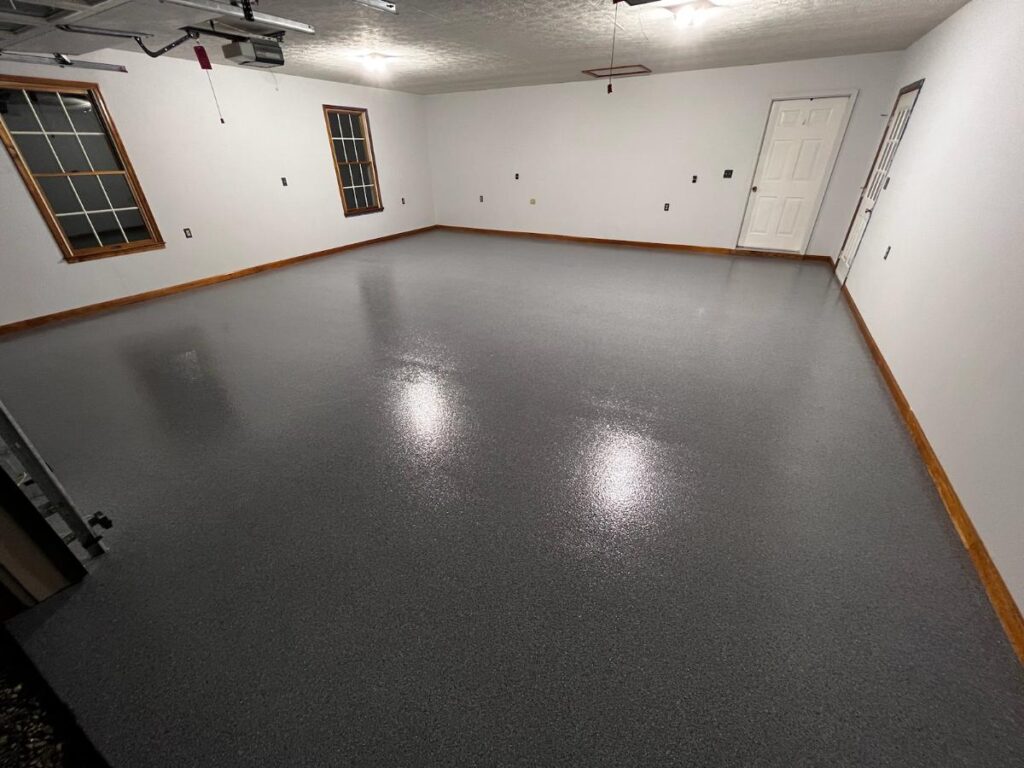
Professional Concrete Coating
The garage can be more than just a parking spot for your car. It can be a workshop, a gym, or a storage space. A polyaspartic coating will turn a dusty, stained, and neglected garage floor into a bright, clean, and durable surface that is simple to maintain. Resistant to hot tire pickup, oil leaks, and dropped tools, this is a great upgrade for any home.
Commercial / Retail Floors
Showrooms, retail spaces, and restaurants need flooring that can handle high foot traffic while still maintaining a professional appearance. Polyaspartic coatings provide a long-lasting, attractive finish that is simple to clean. They also can be installed quickly so businesses can return to operating with minimal downtime.
Industrial / Warehouse Floors
In industrial and warehouse environments, floors are subject to heavy equipment, constant traffic, and exposure to chemicals. Polyaspartic coatings will create a safe, durable surface that can withstand these conditions. The seamless finish also traps dust, which is important for manufacturing and storage facilities.
Patios / Walkways / Outdoor Spaces
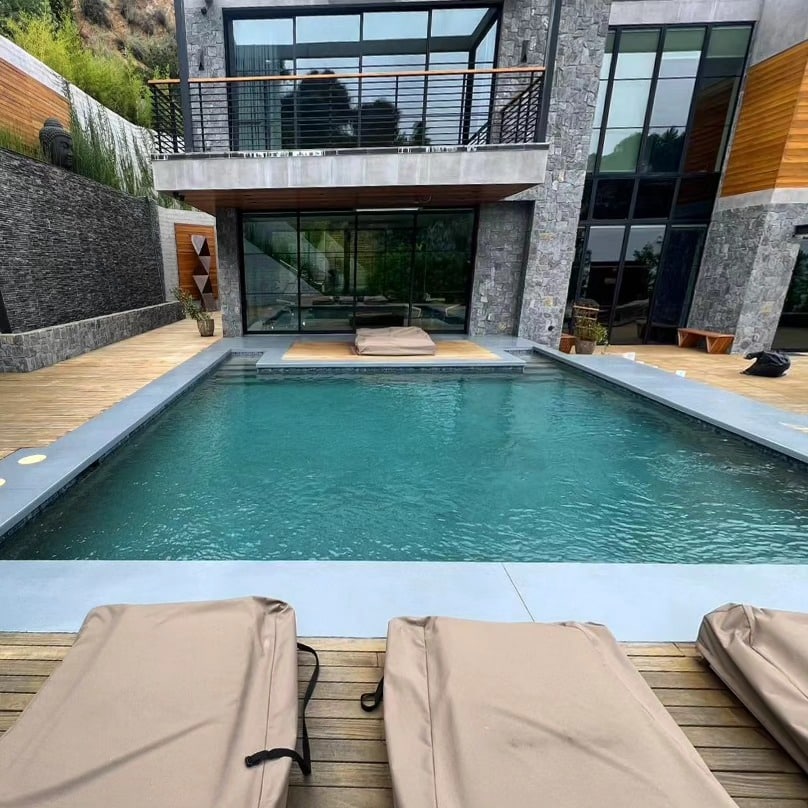
Polyaspartic Concrete Coatings Utah
Polyaspartic versus Epoxy – Comparing Concrete Coatings
Epoxy has long been the go-to standard for concrete coatings, but polyaspartics offer several distinct advantages. Understanding the differences can help you decide which is right for your project.
Curing Time
Arguably the largest distinction between polyaspartic and epoxy coatings is how long it takes for the system to cure. The former cures in hours, the latter takes 3-5 days to fully cure. If your priority is to use the space or equipment as quickly as possible, polyaspartic is a clear winner. On the other hand, it does require a high-level, professional installer with experience working fast.
Flexibility and Adhesion
Polyaspartic is more flexible than epoxy, meaning that it’s less susceptible to cracking or peeling with changes in temperature or small shifts in the substrate. This enhanced flexibility leads to much better impact resistance as well. Polyaspartics penetrate the concrete deeply, creating a powerful bond which is less likely to delaminate.
UV Resistance
As noted above, regular epoxies have a tendency to yellow when exposed to UV radiation. UV-resistant epoxy topcoats are an option, but polyaspartics are engineered to be non-yellowing, providing more peace of mind.
Application Window
Polyaspartic coatings can be applied in extreme heat or cold, with application windows ranging from sub-zero temperatures to the triple digits. Epoxies, on the other hand, have a much narrower sweet spot, generally between 60-85°F.
Cost
Polyaspartic systems have a higher initial material cost than epoxies, but if you factor in lower labor hours and longer lifespan, the lifecycle cost is often very competitive. In most commercial applications, the value of getting back to business faster makes the premium worth it.
Ask your Concrete Coatings Contractor these 4 Questions
Polyaspartic concrete coatings are a relatively new form of floor coating that has been rapidly growing in popularity over the last few years. They offer a very fast curing time, as well as high durability, chemical resistance, and UV stability. In this detailed guide, we will cover all aspects of polyaspartic concrete coatings, including how they work, the benefits they provide, the application process, best practices, common mistakes to avoid, and maintenance.
1. Ask for Solids Content Check
Polyaspartic coatings are a two-part hybrid coating material that exhibits the best properties of two-component epoxy and UV-cured coatings. They are created by mixing polyaspartic resin with a polyurea or polyurethane hardener. The resulting coating has exceptional mechanical properties, including very high abrasion resistance, impact resistance, and toughness.
2. Hire a Professional for Installation
Due to their rapid cure speed, the application of polyaspartic coatings is not a DIY-friendly project. Proper surface preparation, including grinding the concrete to a suitable profile, is required to ensure good adhesion. Hire an experienced, certified installer who specializes in polyaspartic systems to ensure the job is done right.
3. Consider the System, Not Just the Topcoat
The polyaspartic system can be a primer, a color or flakes base coat, and a clear topcoat. Some companies use an epoxy base coat and a polyaspartic clear topcoat. However, a full polyaspartic system will give you the quickest time back to service. Be sure to discuss the entire system you will be getting from your contractor.
4. Ask About Warranty and Maintenance Instructions
A professional installer should always warrant their work. Be sure to ask what is covered and for how long. It is also a good idea to ask for maintenance instructions. Polyaspartic floors are easy to maintain, but a regular clean with a pH neutral cleaner will help to keep them looking their best.
Conclusion
Polyaspartic concrete coatings are a revolutionary new technology that offers unparalleled performance and durability for a wide range of applications. With their unique combination of fast cure, extreme durability, chemical resistance, and UV stability, they provide an unmatched level of protection for any concrete surface. Whether you are looking to upgrade your garage floor, protect a commercial surface, or enhance an industrial facility, polyaspartic coatings offer a high-performance, long-lasting solution. By working with a professional installer and understanding their benefits, you can turn any concrete surface into a valuable and resilient asset.
For a free estimate and consultation, contact Elite Concrete Coatings today for your next Polyaspartic Concrete Coatings project. You can reach us at (801) 946-0929 or fill out our online estimate form.
Elite Concrete Coatings
7879 S 1530 W, West Jordan, UT 84088
(801) 946-0929
https://eliteconcretecoatingsslc.com/
Check out our reviews!